In this article
Maintain a Nuna car seat from the Canadian manual that matches the exact model number. Register it, keep its labels and proof of purchase readable, follow model-specific cleaning instructions, check fit as the child grows, monitor recalls, and obey the labelled do-not-use-after date. After a crash, follow the Canadian manual for the exact model: PIPA requires replacement after any accident, while current PIPA urbn and RAVA manuals distinguish minor from moderate or severe crashes.
There is no single universal procedure for washing, expiry or post-crash use across the Nuna range. The PIPA buckle, RAVA cover and PIPA urbn crash guidance, for example, are governed by different instructions. This ownership calendar keeps those decisions attached to the right source.
Day 0: create the seat record
Before the first drive, record:
- model name and complete model number;
- manufacture date and labelled do-not-use-after date;
- serial or other identifying number shown on the label;
- purchase date and receipt location;
- the live link or saved copy of the matching Canadian manual;
- the vehicle and seating position used for the initial installation;
- which caregivers completed the installation and fit check.
Register the restraint with Nuna Canada so the manufacturer can reach you about a safety issue. Do not remove labels or cover them with a personal sticker.
Before each use: complete the checks required by the exact manual
Confirm that:
- the child remains within every weight, height, age and fit rule for the mode;
- the exact PIPA, PIPA urbn or RAVA manual's harness and vehicle-belt routing, flatness and snugness checks have been completed;
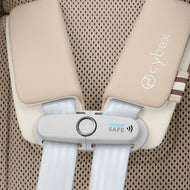
- harness height, buckle closure and any chest-clip position match the exact PIPA, PIPA urbn or RAVA manual;
- the carrier is fully attached to its base when a base is required;
- recline and installation indicators show the allowed result;
- nothing has been placed between the child and seat or added to the setup unless approved for that exact restraint.
Winter clothing deserves particular attention. Bulky layers under a harness can prevent proper tightening. Follow the seat manual and place warmth over a correctly secured child rather than beneath the harness.
Optional household reminder: inspect less-visible parts without replacing the manual's required checks
- Remove loose debris and inspect the belt paths, lower connectors and top tether used by the current mode.
- Check the harness for cuts, fraying, twisting or contamination.
- Operate the buckle and adjuster; stop using the seat if a required part does not function correctly.
- Keep the matching manual available and use the seat's model and date labels, rather than memory, for identification and expiry checks.
- After moving or reinstalling a seat, repeat the installation procedure and final checks in that model's manual, including any before-each-use check.
- Review the child's measurements and fit instead of waiting for clothing to look crowded.
The interval can be shorter for a seat moved often, exposed to a spill or used by several caregivers.
After a spill: clean the exact component, not “the car seat”
Identify what is dirty: removable soft goods, shell, harness webbing, buckle, connector or padding. Then open the matching Canadian manual and the sewn care label before applying water or cleaner.
The current Canadian PIPA manual directs caregivers to wash the seat cover in cold water with mild detergent, clean the shell, handle and harness with a soft cloth and mild detergent, and rinse the buckle with warm water without soap, solvents or lubricants. The current PIPA urbn manual similarly limits the shell, handle and harness straps to mild detergent, water and a soft cloth, while telling caregivers to follow the soft-goods care label for washing and drying.
The current Canadian RAVA manual has its own component instructions, including cold-water care for removable soft goods and separate hand cleaning for the harness. This is why a method remembered from one Nuna seat should not be transferred to another.
Cleaning stop rules:
- do not bleach, lubricate, soak or machine-dry a component unless the exact instructions permit it;
- do not disassemble a restraint beyond the steps shown in its exact manual; the PIPA urbn manual also says not to remove the foam or tape beneath the seat pad;
- for PIPA, PIPA urbn and RAVA, use only products, accessories and replacement components supplied or approved for that exact model.
Every growth change: reassess mode and fit
A child can outgrow a setting before outgrowing the seat's headline maximum. Use the exact manual to recheck its specified fit items: for PIPA these include harness height, head clearance, insert use, and crotch-buckle position, while RAVA has its own harness, insert, and recline rules. For a booster, check lap-and-shoulder-belt position in the actual vehicle.
When one limit is close, plan and test the next stage. Do not switch direction or mode early just because another mode's minimum has been reached.
Registration and notices: verify before reuse or transfer
Use Transport Canada's child car seat safety and recall resources and Nuna Canada's safety advisories. For PIPA, PIPA urbn and RAVA, register current owner contact information together with the exact model number and manufacture date shown on the seat. Safety notices can be model-specific; compare the exact model number and any date criteria stated in the notice before deciding whether it applies.
Read the specific recall or safety notice for its affected population and required remedy. Do not discard or continue using the seat based on the headline alone; the notice will state the affected population and remedy.
Expiry: read the label before calculating
Transport Canada advises following the manufacturer's useful-life or expiry information. Nuna's current Canadian PIPA manual states a seven-year period from manufacture or purchase when proof of purchase is available, and directs the owner to check the do-not-use-after label. The current Canadian RAVA manual states a ten-year period from purchase with proof, or manufacture otherwise, and also points to the product label.
Those examples are not a family-wide formula. The labelled date and the matching manual for the exact seat control. Verify expiry from the seat label and matching manual; if those do not provide a reliable date, contact the manufacturer rather than estimating.
After a crash: model-specific instructions matter
Do not apply one Nuna model's post-crash rule to another. The current Canadian PIPA manual directs replacement after a car accident even if it was minor. The current PIPA urbn manual requires replacement after a moderate or severe crash and lists all criteria that must be satisfied for a crash to be considered minor.
Current Nuna Canadian manuals use different post-crash wording and thresholds, so use the manual matched to the exact model. After any crash:
- stop and identify every occupied or installed child restraint involved;
- open the Canadian manual matching each exact model number;
- document the crash facts needed by that manual;
- contact Nuna Canada when the exact manual or safety notice does not resolve a question about criteria or damage.
- follow insurer and local authority processes without letting them replace the manufacturer's use instruction.
Visible damage is not the only criterion. Do not sell, lend or donate a seat whose crash status makes it unusable or uncertain.
Replacement and hand-off checklist
Stop using or replace the seat when the exact manual or safety notice requires it, the labelled expiry has passed, or required parts are missing or damaged.
Before accepting or handing off a used seat, verify:
- known ownership and crash history;
- readable Canadian certification, model and date labels;
- no open recall without its completed remedy;
- all required original parts and the matching manual;
- no prohibited cleaning, modification or unapproved accessory;
- enough remaining useful life for the intended child and stage.
An attractive cover and an unexpired date do not compensate for an unknown history.
Keep one model-specific maintenance record
Use the Canadian manual matched to the exact model label as the primary maintenance instruction. Keep the record, clean by component, recheck fit, verify recalls, obey the labelled date and treat crash guidance as model-specific. For a seat from the Nuna collection at baby enRoute, resolve the current instructions through Nuna Canada's product manual index and contact Nuna when the evidence is incomplete.