In this article
Buy before birth only what must work for the first ride home or the first days at home; let later Nuna purchases wait for a measured routine. A registry becomes more useful when every item has a first-use date, the exact connected product and a stop rule. The Nuna name alone is not a reason to buy an entire travel-and-home system at once.
Deadline one: the first vehicle ride
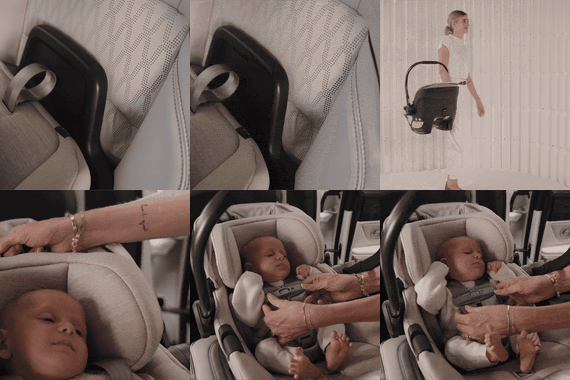
If the baby will travel by car, the Canadian infant restraint and its required installation components need the earliest deadline. Transport Canada says to look for the National Safety Mark and obtain the manufacturer's manual for that car-seat model. Choose the vehicle seating position, verify the installation method and keep the model information. A Nuna PIPA decision belongs before birth only when it is the selected Canadian seat and the household can complete the vehicle-specific setup.
Deadline two: the first repeated outing
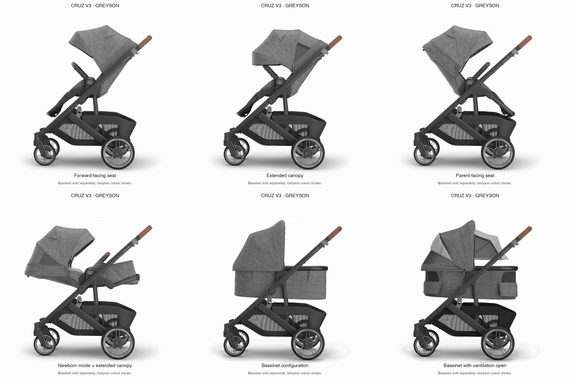
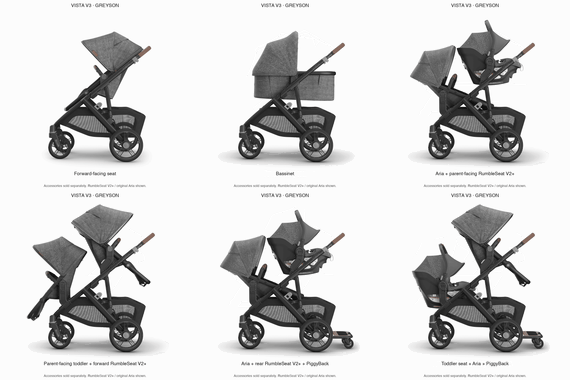
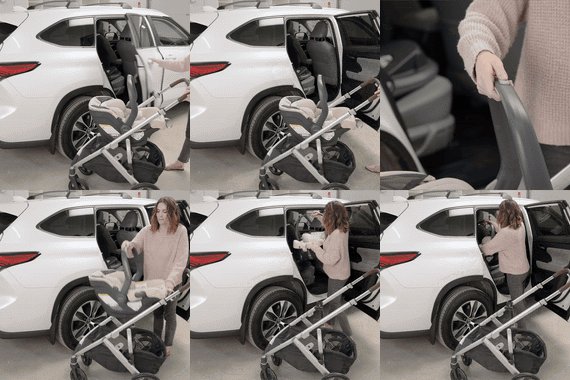
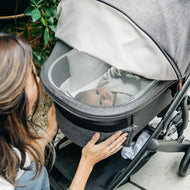
A stroller can be an early purchase when walking, transit or a vehicle-to-stroller connection will happen in the first weeks. Choose from the route, not from a generic registry list. Count stairs, trunk space, winter surfaces, storage and whether a compatible infant seat or bassinet is part of the plan. A full-size stroller may suit long neighbourhood walks; a lighter format may suit carrying and compact storage. Do not register for both until two distinct routes justify them.
Deadline three: the home routine that actually appears
Home gear can often wait on the registry. Keep SENA Aire as a contribution note until its room-to-room or travel job is named; keep LEAF grow separate from sleep products; and defer BRYN until the child can sit up unaided. For each deferred gift, preserve the budget or contribution without locking a colour, generation or physical box into the home before its first-use condition exists.
Use stop rules to prevent ecosystem creep
Give every registry line a cancellation rule. Remove a stroller accessory when the selected route no longer needs it; remove a second mobility product when it duplicates the first; remove a SENA accessory when no named laundry, changing or insect-control job exists; and replace later car-seat models with a contribution note while the current stage is still unresolved. These are gift-list decisions, not a full child-development purchase sequence.
Name the exact product for every line
Each registry line should point to the current Canadian product page once the model is chosen, or the Nuna collection while the model is still open. Record the exact Canadian model name, any required base or adapter, and colour only after the function is settled. Do not substitute a similar U.S. model or rely on a shortened family name. A gift-giver should be able to identify the intended Canadian item without guessing.
Sort the registry by deadline, then test each line
Group every proposed gift into ‘needed before birth,’ ‘useful after the route is proven,’ or ‘later-stage candidate.’ For each item, record the first-use event, exact Canadian model, product it must connect to, storage location and the condition that cancels the purchase. If any answer is blank, keep the item in research or use a contribution note instead of locking in a colour or generation.
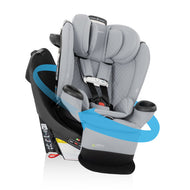
For many car-using families, the lean starting example is one verified infant car seat setup, one stroller chosen for the dominant route and only the home equipment needed in the first month. A car-free household, shared-care arrangement or destination with permanent gear may reverse that order. Review the three groups with gift-givers so a generous purchase does not arrive years early or commit the family to an accessory ecosystem before the main product is chosen.
Avoid duplicate solutions
A registry often accumulates several answers to the same imagined problem: two compact strollers for travel, a playard and another portable sleep product for one destination, or multiple infant-seat bases before the vehicle routine is settled. Circle the job each item owns. When two items serve the same event, keep the one with the clearer confirmed purpose and leave the other off the registry until its role is real. Distinct products are justified by distinct repeated routes, not by different names or finishes.
Build handoff notes for gifts
For an infant seat, note that the physical Canadian label and installation still need verification on receipt. For a stroller, note the intended newborn configuration and any exact adapter. For home gear, note the starting milestone and storage location. For every accessory, name the product it connects to. These notes help a gift-giver choose the intended item without turning a registry description into a safety instruction. The current manual remains the authority when the product arrives.
Gift-value check
Ask whether a gift will be usable by the next known stage or route, whether the exact model is stable enough to choose now, and whether the recipient has storage. A contribution toward a later decision may provide more value than a physical item selected early. For model-specific gifts, preserve the return window until physical labels and compatibility can be checked. This protects the giver's budget and the recipient's ability to choose the current Canadian product when the real stage arrives.
Registry maintenance date
Review the registry in late pregnancy for first-ride and first-outing gifts, then again when a return window or first-use date is approaching. Remove duplicates and discontinued variants instead of only adding. Once gifts are no longer the decision, keep a dated note for the next real stage transition instead of adding a speculative later-stage Nuna item to the registry.
Final registry readback
Before sharing the list, read every line aloud with its first-use event and cancel condition. Remove duplicate jobs, discontinued variants and any item defended only with ‘we might need it.’ Keep deferred stages as contribution notes so gift-givers can support the future decision without selecting the product too early.