In this article
When a Nuna item already in use is likely to reach a real limit within 90 days, identify what must be checked, kept, retired or budgeted before buying the next stage. Use the before-birth Nuna registry guide for purchases before this handoff window. Do not buy a later stage simply because it appears next on a brand chart.
The five handoffs at a glance
| Handoff | Documented trigger | Connected-parts check | Budget or storage consequence | Next decision page |
|---|---|---|---|---|
| First vehicle ride | A Canadian infant restraint is needed for the actual vehicle trip. | Exact seat, allowed installation method, matching Canadian manual and any required base. | Make room for the installed base or the complete approved baseless routine; do not count a stroller adapter as included without the exact package. | Nuna car-seat lineup |
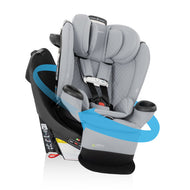
| Infant carrier to convertible | The child reaches any weight, height, head-clearance or fit stop rule for the exact infant seat, or the fixed-seat routine becomes the planned next job without ending rear-facing early. | Vehicle position, rear-facing convertible installation and a separate stroller/carry plan after click-out transfers end. | Do not credit a skipped infant seat or carrier exit as savings until the replacement stroller or carrying need is priced. | What comes after PIPA |
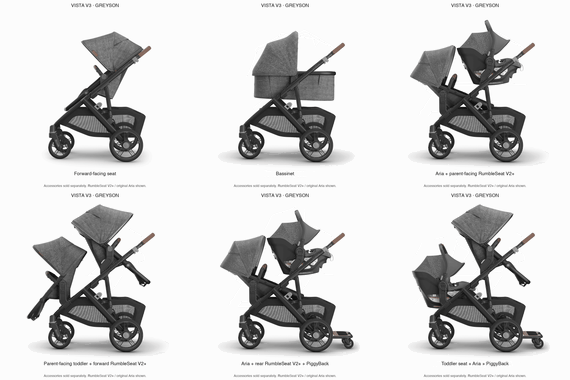
| One rider to two | Two passengers will use the same outing and the current stroller cannot carry them in an approved configuration. | Sibling seat, rider board or double-stroller configuration, infant-seat position and adapter compatibility. | Measure the complete configured fold and storage space; price every required seat, board and adapter rather than the frame alone. | One child, two children or rider setup |
| Home stage change | The exact product's readiness or stop condition occurs, such as unaided sitting for BRYN or a LEAF grow stage transition. | Harness, insert, tray, pad and any parts that must be removed, retained or stored for the next allowed configuration. | Keep home categories separate: a high chair, supervised-use seat and playard do not replace one another because their ages overlap. | BRYN product details |
| Forward-facing harness to booster | The forward-facing harness is outgrown and the child meets the exact booster requirements, can maintain belt position and fits the vehicle. | Vehicle lap-and-shoulder belt path, head support and the exact Canadian booster instructions. | Delay the purchase while the harness still fits; recheck the current Canadian model near the real transition. | Nuna stage guide |
Handoff one: record what leaves the car with the child
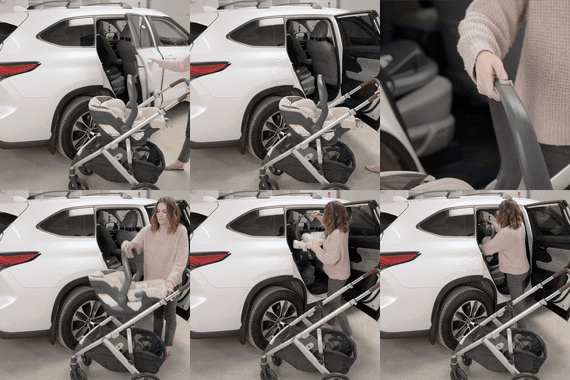
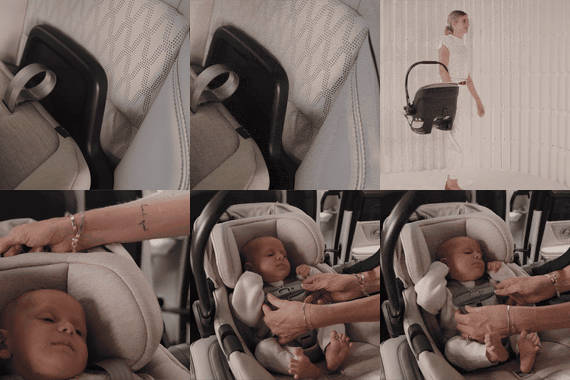
An infant carrier can move between vehicle and stroller; a convertible remains installed. Before changing seats, write the current transfer sequence from home to destination. If the carrier is ending, name the replacement for every job it performed: vehicle restraint, stroller connection and short carry between them. A rear-facing convertible may continue the correct restraint stage, but it does not preserve click-out transfers.
For the current PIPA, use the exact Canadian manual. Weight, height, head clearance and other fit rules apply together. The next purchase is not released by age alone, and it should not move a child out of rear-facing before the current rear-facing restraint is outgrown.
Handoff two: price the configuration that will actually ride
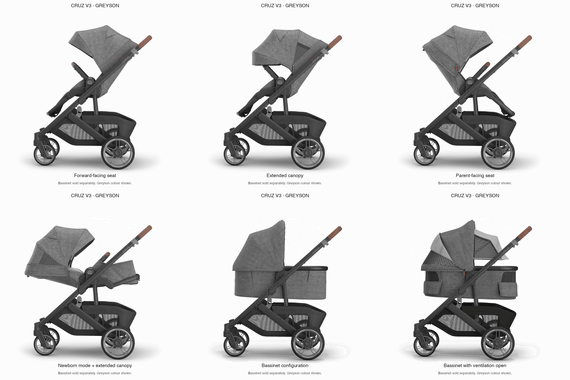
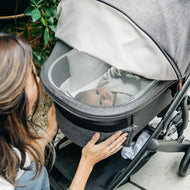
A growing-family stroller price is incomplete when the planned trip also requires a sibling seat, rider board, infant-seat adapter or different carry protection. Draw each passenger position and list the exact connected parts beside it. Then measure the configured fold in the real trunk or storage space.
Choose a tandem or side-by-side layout only when the passenger plan exists. If a second child will usually walk, a rider board may solve a different job from a full second seat. If both children must ride for the same route, test that route rather than treating future flexibility as present value.
Handoff three: keep home products on independent clocks
BRYN begins when a child can sit up unaided. LEAF grow has its own harnessed and later chair stages. SENA Aire has configuration-specific setup and use limits. These clocks do not form one newborn-to-toddler ladder, and none should be bought merely because another Nuna product is being retired.
At a home-stage change, make a parts envelope: current manual, removed harness or insert, retained hardware, care instructions and the stop condition for the new configuration. If the product no longer has a repeated household job, do not use a later stage as the reason to keep it in the room.
Handoff four: keep the booster decision near the child and vehicle
Transport Canada describes rear-facing, forward-facing harness, booster and vehicle-belt stages. A booster belongs near the actual transition, after the forward-facing restraint is outgrown and the child can maintain correct belt position for the whole ride. Provincial requirements, the exact Canadian booster instructions and vehicle fit all still apply.
Do not reserve storage for a booster years early or select a model from an old comparison. Keep the budget category open, then verify the current Canadian product, child measurements and intended seating position inside the 90-day purchase horizon.
Use a transition envelope for each purchase
On the front, write the observed trigger and the latest date the decision must be complete. Inside, keep the current product label, manual link, measurements, connected-parts list, vehicle or room measurements and the exact next-guide URL. On the back, write one cancellation condition: the child still fits, the passenger plan changed, the route disappeared, the product generation changed or the required configuration does not fit.
Release the budget only when the trigger is real, the current Canadian model is identifiable, every required connection is documented and storage exists. Otherwise preserve the money and reopen the decision when the 90-day horizon becomes real.
The sequence is a set of handoffs, not a bundle
A practical Nuna sequence can branch from infant carrier to rear-facing convertible, from one rider to two, from one home stage to another and eventually from a forward-facing harness to a booster. The order changes with the household, but each handoff uses the same discipline: retire an item only when its documented job ends, identify every replacement job, and price the complete configuration that will be used next.