In this article
Choose a single-seat Nuna setup when one child needs a seat on almost every outing. The DEMI Next rider board is an option for one standing child, up to 50 lb and 45 in., who can keep both feet on the board, hold the stroller and follow every current manual rule while the caregiver remains in control. Use an approved second-seat configuration when two children need seats at the same time. The number of children in the family does not answer the stroller question; the required configuration for simultaneous riders does.
Start with attendance, not family size
Build a four-week attendance sheet. For every regular outing, mark each child as seated, standing rider, walking, carried separately, or not present. A second seat earns its place through repeated simultaneous use. A rider board earns its place when an older child can walk most of the route but predictably needs short recovery periods.
| What actually happens | Configuration branch | Stop rule |
|---|---|---|
| One child rides; second child is not yet in the plan | Single stroller | Do not buy expansion hardware only for a hypothetical date |
| Baby rides; older child walks and occasionally rests | DEMI Next with included rider board | Move to two seats if standing is not reliable for the whole route |
| Both children nap, fatigue, or need containment | DEMI Next with approved sibling-seat configuration or TRVL Dubl | A board is not a substitute for a seat |
| Twins or two same-stage riders | Purposeful twin or two-seat configuration | Confirm every exact component and passenger position |
| One child has nearly outgrown stroller use | Single plus walking plan, possibly rider board | Do not carry unused second-seat capacity daily without a clear need |
Branch 1: one child, one seat
A single stroller keeps the ownership routine smallest: one passenger position, one fold, and no additional seat to store. That does not mean the lightest stroller is automatically the answer. The choice still depends on route, seat direction, newborn mode, lift limit, and trunk shape.
If a second child is only a future possibility, decide how much option value you are willing to carry now. DEMI Next is listed at 26 lb without its insert, canopy, and arm bar, and it folds to 23.5 by 24 by 35 inches. A household that does not use the rider board or expansion path may be carrying more stroller and storing more folded volume than its current passenger map requires.
That can still be rational when the family expects a near-term second rider and wants to avoid replacing the stroller. Write the expected transition month and the configuration likely to be used. If neither is clear, compare a current single model such as MIXX Next, TRIV Next, SWIV, or TRVL LX on its own merits rather than awarding DEMI Next an undefined future win.
Branch 2: one seat plus a rider
The DEMI Next package currently carried by baby enRoute includes a rider board. Nuna Canada says it attaches to the lower seat mounts, positions the child between the caregiver's arms, and flips into the stroller basket when not in use. This creates a distinct third path between one seat and two seats.
Before choosing the board, read the current instructions and verify the operating boundary: one child only, standing with both feet on the board, holding the stroller, within 50 lb and 45 in., never unattended, with the attachment inspected before use. A household rehearsal can test whether those rules are realistic, but it cannot replace them.
Do not use the board when the child cannot remain standing with both feet on it while holding the stroller. In that case, choose an approved seat and configuration that fits the child and both product manuals.
The folded-up board also uses basket space. Nuna's current media shows the board flipping into the basket, so include that position in the grocery and diaper-bag test. A feature that stores on the stroller can still displace cargo.
Branch 3: two children, two seats
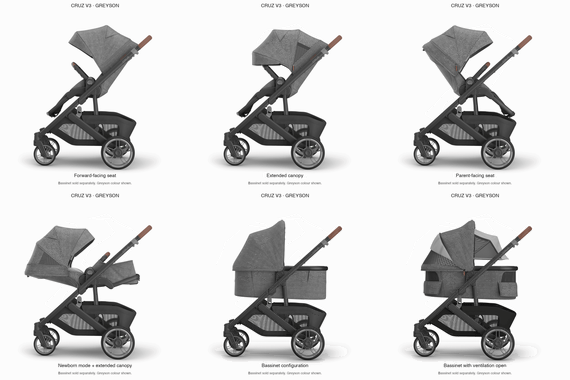
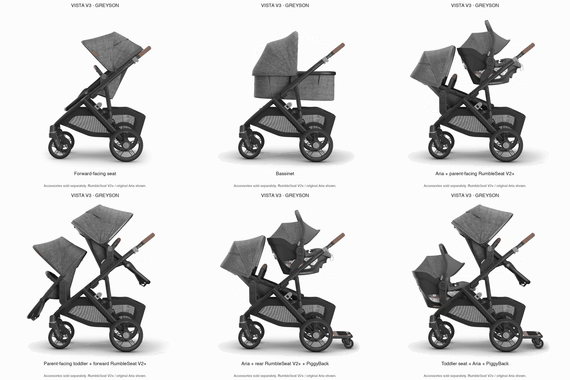
DEMI Next can convert from a single stroller to a double or twin setup, with the DEMI Next sibling seat sold separately. The main stroller seat is forward- or rear-facing, and the product supports separately sold infant-seat and bassinet paths. Exact passenger positions depend on the approved component combination, so build the configuration from the current Canadian manual rather than from a photo or a different generation.
For each planned layout, answer six questions:
- Which child occupies the upper position and which occupies the lower?
- Can the caregiver see and reach both passengers as needed?
- What happens to basket access?
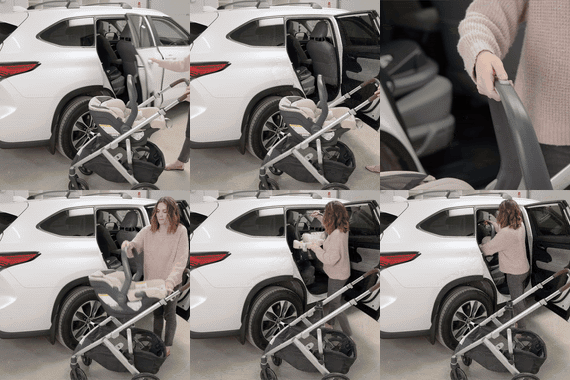
- Which component must be removed before folding or vehicle loading?
- Where is the unused seat, bassinet, or adaptor stored?
- Can one adult perform the full conversion without leaving a child unsupported?
A convertible stroller wins only when the chosen configuration works, not merely because many configurations exist.
Branch 4: newborn plus older child
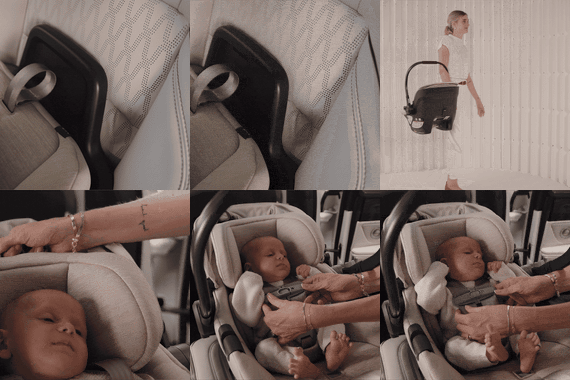
There are three different newborn transport ideas inside this branch: a PIPA infant car seat on the stroller, a DEMI Next bassinet, or the stroller's approved newborn seat configuration. They are not interchangeable.
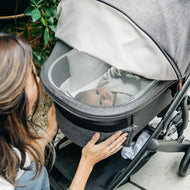
Nuna Canada lists the DEMI Next bassinet from birth to 20 lb and up to 27 inches, with use ending when the infant begins to push up on hands and knees. Nuna identifies that exact bassinet as suitable for overnight sleep. The bassinet can pair with a sibling seat and can also be used in twin-oriented configurations.
A PIPA connection may make car-to-stroller transfers easier, but the child-use limits come from the exact Canadian PIPA manual. A stroller seat or car seat is not a routine sleep space. Health Canada advises moving a baby who falls asleep in a stroller or car seat to a crib, cradle, or bassinet at the destination. Keep the bassinet sleep claim confined to the exact bassinet and its instructions.
When TRVL Dubl is the simpler two-child answer
Not every two-child family needs a convertible system. TRVL Dubl provides two side-by-side seats from the start. Each seat supports up to 50 lb and 45 inches under the Canadian manual, subject to the 100 lb combined maximum. Its fixed two-seat layout avoids storing a separate sibling seat, but doorway and trunk fit still need to be checked on the physical Canadian stroller.
Choose the fixed side-by-side branch when both children need seats now and the measured route accepts the width. Choose DEMI Next when single use, rider-board use, or changing upper-and-lower configurations will genuinely be used. This is a frequency decision, not a claim that one architecture is universally more capable.
Choose the passenger branch that matches the week

- Will two children need to ride on the same outing? If no, choose a single stroller for current needs.
- Can the older child remain standing with both feet on the board, hold the stroller and meet every current weight, height, supervision and configuration rule? If yes, test the DEMI Next rider-board branch.
- Do both children need seated support? If yes, compare DEMI Next's approved two-seat layout with TRVL Dubl's fixed side-by-side layout.
- Is a newborn mode required? Specify PIPA, bassinet, or stroller-seat path and verify the exact manual.
- Does every component fit the home and trunk when not in use? If no, remove that branch even if it works while open.
Now add a handoff check. Give the proposed setup card to the other caregiver or grandparent who may use it. Without relying on a product photo, that person should be able to identify each child's position, the component that stays home, what must be removed before folding, and where the unused part is stored. If the answer changes by weekday, make one card for each routine rather than expecting everyone to remember a flexible system's full configuration tree.
Review the attendance sheet again after a month. A rider who needs a seat more often than expected, or a second seat that travels empty, is evidence to change branches. The tree is a planning tool, not a permanent label for the family.
Choose the lowest-complexity setup that covers the real riders
The practical setup is the one with no missing passenger place and no unused daily burden. For one rider, stay single. For an occasional older rider, test the board. For two children who need seats, choose a two-seat configuration and verify every component. Expansion is valuable when it gets used; otherwise it is weight, storage, and setup work.
Review the current Nuna DEMI Next with rider board, DEMI Next sibling seat, DEMI Next bassinet, and TRVL Dubl. The Nuna collection has more current Nuna options.