In this article
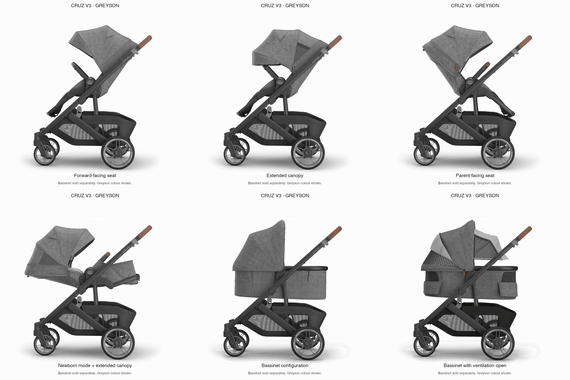
Choose Kona when a 22 lb stroller, a 30 lb rated basket, and folding with the seat attached in either direction solve your main routine. Choose Cruz V3 when you need published dimensions before buying, want its documented FlexRide suspension, or need its listed PiggyBack option. The answer can reverse quickly because Kona's exact width and folded dimensions are not yet public.
This is not a smaller-is-better contest. Both publish from-birth paths and direct UPPAbaby newborn connections. Kona currently sits between compact and full-size priorities. Cruz V3 gives buyers a more complete published specification and accessory picture today.
The trade-off board
| Decision point | Kona | Cruz V3 | Who should care most |
|---|---|---|---|
| Published stroller weight | 22 lb | 26.5 lb frame plus seat | Households lifting, carrying, or loading the stroller frequently |
| Published width | Not currently published | 22.5 in unfolded and folded | Anyone with a hard doorway, elevator, or trunk constraint |
| Fold | One-hand fold with seat attached in either direction; exact folded dimensions unpublished | Two-action compact fold; 17 in L x 22.5 in W x 32.5 in H with seat attached | Car users and small-home storage planners |
| Basket | Rated up to 30 lb | Described as large and easy-access; no numeric basket limit on the current page | Grocery-walking and long-outing households |
| Newborn path | Near-flat from-birth position; direct Bassinet or UPPAbaby infant car-seat attachment stated generically | Lay-flat seat from birth; Bassinet, Mesa, and Aria listed for direct attachment | Expectant parents who need exact configuration names now |
| Ride hardware | No suspension system is specified on the current Kona page | Dual-spring FlexRide suspension and never-flat tires | Buyers who want named ride hardware in the published specification |
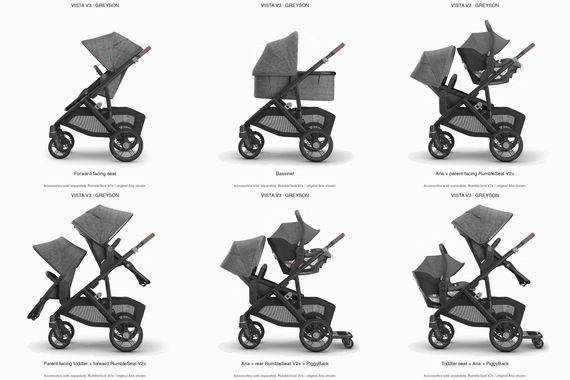
| Second rider | No ride-along board is listed on the current page | PiggyBack support is listed | Families planning occasional standing-board use |
Compare only like-for-like published fields. If a Kona value is missing, leave that row open rather than estimating from photos or borrowing a Cruz V3 specification.
Switch one: lifting weight versus known geometry
Kona's published weight is 22 lb; Cruz V3's frame-plus-seat figure is 26.5 lb. That difference is most relevant when the whole stroller is repeatedly lifted into a cargo area, carried to storage, or moved over steps. It is less decisive when the stroller stays open at ground level for most of the week.
Cruz V3 answers a different constraint. It publishes a 22.5 in width and folded dimensions with the seat attached. That lets a buyer compare the stroller with a doorway, closet, or trunk using actual numbers. Kona is described as slim, but exact width and folded dimensions are still absent. If a pass-or-fail measurement controls the purchase, Cruz provides published dimensions for a paper check today; Kona still requires official dimensions or a physical fit test.
Switch two: fold sequence versus folded package
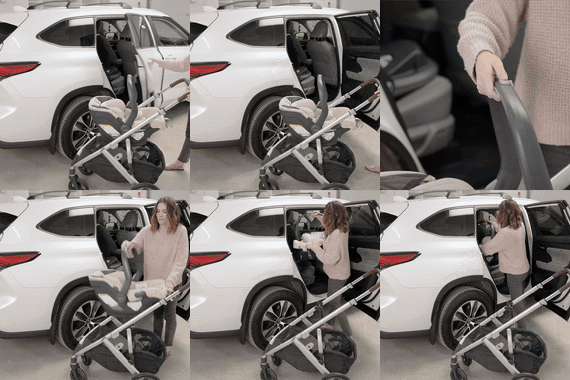
Kona's fold story emphasizes fewer seat decisions: UPPAbaby says it folds one-handed with the seat attached whether the seat faces the parent or the street. That can remove a reorientation step at the car or front door.
Cruz V3's current page describes a two-action compact fold and publishes the resulting size with the seat attached. Cruz V3's two-action fold supplies the geometry needed for storage planning. The practical choice depends on where friction occurs. If the annoying step is turning or removing the seat before every fold, Kona's sequence deserves attention. If the hard problem is a measured cargo box or closet, Cruz provides the evidence required to decide.
Neither product page proves that one fold is easier for every user. Handle height, grip, lifting direction, and the space around the stroller should be checked in person when they matter.
Switch three: rated basket load versus published ride system
Kona's basket is rated for up to 30 lb. That is a clear planning figure for households that walk to groceries, carry long-outing gear, or want bags off their shoulders. It is not a volume promise, and it does not tell you that a particular rigid item fits the opening.
Cruz V3's current page calls its basket large and easy-access but does not state a numeric basket capacity. Its published detail is stronger elsewhere: dual-spring FlexRide suspension and never-flat tires are named features. Do not convert that hardware list into a universal claim that Cruz rides better on every surface. It does mean a buyer who requires a documented suspension system has explicit Cruz evidence that is not currently present on the Kona page.
Your routine decides which side carries more weight. A smooth indoor route with large weekly cargo may point toward Kona's rated basket. A buyer prioritizing named suspension hardware over a numeric basket limit may lean Cruz. Physical testing remains useful because neither page can reproduce your sidewalks, steering preferences, or cargo shapes.
Switch four: generic newborn promise versus named configurations
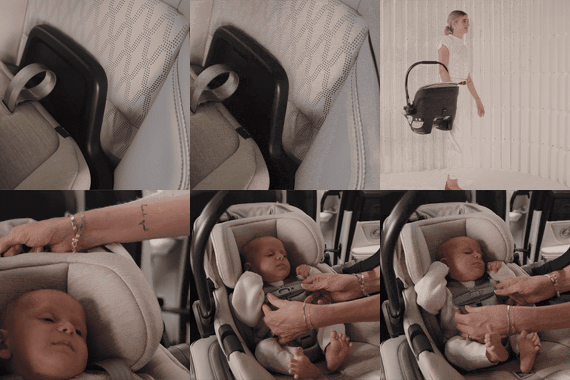
Both strollers have published from-birth paths. Kona lists a near-flat position and says a Bassinet or UPPAbaby infant car seat attaches directly without adapters. Cruz V3 lists its lay-flat seat from birth and specifically names Bassinet, Mesa, and Aria direct attachment.
The difference is documentation specificity. The current UPPAbaby manuals index includes a Cruz V3 manual but no Kona manual. A buyer assembling a newborn system today can verify more exact Cruz configurations from public materials. Kona's broad compatibility statement should not be expanded into exact model-generation approval without current written UPPAbaby instructions that explicitly name the pairing.
If the newborn setup is the deciding factor, make a component list before choosing the stroller. Write down the exact Bassinet or infant car-seat model, generation, and Canadian version. Cruz can be checked against current named instructions. Keep the exact Kona pairing out of the plan unless written UPPAbaby documentation reaches the same level of specificity.
Switch five: one rider now or a standing rider later
Cruz V3 currently lists the ability to accommodate a second rider with the PiggyBack accessory. That can matter for a family with an older child who sometimes needs a standing ride. The Kona page does not currently list a ride-along board.
Absence from the Kona page is not proof that an accessory will never exist. It is proof that the current public information does not support planning around one. If occasional second-rider use is a known requirement, Cruz has the documented path in this comparison.
Use the 10-outing tally
Look at the next ten realistic outings and mark the deciding friction for each:
- L: lift or carry the folded stroller;
- S: pass a measured space or fit a trunk;
- C: carry a meaningful basket load;
- R: rely on named ride hardware for the route;
- N: use a newborn configuration that needs exact compatibility;
- P: carry an older standing rider with a documented board.
If L and C dominate, Kona's lower published weight and 30 lb basket rating deserve the first look, subject to fit. If S, R, N, or P dominate, Cruz V3 currently provides more of the exact published evidence needed to close the decision. If the tally is mixed, test both products with the hardest constraint first rather than averaging unlike features.
Who should choose Kona?
Kona is the stronger candidate for a single-child household that values a lower published stroller weight, a high stated basket limit, a reversible seat, and a one-hand fold without changing seat direction. The choice remains unresolved for buyers who need exact dimensions or model-specific newborn confirmation; require measured fit evidence and written UPPAbaby compatibility documentation instead of assuming. Buyers with tight trunks, elevators, or storage spaces should not cross that boundary on the word 'slim' alone.
Who should choose Cruz V3?
Cruz V3 is the stronger candidate when known dimensions, named suspension hardware, a published PiggyBack path, and current named newborn connections are more important than the two published stroller weights. It also gives a buyer a live, detailed product record today. Read the Cruz V3 versus Minu V3 guide if the real alternative may be a more compact stroller rather than Kona.
Make the hard-constraint choice
Kona reduces published stroller weight and makes a strong basket-capacity case. Cruz V3 reduces uncertainty by publishing its size and naming more of the ride, newborn, and second-rider system. Choose Kona when mobility means less lifting and more cargo. Choose Cruz when mobility means known fit and a documented full-size feature set.
For a deeper explanation of Kona's available numbers, start with the Kona specifications guide. Compare current brand options through the UPPAbaby collection, and use the Cruz V3 product page for the live commercial details of that model.