In this article
The most decision-changing UPPAbaby Kona specifications are its 22-lb frame, 30-lb basket rating, reversible four-position seat, and one-hand fold with the seat attached in either direction. Together, they describe a stroller built to reduce transition steps while offering substantial cargo capacity and flexible seating in a slim everyday frame.
Numbers alone cannot tell you whether Kona fits your lift, boot, doorway, or weekly load. Use this consequence ledger to turn every confirmed specification into a test. If a needed number is absent from official materials, treat it as unknown rather than filling the gap with a retailer listing or visual estimate.
The spec-to-routine consequence ledger
| Confirmed Kona detail | What it could change | What it does not prove | Household test |
|---|---|---|---|
| 22 lb | How demanding repeated boot lifts, stairs, and carry transfers feel | That the folded shape is easy to grip or fits your storage space | Lift a comparable 22-lb object from floor to boot height |
| 30-lb basket rating | How much total cargo weight the basket is designed to carry | That every large diaper bag or grocery bag fits the opening | List your usual cargo by weight, shape, and access frequency |
| Seat-attached fold in either direction | Removes a seat-turning or seat-removal step before folding | Exact folded dimensions, self-standing behaviour, or one-hand carrying comfort | Rehearse your full departure sequence, not just the fold motion |
| Four one-hand recline positions | Lets a caregiver change seat angle without using both hands | That every position suits every age, task, or preference | Check whether you value distinct positions or continuous adjustment |
| Direct UPPAbaby attachment | Reduces adapter parts for a compatible UPPAbaby Bassinet or infant car seat | Compatibility with other brands or instructions for use | Write down the exact infant-seat or Bassinet model in your plan |
Read each number with its stated limit and the household test beside it. The specification describes the stroller; your routine determines whether it matters.
22 lb: use repetition, not pride, as the test
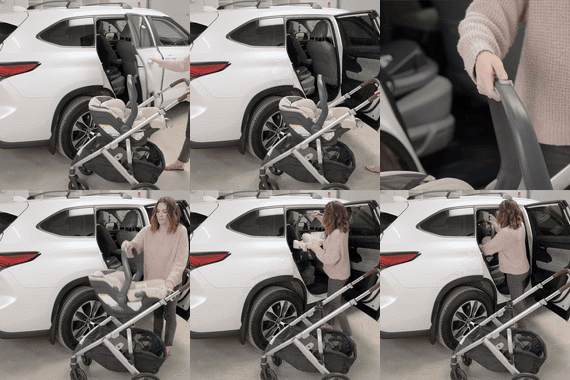
A stroller's weight matters most when lifting is repeated or awkward. One lift in a showroom is a weak test. A normal car outing may involve lifting the stroller into the boot at home, out at the destination, back in after the outing, and out again at home. Stairs add distance and turning.
Build a realistic trial with an object close to 22 lb. Start at the height where the folded stroller would rest. Lift to the height of your vehicle lip or storage shelf, then set it down. The point is to notice the load at your back, hands, and route, not to prove strength.
Weight also needs a shape. A 22-lb stroller with a balanced grip can feel different from a compact but awkward package. Kona's current page does not publish folded dimensions, so grip and carrying geometry remain unresolved. Keep grip and folded geometry on the in-person verification list.
A 30-lb basket is a load limit, not a packing plan
The official basket rating is 30 lb. That number is useful for a loaded errand day, but basket usefulness has three dimensions:
- Weight: the total load must stay within the manufacturer's limit.
- Volume: a light winter coat can consume more space than several dense groceries.
- Access: an item is only convenient if you can add or remove it in the seat position you use.
Run a paper cargo check. Write down the diaper bag, weather cover, caregiver layer, water bottle, lunch, and likely groceries. Mark each as heavy, bulky, or frequently accessed. A large weight rating helps the heavy column. It says much less about the bulky and access columns until the basket can be inspected.
Health Canada advises caregivers not to hang purses or diaper bags from stroller handles and to follow the manufacturer's instructions for extra items and accessories. Keep Kona's basket within its published limit and do not add cargo or accessories in a way that current written instructions do not explicitly permit.
The two-way seat-attached fold changes the sequence
Kona's fold claim has two parts: it is one-hand, and the seat can remain attached whether it faces the parent or faces forward. The second part is easy to overlook, but it may matter more.
Imagine arriving at a car with a child, bag, and stroller. A fold that requires the seat to be turned creates an extra decision and movement. A fold that works in the current seat direction removes that branch from the sequence. It does not guarantee that you will lift the folded stroller one-handed. It simply means the fold itself is designed to avoid seat reorientation.
- Park the stroller where you normally unload.
- Complete the child transfer before folding.
- Remove any items the manufacturer says must come out before folding.
- Fold, grip, lift, and place the stroller.
- Check whether the boot still holds the cargo that did not stay in the basket.
That full sequence is the test. A fast fold animation is not.
Four recline positions and a reversible seat: flexibility with boundaries
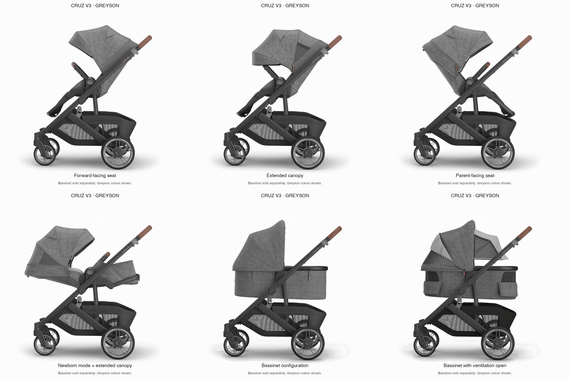
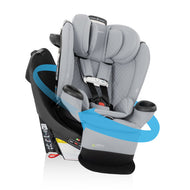
UPPAbaby says Kona's reversible seat switches between parent-facing and forward-facing modes and offers four one-hand recline positions. The page also describes a near-flat, from-birth position. Those facts create several configuration choices without requiring seat removal for every angle change.
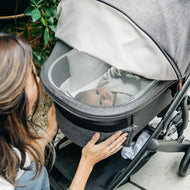
Do not translate "near-flat" into a measurement that has not been published, and do not treat a marketing page as a substitute for model-specific instructions. Buyers planning newborn use should not use an exact configuration unless current written UPPAbaby instructions provide its setup and limits. For a general stroller shortlist, the consequence is simpler: Kona is not a fixed-direction, upright-only travel buggy.
Direct attachment reduces parts, not decisions
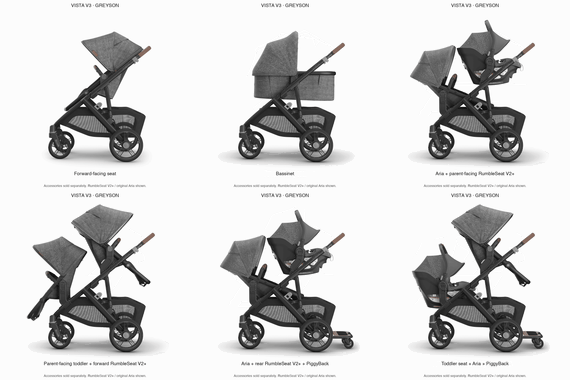
Kona is listed for direct, adapter-free attachment with UPPAbaby infant car seats and the UPPAbaby Bassinet. That can reduce the number of loose components stored in a vehicle or entryway.
The exact model still matters. Record the full name and generation of any infant car seat or Bassinet you plan to use, then require current written UPPAbaby compatibility information that explicitly names the pairing. The current Kona product page does not provide model-specific attachment instructions in its resource area.
The missing-spec list is part of the specification
UPPAbaby has not yet published Kona's exact unfolded dimensions, folded dimensions, wheel measurements, or a model manual. These gaps matter differently by household.
- Condo storage: exact folded depth and height may be a hard constraint.
- Narrow doorway or elevator: exact frame width may control the decision.
- Small vehicle: all three folded dimensions matter, not just weight.
- Rough routes: wheel and terrain guidance may matter more than basket capacity.
- Newborn planning: the manual and exact configuration instructions should control use.
A missing number is not a negative score. It is a stop sign only when that number governs your purchase.
Build your four-line fit card
Put four lines in your phone before you compare or view the stroller:
- Lift limit: the weight and number of daily transfers you accept.
- Space limit: your smallest doorway, elevator turn, storage bay, and boot opening.
- Load pattern: the heavy, bulky, and frequently accessed items you carry.
- Configuration: seat direction and any exact UPPAbaby infant component you plan to attach.
For more context on Kona's place in the lineup, read our UPPAbaby Kona Canada mid-size guide. To compare that shortlist with the UPPAbaby stroller range, continue to the UPPAbaby collection.
Bottom line: Kona's published specifications support fewer folding steps, a 30-lb basket limit, and a defined 22-lb lift. The honest decision still depends on your repetitions, cargo shape, and spaces. Use the confirmed numbers now, and do not approve a non-negotiable fit without official dimensions or a physical fit test.