In this article
The practical answer: choose the UPPAbaby Kona if most stroller days start at home and involve groceries, neighbourhood walks, daycare gear, or tight urban spaces. Choose the Minu V3 if trips, stairs, vehicle transfers, and carrying the folded stroller happen often enough to shape your week. Kona is the option with more published basket capacity; Minu V3 is the lower-weight travel-first compact.
The decision is not simply 22 lb versus 16.7 lb. It is about when you feel those pounds, what you need to carry underneath the seat, and how often your stroller becomes luggage.

The published differences that change the decision
| Decision point | UPPAbaby Kona | UPPAbaby Minu V3 |
|---|---|---|
| Published stroller weight | 22 lb | 16.7 lb |
| Basket weight limit | 30 lb | 20 lb |
| Seat and fold emphasis | Reversible seat; one-hand fold with the seat attached in either direction | One-hand, overhead-friendly compact fold; integrated carry strap |
| From-birth route | Near-flat seat positioning, plus direct adapter-free attachment for an UPPAbaby infant car seat or Bassinet | Carriage mode in the seat, or compatible infant car seats using the appropriate adapters |
| Primary job | Streamlined everyday single stroller | Travel-first lightweight stroller |
Those numbers and features come from the current Kona product page and Minu V3 product page. They do not make either stroller universally better. They reveal which compromises each one is designed to reduce.
Use the departure-frequency switchboard
Think about your next eight weeks, not an imagined perfect year. Mark every day that involves one of these departure events:
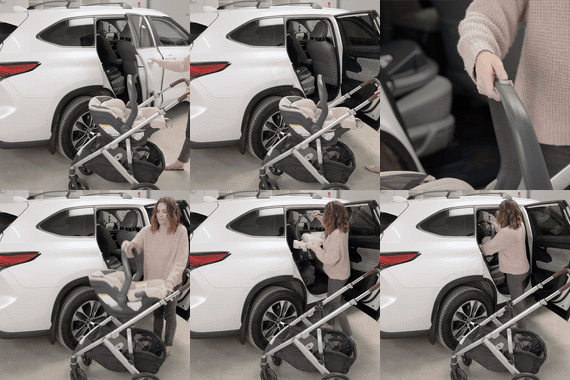
- lifting a folded stroller into a vehicle;
- carrying it through a station, terminal, hotel, or rental property;
- climbing stairs without reliable elevator access;
- making room for the stroller beside luggage or other family gear.
Now mark the everyday load events:
- a grocery stop on foot;
- a daycare run with an extra bag or seasonal layers;
- a long outing where the basket replaces a separate carry bag;
- a neighbourhood day when the stroller stays open for most of the trip.
If departure events clearly dominate, Minu V3's lower published weight, compact fold, and carry strap solve a recurring task. If load events dominate, Kona's 30 lb basket limit and reversible seat are more likely to matter every week. If the counts are close, continue to the two tests below rather than guessing from product labels.
Test 1: carry the difference honestly
Published weights are 22 lb for Kona and 16.7 lb for Minu V3. That matters most when the entire folded stroller is in your hands. It matters less while the stroller is rolling and the bigger frustration is finding space for a diaper bag, groceries, coats, and snacks.
Rehearse the carry at home with an object that is safe and comfortable for you to lift. Walk the real path from storage to vehicle or from lobby to front door. Include the turn, door, or stair landing that usually causes trouble. Do not judge only by a straight lift from floor to waist.
Choose Minu V3 when the carry path itself is the repeated obstacle. Choose Kona when you can comfortably manage the higher stroller weight and would rather have Kona's 30-lb basket limit than Minu V3's 20-lb limit for the open-stroller part of the day.
Test 2: build a real cargo load
Put a normal outing's gear on the floor. Include seasonal items, because a Vancouver rain layer or an Ottawa winter blanket can change the load more than a tidy summer packing list suggests. Weigh the items if you are close to a basket limit, but also notice bulk. A light puffer jacket may consume more space than a heavier compact item.
The official limits are 30 lb for Kona and 20 lb for Minu V3. Stay within the applicable manufacturer limit and keep access to the stroller's controls clear. The useful question is not whether you can fill either basket for a demonstration. It is how often your normal load would make the smaller limit or travel-focused package feel restrictive.
If you routinely need the extra published capacity, Kona has the stronger everyday case. If your load fits comfortably within the Minu V3 limit and portability remains the main constraint, Minu V3 keeps its advantage.
Travel changes the fold question
UPPAbaby describes the Minu V3 fold as overhead-friendly and says it is IATA compatible. Treat that as a design characteristic, not a promise that every airline, aircraft, fare, or crew will accept it in the cabin. Check the operating carrier's current baggage rules before each trip and be prepared to check the stroller before boarding when required.
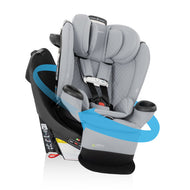
Kona's fold solves a different interruption: it folds one-handed with the seat attached whether the seat is parent-facing or forward-facing. That can reduce seat-repositioning steps during everyday vehicle or home transitions. It is not presented as an overhead travel stroller.
If flights are occasional but car loading is frequent, the better fold is the one that removes your repeated step. If flights and multi-modal trips are routine, Minu V3's carrying and folded-travel design deserves more weight in the decision.
From-birth planning: compare the setup, not the slogan
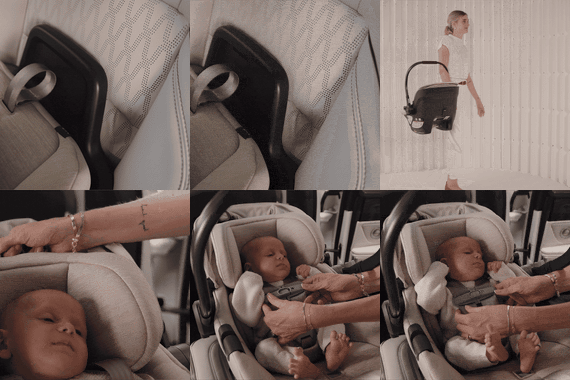
Both product pages describe from-birth options, but the routes differ. Kona publishes near-flat positioning and direct, adapter-free attachment for UPPAbaby infant car seats and the Bassinet. Minu V3 offers an in-seat carriage mode and uses adapters for the compatible infant car-seat route.
List the exact pieces you expect to use during the newborn stage. Then verify the current instructions and compatibility for those exact pieces before use. A direct attachment may reduce parts to track; an integrated carriage mode may suit a family trying to keep a travel setup compact. This comparison is about setup choice, not advice on which configuration is appropriate for an individual child.
Which stroller fits five common routines?
- Mostly walking, errands, and daycare: Kona's larger published basket and reversible seat are likely to be more useful than choosing the lower published stroller weight.
- Frequent flights or train trips: Minu V3 has the clearer travel-first brief. Confirm carrier rules for every trip.
- Third-floor walk-up: Minu V3 deserves the first look because the carry repeats at home. Rehearse the full stair route before deciding.
- Small vehicle, light packing: Minu V3's compact folded design may control the choice. Check the actual vehicle space with your usual cargo.
- One stroller for mixed city life: Kona is the stronger starting point when everyday capacity and seat direction matter more than cabin-oriented travel. Use our Kona only-stroller stress test to check the exceptions.
The trade-off each choice accepts
Choose Kona and you accept carrying a 22-lb stroller rather than the 16.7-lb Minu V3, plus a fold that is not positioned as an overhead travel solution. In return, you get a reversible seat, a 30 lb basket limit, and direct adapter-free UPPAbaby infant-seat and Bassinet attachment in a 22 lb stroller.
Choose Minu V3 and you accept a 20 lb basket limit and an adapter-based infant-car-seat route. In return, you get the lower 16.7 lb published weight, a carry strap, and a compact fold built around frequent travel transitions.
If your shortlist still includes a more substantial everyday model, the existing Cruz V3 versus Minu V3 guide separates full-size and travel-first priorities. When you are ready to compare the current range, browse the UPPAbaby collection at baby enRoute or review the Minu V3 product page.
Let departure frequency break the tie
Pick Kona when the stroller's main job is carrying a child and a real everyday load through city routines, with occasional lifting. Pick Minu V3 when carrying, compact storage, and departure transitions recur often enough that travel convenience must control the purchase.
When the answer is still tied, count the next month's departure events and load events. The category with more unavoidable repetitions is the one your stroller should solve.