In this article
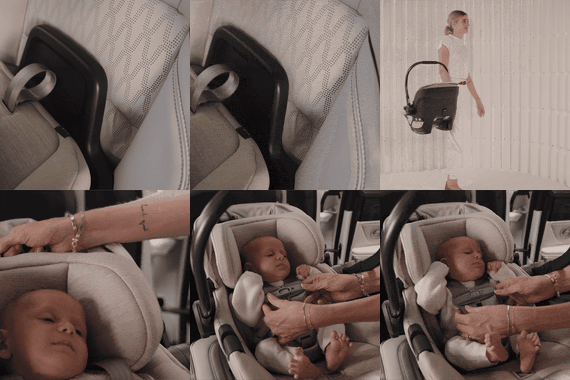
Choose the Nuna PIPA when a lighter carrier and a supported connection within a Nuna stroller system matter most. Choose the Clek Liing when having its published 16.9-inch carrier width to test, a multi-position base, or one of Clek's named third-party stroller-adapter paths better matches your plan. Both are current Canadian rear-facing infant seats rated from 4 to 35 lb. The PIPA manual requires height less than 81 cm (32 in.) and at least 25 mm (1 in.) of head clearance below the carrier top; Clek lists Liing at up to 32 in. Those similar numbers do not make the seats interchangeable. The useful decision is about the trip you repeat: carrying, installing, and moving between car and stroller.
Choose the vehicle route before the brand
Start by writing down where the seat will actually go. A family using one vehicle and one stroller has a different problem from a family sharing two cars, using taxis, or trying to preserve space beside another restraint. Transport Canada says to use the child limits on the manufacturer's label and keep a child rear-facing until the seat's stated height or weight limit is reached. Provincial and territorial rules can add requirements, so the correct stage is a threshold, not a race to the next seat.
For either model, confirm the Canadian National Safety Mark and current labels on the exact seat you receive. Do not treat a compliance result, marketing phrase, or cross-border review as a ranking of protection. Transport Canada explains that compliance testing is pass/fail and is not designed to rate one compliant seat above another.
The Canadian comparison board
| Decision point | Nuna PIPA | Clek Liing |
|---|---|---|
| Current Canadian scope | CF03507 family | Current Canadian Liing |
| Rear-facing child limits | 4-35 lb; less than 81 cm (32 in); top of head at least 25 mm (1 in) below carrier top | 4-35 lb; up to 32 in |
| Published carrier weight | 7.9 lb | 9 lb with newborn insert removed |
| Published carrier dimensions | Nuna Canada's product page does not publish them | 16.9 in W x 27.7 in D x 26.8 in H |
| Included base | True lock base with rigid UAS | Load-leg base; rigid UAS or vehicle-belt installation |
| Base-free route | Carrier-only vehicle-belt route in the Canadian manual | European vehicle-belt path |
| Stroller path | Compatible with all Nuna strollers | Approved adapters named for selected Baby Jogger, Babyzen, Bugaboo, Bumbleride, Silver Cross, Stokke, Thule, and UPPAbaby strollers |
The PIPA's published carrier is 1.1 lb lighter. That is a real specification difference, but it is not the combined weight of the seat, baby, blankets, and anything hanging from the handle. Treat it as one line in the decision, then rehearse the full lift you expect to make.
Route 1: one car, repeated base installation
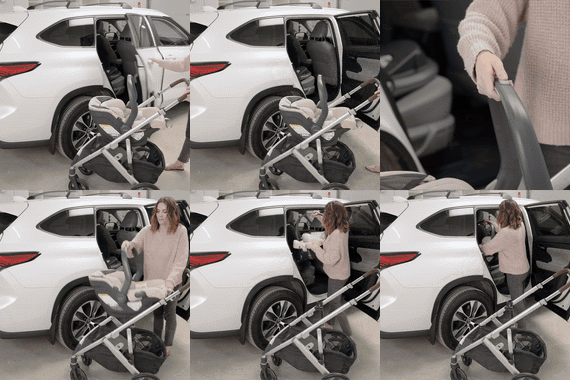
If most trips begin in one vehicle, compare the bases rather than focusing only on carrier weight. The PIPA's included True lock base uses rigid UAS. The Liing base can be installed with rigid UAS or the vehicle belt, includes a load leg, and provides multiple recline positions. The better base is the one that obtains an allowed, secure installation in your exact seating position while following the selected seat's Canadian manual and the vehicle owner's manual.
The Liing can win this route when its base geometry, belt option, or recline range solves a documented fit problem in the intended vehicle. The PIPA can win when a straightforward rigid-UAS base and a supported Nuna stroller path keep the family's repeated transfers simpler. Neither conclusion can be made from a product-page dimension alone.
Route 2: taxis, travel, or a second car
Both seats provide a Canadian base-free vehicle-belt path, so neither should be described as base-required. The details still differ, and a caregiver needs to learn the exact belt routing for the chosen carrier before relying on it under time pressure. Practise with the Canadian manual in a stationary vehicle. Before relying on the belt path for a trip, confirm each step against the selected seat's Canadian manual and the vehicle owner's manual.
For a family that routinely leaves the base at home, the Liing's named European belt path and broader list of approved third-party stroller-adapter brands may be the stronger travel system. For a family already using a Nuna stroller, the PIPA avoids an adapter compatibility decision. Do not infer that an unlisted adapter is acceptable merely because the carrier appears to click into place.
The paper-space check
Clek publishes a 16.9 in carrier width and a 13.2 in base width for the Liing. Those figures make it a credible candidate for a width-constrained seating plan, but they do not guarantee that another restraint or passenger will fit beside it. The vehicle's contours, buckle access, door clearance, front-seat position, and the neighbouring restraint all matter.
Nuna Canada does not publish PIPA carrier dimensions on the current product page. That is an unresolved measurement, not permission to borrow a United States specification or declare one seat more compact. Bring the intended vehicle, its owner's manual, the Canadian manual for each seat being tested, and any neighbouring restraint to an authorized retailer. Check the exact seating position with the front seat adjusted for its real occupant. If a three-across plan is involved, all three installed restraints must independently meet their instructions and leave usable belt or buckle access.
Stroller compatibility checkpoint
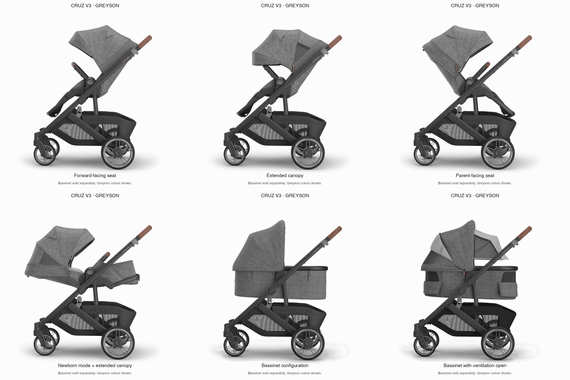
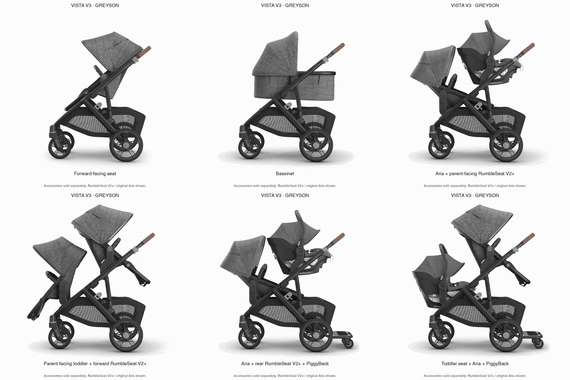
The PIPA is the clearer choice inside a Nuna stroller system because Nuna Canada states compatibility with all Nuna strollers. The Liing is the more flexible published candidate when the household already owns one of Clek's named partner brands and the correct approved adapter exists for the exact stroller model.
Before buying, record the stroller model, model year, adapter part, and any restrictions in the current instructions from both the selected carrier manufacturer and the stroller manufacturer. "Maxi-Cosi style" is not a universal approval. A successful click does not establish an unlisted stroller adapter, and each carrier's vehicle installation still follows that exact model's Canadian instructions.
A four-question decision card
- Which stroller is already owned? A Nuna stroller gives PIPA a first-party supported path; a specifically approved third-party adapter may favour Liing.
- How often is the carrier lifted? PIPA's published 7.9 lb carrier has a 1.1 lb advantage over Liing's published 9 lb figure.
- Is width the binding constraint? Liing supplies usable published width data; PIPA needs a physical fit check because the Canadian page leaves that dimension unstated.
- Which installation will be repeated? Compare the allowed base and base-free routes in the exact vehicle, not just the connector name.
Include the second-vehicle cost
If two caregivers exchange pickup duties, decide whether the carrier will travel with the baby while a base stays in each vehicle, or whether one caregiver will use the approved carrier-only belt route. That choice affects cost, storage, and training. Price any additional base only after confirming that it is the current Canadian base approved for the exact seat generation.
A second base does not remove the need to inspect both installations. Record the vehicle seating position, allowed method, recline setting, and any lower-anchor or belt restrictions for each car. If a substitute caregiver will use the belt route, that person needs a calm practice installation before the first time-sensitive trip.
Create a caregiver handoff card
Keep a short card with the seat rather than relying on a verbal explanation. It should identify the exact Canadian model, where the manual is stored, the child's current fit settings, the approved installation route for each regular vehicle, and the stop rules that end use. It should not replace the selected seat's Canadian manual or the vehicle owner's manual for any regular vehicle.
At each handoff, follow the selected seat's current Canadian instructions for installation and fit, including any model-specific harness or handle-position requirement. Remove unapproved padding and accessories from the plan. A system is only as usable as the least-familiar caregiver's correct repeatable routine.
Make the final choice only after the whole route has an answer: exact Canadian seat, child fit, primary and secondary vehicle installation, stroller connection, and next-seat timing. If one line remains unknown, resolve it through the exact manuals, manufacturer support or a clearly available qualified in-vehicle fit resource rather than letting a familiar brand name answer it.
Bottom line: PIPA is the stronger match for a Nuna-stroller household that values the lighter published carrier. Liing earns the decision when its documented width, base adjustments, or named adapter ecosystem solves a specific problem. The final choice should follow an in-vehicle installation and stroller-compatibility check, not a claim that either seat is universally better.
If PIPA remains on the shortlist, verify its current Canadian package on the Nuna PIPA product page. If Liing remains, use the Clek Liing first-months guide to continue the vehicle-and-newborn check.