In this article
Choose Nuna DEMI next when you want two stroller seats with the same published 50-lb limit, a rider board included in the current stroller package and a compact stacked approach. Choose UPPAbaby VISTA V3 when its broader documented two-child combinations, 30-lb basket and option to add a PiggyBack for a third rider better match the family plan. The children's ages and who sits where can reverse the decision.
Do not buy “future-proof”; draw the future
A single-to-double stroller is only useful when its allowed configuration matches the children at the same time. Write the likely ages and weights at three points: the new baby's arrival, one year later and two years later. Then assign each child to a seat, bassinet, infant car seat or board. This exposes mismatches that a long configuration count can hide.
The comparison below uses the current Canadian Nuna DEMI next with rider board, the separate DEMI next sibling seat and bassinet, and the current UPPAbaby VISTA V3 ecosystem. Exact car-seat and adapter combinations still require the current manuals.
Stage one: one baby
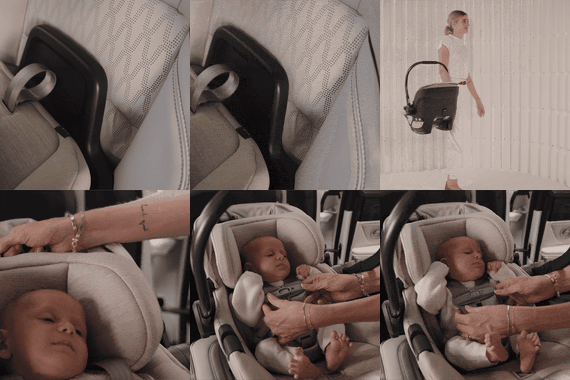
The DEMI next main seat is published for newborn use up to 50 lb. Nuna also offers a separate DEMI next bassinet, rated from birth to 20 lb and up to 27 inches, and infant-car-seat configurations. The stroller package currently listed by baby enRoute includes the rider board, even if it is not yet needed.
VISTA V3 includes its main toddler seat. UPPAbaby publishes that seat for three months to 50 lb without accessories, or from birth with the Infant SnugSeat or Bassinet accessory. This is important: neither ecosystem should be priced only as a bare chassis if the newborn plan requires a bassinet, infant insert or car-seat connection.
For one baby, the choice is less about capacity than about which newborn surface and car-seat system you intend to use. If a second child is only hypothetical, compare how each stroller works in single mode before paying for future accessories.
Stage two: baby plus toddler
Nuna's sibling seat is designed as a duplicate of the DEMI next main seat. It connects in upper or lower positions without a separate adapter, faces forward or rearward and is published from birth to 50 lb and up to 45 inches. Official Nuna media also shows a sibling seat below an infant car seat and a bassinet above a sibling seat.
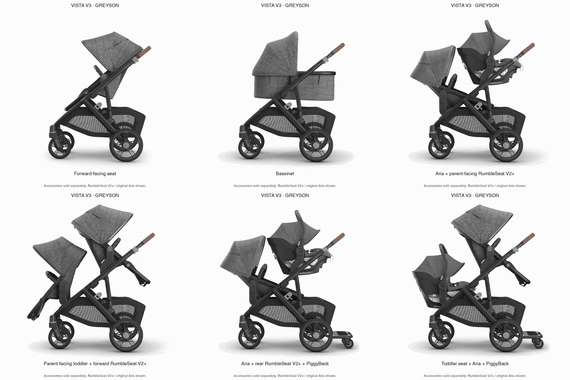
VISTA V3 can combine its Toddler Seat with a RumbleSeat V3, bassinet or compatible infant car seat using the required accessories and adapters. UPPAbaby states that VISTA V3 can accommodate up to three children with added accessories and adapters. The main seat remains the higher-capacity seat; consult the current RumbleSeat instructions for that accessory's exact child limits and allowed positions rather than assuming it duplicates the main seat.
This creates a clear fork. DEMI next is attractive when the older and younger child may both need a 50-lb stroller seat over the ownership period. VISTA V3 is attractive when its configuration documentation and accessory ecosystem fit the actual age gap, especially if the lighter or younger child can use the lower accessory seat as directed.
Stage three: an older child still wants occasional help

The current DEMI next stroller package includes a rider board. Nuna positions the standing child between the caregiver's arms, and the board flips into the basket when not in use. Check the current instructions before planning where the sibling seat will go. Verify the exact board-and-seat combination in the current instructions rather than assuming every arrangement is permitted.
VISTA V3 can add the PiggyBack ride-along board and UPPAbaby describes a three-child arrangement using Toddler Seat, RumbleSeat and PiggyBack. This is the VISTA's defined win: if three riders, including one standing child, are a realistic recurring need, the manufacturer documents that route directly.
A board is not a replacement for a seat when the older child regularly sleeps or cannot reliably stand for the route. Treat it as an occasional mobility tool and follow the board's current usage instructions.
Space, weight and storage change in double mode
| Base stroller fact | DEMI next | VISTA V3 |
|---|---|---|
| Published base weight | 26 lb without insert, canopy and armbar | 27.6 lb frame and seat |
| Open width | 24 in | 25.7 in |
| Folded | 23.5 x 24 x 35 in | 16.3 x 25.7 x 33.8 in with seat |
| Basket limit | 22 lb | 30 lb |
| Main seat limit | 50 lb | 50 lb |
These are base facts, not equipped-double weights. Add the sibling/RumbleSeat, adapters, bassinets and board you will actually carry. VISTA V3 has the higher published basket limit. DEMI next is narrower on the published open widths. In either stacked or tandem system, a lower passenger can reduce basket access, so inspect the intended configuration rather than the empty stroller.
The complete-parts worksheet
Create one row for each stage and mark each item as included, already owned or additional:
- base stroller and main seat;
- newborn surface: seat setup, bassinet or infant car seat;
- second stroller seat and its required adapters;
- infant-car-seat adapters for the exact carrier;
- rider board;
- rain covers or other stage-specific essentials.
Do not assign a total from old bundles or US pages. Canadian contents and accessory generations can differ. The worksheet's purpose is to reveal how many transitions and stored parts each route creates, not to manufacture a permanent price winner.
Passenger experience: symmetric questions for both
Ask the same questions of each configuration. Can both children face the desired direction? Is the younger child in the allowed position? Can the caregiver see and reach each passenger? Does the older child's leg space remain workable? Can the basket opening still accept the normal bag? Does the stroller fold with the configured accessories, or must parts be removed?
Published suspension names do not answer those household questions. DEMI next specifies Custom Dual Suspension and foam-filled tires; VISTA V3 specifies FlexRide suspension and never-flat tires. Those facts describe the systems, but they do not establish a route-specific ride winner without a controlled test.
Twins require a separate branch
For twins, do not reuse the baby-plus-toddler assumptions. Both children may need the same newborn type at the same time, followed by two seats with similar limits. Nuna's official materials show two DEMI next bassinets in stacked twin mode, while UPPAbaby documents two-bassinet and two-infant-seat VISTA configurations. Build the exact twin package and verify every adapter before comparing cost or fold.
Then repeat the configuration at the point when both children move to stroller seats. Equal limits can favour DEMI next; VISTA's allowed seat roles may still work for the expected weights. The relevant comparison is the first stage at which one child no longer fits the assigned accessory, not the newborn photograph.
Exit costs and unused parts
A growing system can leave a bassinet, adapter or second seat stored for long periods. Record where each part will live and whether the base stroller remains pleasant in single mode after the older child stops riding. If the extra equipment has no storage location, a lighter single stroller plus a later double may be the more honest plan.
Also decide who will convert the stroller and how often. A configuration used daily deserves more weight than an arrangement kept only for an annual trip. Practise that conversion before committing to the system.
Assign every rider, then make the call
Choose DEMI next for two seated children when equal 50-lb published seat limits, a 24-inch base width and the included rider board are decisive. Its stacked configurations can suit families who want to keep length controlled and are comfortable with a lower passenger position.
Choose VISTA V3 when the 30-lb basket, documented two-bassinet/two-infant-seat combinations or a three-rider PiggyBack pathway solves a real stage. It also wins when the intended age gap fits the allowed main-seat and RumbleSeat roles without compromise.
Choose neither yet if the second child is not planned closely enough to assign passengers. Buy for the current routine or delay the extra seat. A stroller cannot be future-proof when the future passenger map is unknown.
Review the current Nuna collection, the exact DEMI next product and accessory pages, and UPPAbaby Canada's current VISTA materials before purchase. Choose only after every stage that matters to your family has an allowed passenger assignment, a required-parts list and a storage plan.