In this article
Verify the physical seat, not only the listing. For Canadian use, check the National Safety Mark, exact model and manufacture date, matching Canadian instructions, required parts, known history and applicable notices. Compare country-specific specifications and accessory pairings separately. If one identity element is missing, stop and resolve it with the manufacturer before use.
1. Find the National Safety Mark
Transport Canada says it is illegal to import, sell or use a child car seat in Canada without the National Safety Mark, except for a narrow custom-restraint exception. The mark is proof that the manufacturer or importer certified the seat to applicable Canadian standards. Compare the physical mark with Transport Canada's example. A Canadian retailer URL, bilingual box or maple-leaf graphic elsewhere is not a substitute.
2. Record model name, model number and manufacture date
Photograph the permanent labels and transcribe each field. Similar product names can cover different generations, colours and country versions. The model number is the key for manuals, notices, replacement parts and manufacturer support. The manufacture date is not the purchase date and helps establish notice eligibility and manufacturer useful-life information. If a label is damaged, do not reconstruct it from an online photo.
3. Match the current Canadian manual
Search Nuna Canada's product manual index using the complete model or SKU. Confirm the manual identifies Canadian contact information and the same restraint. Transport Canada advises contacting the manufacturer for the manual for that model. A U.S. manual with the same product name can contain different limits, labels or installation directions; do not blend the two.
4. Confirm required parts are present, then stop
Use the matched Canadian model manual to identify every required part and attachment. Transport Canada says not to use a seat until missing or broken parts are replaced. A complete seat does not prove that a separately purchased base, adapter or accessory is approved; require an exact model-level manufacturer compatibility statement for that pairing.
5. Check condition and known history
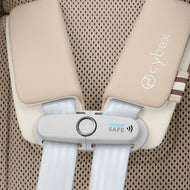
Operate the buckle, chest clip and harness adjustment as Transport Canada describes. Look for fraying, tears, discolouration, cracks or missing labels. For a used seat, establish collision history and confirm the manufacturer's expiry or useful-life information. A clean cover and intact box cannot prove the internal history. When the history cannot be established, the uncertainty belongs in the use decision.
6. Search current alerts and notices
Transport Canada's child-seat safety alerts and notices can be sorted by manufacturer and show the affected model population, issue and remedy. Match every field on the physical label. A notice for a similar Nuna model or date window is not automatically applicable. Save any remedy confirmation with the manual and tell every caregiver who uses the seat.
A Canadian listing check before checkout
The current Nuna collection at baby enRoute shows the brand range, while exact product pages such as the Nuna PIPA listing identify a listed Canadian model and its shopping configuration. Before buying, preserve the product title and variant, then verify the physical seat on receipt. Do not treat a store URL as the final compliance inspection. If the delivered model or label differs from the order, stop before installation.
The stop card
Stop if the National Safety Mark is absent, the seat cannot be identified, its condition or history is unknown, or an applicable remedy is incomplete, and check missing parts plus harness or buckle function against the exact model manual. When identity, instructions, condition, or notice applicability cannot be confirmed, seek model-specific guidance from Nuna Canada or Transport Canada rather than borrowing a rule from another seat.
Run the identity card on delivery day
Before discarding packaging, photograph the order label, physical National Safety Mark, model and manufacture labels, manual cover and all included components. Compare those with the ordered Canadian product page. This is the moment when a wrong variant, country version or incomplete shipment is easiest to resolve. The photos should document identity, not replace future inspection; labels and manuals remain with the physical seat.
Second-hand seats need a longer stop list
In addition to the mark, model, manual and parts, establish the original purchase context, expiry or useful-life information, collision history, storage history and whether any recall or notice remedy was completed. A friendly seller and clean fabric do not answer those questions. If the history is incomplete or the seat cannot be matched to manufacturer guidance, do not use price savings to erase the uncertainty. A new replacement decision may be the more responsible outcome.
Keep country boundaries intact online
Search results often mix Canadian and U.S. pages with nearly identical product names. Add 'Canada' to the query, inspect the market and confirm the physical model number appears in the Canadian manual directory. Do not transfer a U.S. seat's labels, limits or instructions to Canadian use. Resolve any country-specific difference from current Canadian manufacturer guidance for the exact model.
Verification is not installation approval
Recording the National Safety Mark, full model, and matched Canadian manual identifies the seat; it does not prove correct installation in a particular vehicle. Installation still follows both the child-restraint manual and the vehicle manual, including permitted seating positions and anchorage information. Recheck after the seat moves between vehicles or changes mode. Keep the two tasks separate so a valid label never becomes false confidence about fit or installation.
Create a household readback
Ask a second caregiver to find the National Safety Mark, read the model number, open the correct manual and locate the alerts index without hints. Then have that person identify each included component against the manual. Any point of confusion reveals a documentation or storage problem before travel. This readback is not a professional inspection; it tests whether the household can retrieve the authoritative information when the primary caregiver is unavailable.
What to keep with the seat
Keep the Canadian manual, proof of purchase, registration record, label photographs, replacement-part records and completed notice remedies together. Do not write over labels or detach them for filing. When the seat changes vehicles or caregivers, move the record with it and reread the relevant installation section. Good documentation cannot make a damaged seat usable, but it prevents identity and instruction gaps from being rediscovered under time pressure. Review the folder after any manufacturer communication so an old answer does not sit beside a newer instruction without explanation.