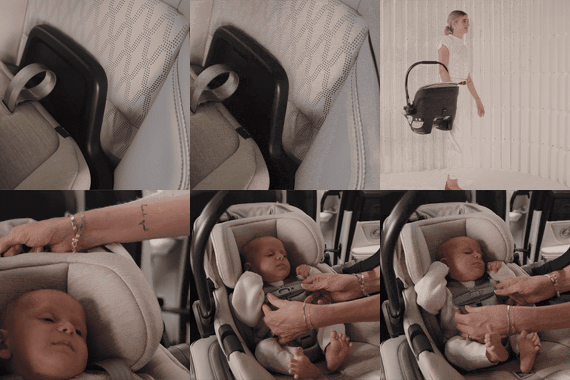
In this article
Vista V3 accessories are easiest to choose when you rank them by the routine they unlock rather than by how many add-ons exist. The useful way to compare Vista V3 and Rumble Seat V3 is not by asking which one is more popular. Ask which one removes friction from the routine you actually repeat every week.
Quick answer: Buy the accessory that solves the next real stage first: Bassinet V3 for newborn walks, Rumble Seat V3 for a second seated child, PiggyBack for an older child who mostly walks, and organizers or weather pieces only when the routine demands them.

Start with the job this purchase has to do
A good gear choice should make one recurring task easier: school drop-off, condo storage, a grandparent pickup, a newborn transfer, a second-child errand, or a weekend walk. If the task is occasional, the simplest setup often wins. If the task is daily, comfort, setup speed, and long-stage usefulness become more important than the lowest starting price.
Before buying, write down who will use the gear, where it will be stored, which vehicle or hallway it must fit, and whether the baby will usually be asleep, awake, carried, or riding. That list usually makes the decision clearer than a feature-by-feature comparison.
Decision table: which option fits which family?
| Choose this path | Best fit | Watch-out |
|---|---|---|
| Vista V3 | families buying the core stroller first and delaying add-ons until the baby’s routine is clear | Make sure the setup solves your daily use case, not only the first few weeks. |
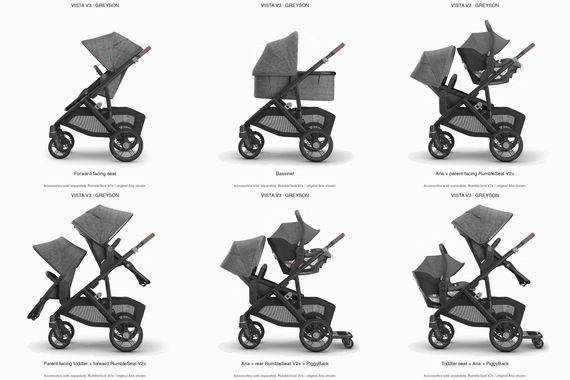
| Rumble Seat V3 | families who already know a second child, newborn bassinet, or standing-board use case is coming soon | Check storage, compatibility, and whether a simpler add-on would be enough. |
When Vista V3 is the smarter first buy
Vista V3 is the stronger first choice when the main pain point is immediate and repeated. If it saves a caregiver from awkward transfers, reduces the number of pieces being moved, or creates a setup that another adult can use confidently, the value shows up quickly.
This is also the better direction when you want fewer decision points during busy days. Parents often overbuy when they try to solve every possible future scenario at once. A more useful strategy is to buy the item that handles the first daily routine well, then add the second piece only when the need becomes predictable.

When Rumble Seat V3 is worth buying instead
Rumble Seat V3 earns the purchase when the family has already outgrown the simpler path or when two children, two vehicles, or two locations create a real second routine. In that case, the question becomes whether the added capability will be used several times a week, not whether it looks convenient on a registry.
Think about stairs, trunk space, hallway width, winter gear, caregiver height, and whether the item will stay installed or be moved. A product that feels perfect in a large detached home may feel different in a condo elevator or a compact vehicle.
How to choose without overbuying
A practical buying sequence is usually better than a complete registry-style bundle. Start with the piece that solves the next ninety days, then add the second piece when the next routine is certain. This protects the budget and keeps the home from filling with gear that is technically compatible but rarely used.
The exception is when a predictable second routine is already locked in: two regular vehicles, a nanny or grandparent pickup, a newborn plus toddler school run, a small trunk that requires a compact fold, or a standing older sibling who cannot reliably walk the whole route. In those cases, buying the right second piece early can be less frustrating than trying to stretch the first setup too far.
Canadian routines that change the answer
Canadian families often need to think about more than the product category. Winter layers, wet sidewalks, condo elevators, narrow mudrooms, underground parking, and grandparents who help with pickup can all change the better choice. A compact option may win in an apartment even if a larger setup looks more comfortable on paper. A longer-stage option may win in a second vehicle even if the newborn carrier still feels convenient in the main car.
If the item will be used in snow, slush, or on longer outdoor walks, prioritize stability, approved setup, and caregiver comfort. If the item will be used for quick indoor errands or travel, prioritize lift weight, fold size, and how easily another adult can repeat the setup without a long explanation.
What to check before you commit
- Frequency: Will this be used daily, weekly, or only for rare trips?
- Storage: Where will it live when it is not in use?
- Caregiver fit: Can every adult who uses it lift, fold, install, or adjust it confidently?
- Child stage: Does it match the child now, and does it still make sense in the next stage?
- Compatibility: Are the required adapters or accessories part of the plan?
Buy in stages instead of building a full accessory wall
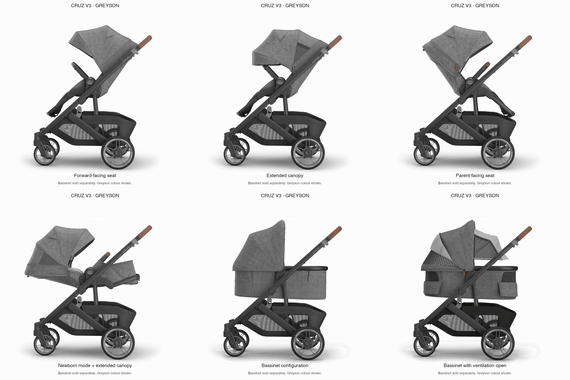
Vista V3 can support many family routines, but buying every possible accessory at once often creates clutter. A staged plan is cleaner: newborn comfort first, then second-child capacity, then weather or storage pieces once you know your walking pattern.
Accessory priority ladder
Rank Vista V3 accessories by timing. Newborn pieces matter first only if the baby will use the stroller from birth. Second-child pieces matter when another child will ride in the next few months. Weather, cup, snack, and organizer pieces should follow the real walking routine instead of being treated as automatic add-ons.
A clean accessory plan also protects storage. Families often end up with pieces that are compatible but not useful for their home, car, or child stage. If an accessory does not solve a weekly task, it can usually wait until the need is clearer.
Final pre-purchase checklist
Before checking out, confirm the exact model name, color or fashion, required adapter, and the child stage the setup is meant to support. If two adults will use the gear, both should understand the adjustment or installation steps, not just the person doing the research. For gifts or registry purchases, choose the item that removes the most likely first-month friction rather than the item with the longest feature list.
If the decision still feels close, choose the option with the clearest weekly job and delay the optional add-on. Baby gear works best when each piece has a defined role: one seat for one vehicle, one stroller setup for one routine, one accessory that changes a real outing. That keeps the purchase easier to use and easier to explain to grandparents, caregivers, or anyone helping with pickup.
Safety and setup come before convenience
Convenience should never replace correct use. For car-seat decisions, follow the car-seat manual, the vehicle manual, and Canadian child-passenger guidance. For stroller or bassinet decisions, use only approved configurations, check weight and stage limits, and avoid improvised placements or unapproved accessories.
Bottom line
Choose Vista V3 if it solves the first routine you will repeat most often. Choose Rumble Seat V3 if the second routine is already clear enough that dedicated capability will be used every week. The best purchase is the one that removes a real friction point without creating extra storage, installation, or compatibility work.
FAQ: buyer questions we hear most often
Which Vista V3 accessory should I buy first?
Start with the accessory that changes your first routine: newborn bassinet, second seat, standing board, or weather protection. Do not buy every accessory before the routine is real.
Do I need Rumble Seat V3 right away?
Only if a second seated child will use the stroller immediately or very soon. Otherwise, wait until the second-child routine is predictable.
Is PiggyBack better than a second seat?
PiggyBack fits an older child who can stand safely for short trips. A second seat is better when the child still needs to sit for longer outings.
What accessories can wait?
Nice-to-have organizers, snack pieces, and some weather extras can usually wait until you know where the stroller is being used most often.
Related baby enRoute reading
- UPPAbaby Minu V2 vs. Minu V3: The Ultimate Comparison & Guide | baby enRoute Canada
- UPPAbaby Vista V3: A Practical Buying Guide (With Key Specs)
- UPPAbaby Minu V3 vs. V2: What's New and Why It Matters for Your Family (Coming Soon to baby enRoute!)
Product details can change: Check linked product pages for current colours, pricing, availability, and compatibility. Follow manufacturer instructions and official safety guidance when those apply.