In this article
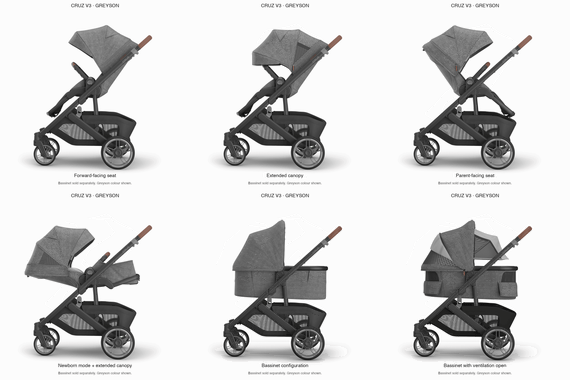
As a curated retailer, we’re not here to tell every family the same “right answer.” We’re here to make the trade-offs clear—so your choice fits your daily routine, not just a checklist. This Vista V3 guide focuses on how people actually use a full-size stroller: storage, folding, carry needs, and how plans change over time.
What are you trying to solve: daily handling, or future flexibility?
Before comparing anything, name the one or two friction points you want your stroller to reduce:
- Frequent folding and lifting (trunk, stairs, narrow hallway)
- Longer outings where carry capacity changes your mood
- Season-to-season comfort needs
- Keeping options open as family needs evolve
If you can name the friction, the “specs that matter” becomes much easier to spot.
What specs are actually worth looking at for Vista V3?
Specs should support a decision—not overwhelm it. For Vista V3, the most decision-relevant official numbers tend to be:
- Max child limit (Toddler Seat): up to 50 lbs; max 40" child height
- Stroller weight planning: 27.6 lbs (frame + seat); frame 19.8 lbs; seat 7.8 lbs
- Fold/storage planning: two folded setups (with seat attached vs seat removed), so you can match the “shape” to your space
- Basket planning: extra-large basket with a 30 lb. weight limit
Retailer Insight: Most regret isn’t “I chose the wrong stroller.” It’s “I didn’t choose for my tightest constraint.” The numbers above map directly to trunk space, daily lifting, and how much you carry.
Will it fit your storage space (and your patience)?
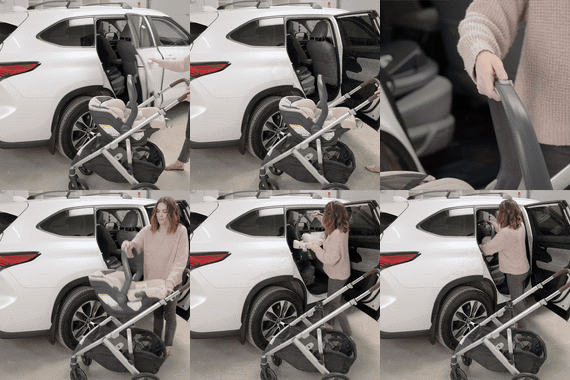
For many families, the stroller doesn’t disappoint on the sidewalk—it disappoints at the doorway. If you fold daily, think in repeated moments:
- Can you fold it without turning it into a multi-step ritual?
- Does it stand when folded (so you’re not hunting for a place to lean it)?
- Does your space prefer a tall fold, a flatter fold, or a compact footprint?
Vista V3’s “folded with seat attached vs removed” detail is especially useful if your trunk or entry storage is awkwardly shaped.
Is the “platform” approach right for you?
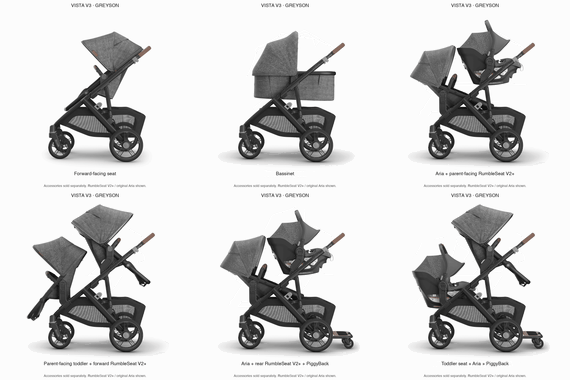
Vista V3 is often shortlisted by families who want a full-size stroller that can remain relevant as routines change. The trade-off is simple:
- Platform mindset: you can plan in phases and add compatible pieces later.
- Minimalist mindset: you might prefer a simpler setup that stays “one configuration” most of the time.
Neither is universally better—it depends on whether you value optionality or simplicity more in your own day-to-day.
How should you think about travel-system planning?
This is where misunderstandings happen. Treat these as two separate questions:
- Compatible: can the stroller work with your intended infant setup?
- Included: what comes in the box for this specific product listing?
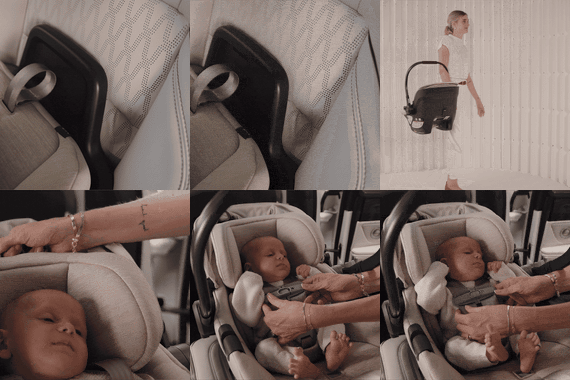
If you’re building your plan around an infant car seat, start by browsing category-level options first (as a planning step, not a verdict): Infant car seats (planning collection).
Where Vista V3 tends to make sense (and where it may not)
From what we observe in-store, Vista V3 tends to fit best when:
- You’ll carry real-life loads (and the basket limit matters in practice)
- You walk enough that comfort and ride feel affect your week, not just one outing
- You want future flexibility and prefer a phased setup approach
It may feel like “too much stroller” when you:
- Fold constantly into a very tight space and want the simplest possible routine
- Rarely carry extras and mainly do short, minimal outings
If you’re comparing categories: full-size vs lightweight strollers
If you’re still deciding between a full-size platform and a lighter travel-style approach, compare the categories directly—especially for storage and daily handling expectations:
Full-size strollers | Lightweight & travel strollers
Frequently asked questions
Q: What’s the fastest way to know if Vista V3 fits my routine?
A: Start with your tightest constraint (storage shape, daily lifting, or carry needs). Then confirm the official limits that map to those moments—especially max child limits, weight planning (frame vs seat), and whether your storage works better with the seat attached or removed.
Q: I want flexibility, but I don’t want complexity. How do I approach that?
A: Plan in phases. Decide what you need for the next few months first, then treat add-ons as intentional upgrades. This keeps optionality without turning every outing into a configuration decision.
Q: Is basket capacity really a deciding factor?
A: For many families, yes—because it changes how often you end up hanging bags, juggling extras, or cutting outings short. A clear basket limit is one of the few specs that tends to show up in daily life quickly.
Summary (no verdict—just clarity)
Vista V3 tends to fit families who want a full-size stroller that supports real carry needs, practical storage planning, and flexibility over time. The most reliable way to choose is to match it to your routine constraints—folding frequency, storage shape, lifting reality, and your plan for add-ons.
Related baby enRoute reading
- UPPAbaby Minu V2 vs. Minu V3: The Ultimate Comparison & Guide | baby enRoute Canada
- Stroller Accessories That Actually Get Used: A Practical Guide
- How to Choose a Full-Size Stroller: A Practical Guide for Canadian Families
Product details can change: Check linked product pages for current colours, pricing, availability, and compatibility. Follow manufacturer instructions and official safety guidance when those apply.