In this article
The Kona's 30 lb basket rating matters most when the stroller regularly carries the load that would otherwise move to your shoulders, hands, or a second trip. It matters less when most outings are short, car-based, and lightly packed. The way to decide is not to imagine a perfectly filled basket. It is to record what your household actually carries.
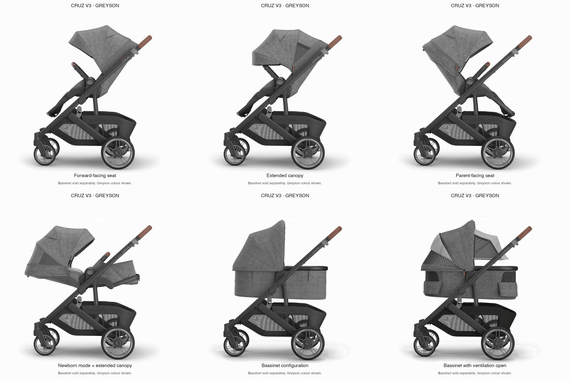
UPPAbaby currently publishes two useful but separate numbers for Kona: the stroller is listed at 22 lb, and the storage basket accommodates up to 30 lb of gear. The manufacturer's Kona page supports both figures. The basket rating is a weight limit, not a volume, grocery count, or promise that every bulky object will fit through the opening.
Empty stroller weight and cargo capacity solve different problems
An empty stroller weight describes part of the lifting and carrying task. Basket capacity describes how much rated load the stroller can carry while in use. One number does not cancel the other.
Consider two routines. A household that lifts the stroller into a car several times a day may feel every pound of stroller weight while rarely using the basket. A car-free household may lift the stroller less often but carry groceries, rain layers, a diaper bag, and library books over a longer route. In the second routine, usable basket capacity can change the outing more than a small difference in empty stroller weight.
Do not add the two published ratings and call the result a "carry weight." The current Kona page publishes a 22-lb stroller weight and a separate 30-lb basket limit; it does not publish a loaded-lifting limit. Do not assume a loaded basket can remain packed during the fold; the current page does not settle that point, so exclude loaded folding from your plan unless current Kona instructions explicitly permit it.
Build a seven-day cargo load ledger
For one representative week, weigh or estimate nothing from memory. Put each real item on a household scale where practical, or use the packaged weight printed on a product when it applies to the exact item. Record shape and access needs as carefully as weight.
| Outing and item | Actual weight | Shape or rigidity | Needed during walk? | Basket candidate? |
|---|---|---|---|---|
| Day 1: regular diaper bag | Measure packed bag | Soft, wide, tall, or structured | Often / once / no | Check opening and access |
| Day 2: grocery stop | Weigh the exact return load | Multiple bags, fragile, chilled, or rigid | At destination | Check containment and balance |
| Day 3: weather layers | Measure packed items | Compressible or bulky | Possibly | Reserve quick-access space |
| Day 4: books or parcels | Measure exact load | Dense, flat, or awkward | No | Check that weight stays low and contained |
| Weekend: long outing | Total each actual item | Mixed | Mixed | Test the full routine |
Add each outing separately. The relevant number is the heaviest normal basket load, not the sum of everything carried across the week. Note the outlier trip too, but do not buy around a once-a-year scenario if another transport plan would solve it.
Weight is only the first check
A load can remain below 30 lb and still be a poor basket match. Run four more checks:
- Opening: Can the largest rigid item pass into the basket without forcing fabric or controls?
- Containment: Can every item sit fully inside without straps or loose objects reaching the wheels?
- Access: Can you reach the diaper, rain cover, or snack you need without emptying the basket at the curb?
- Instructions: Does the placement follow the manufacturer's loading guidance for the exact stroller?
The current product page does not publish a litre volume or basket dimensions. Avoid converting 30 lb into a fixed number of grocery bags or backpacks. Bag size, package shape, and how the seat is positioned can all affect real access. Those are physical-fit questions for the stroller, not conclusions hidden inside a weight rating.
Use zones instead of one large pile
On paper, divide your normal load into three zones before trying the stroller:
- Dense and stable: items that can sit low and do not need frequent access.
- Quick access: one small area for the item you expect to reach during the walk.
- Shape-sensitive: food, fragile items, or anything that should not be crushed beneath another bag.
This exercise reveals whether capacity is usable for your mix. A high rating is valuable only if the basket opening and floor can organize the load without overfilling it. Leave room rather than treating the published maximum as a packing target.
Keep bags off the handlebar
Use the basket within its published limit instead of hanging purses or heavy bags from the handle; Health Canada warns that handle-hung bags may make a stroller tip. Health Canada advises against hanging purses or diaper bags from a stroller handlebar because the stroller can tip backwards and a child can become tangled in straps. The regulator also says to follow the manufacturer's instructions for accessories and extra items.
A generous basket does not authorize overloading or placing cargo anywhere convenient. Use only the approved basket and accessories, stay within current instructions, supervise the child, and engage the brake whenever stopped.
When the 30 lb rating should influence your shortlist
Give the basket meaningful weight in your decision when several of these statements are true:
- You walk to groceries, daycare, parks, or errands several times each week.
- Your typical load is dense enough that a low basket rating would be a real constraint.
- You want to avoid carrying a bag on your shoulder while pushing.
- Your route begins at home, so folded-stroller lifting is less frequent than loaded strolling.
- You expect the stroller to serve as the main cargo tool on long outings.
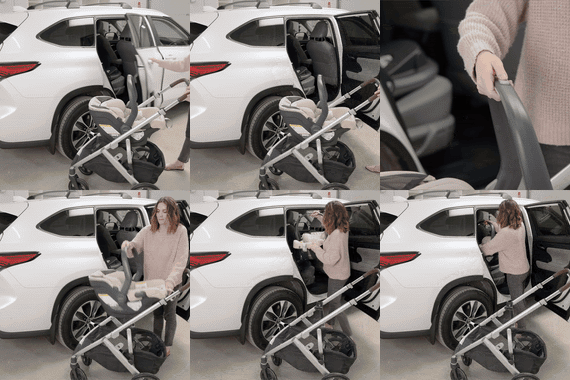
Give empty stroller weight more influence when the stroller is repeatedly carried up stairs, lifted into a high cargo area, or moved between vehicles while the basket is usually empty. Kona's 22 lb published weight may still appeal, but test the complete lift and fold rather than comparing a number in isolation.
Score the routine, not the specification
At the end of the week, give each outing one mark for every problem the basket would plausibly remove: a shoulder-carried bag, a second trip, a hand occupied while pushing, or an item left behind. Then mark every unresolved constraint: an object too rigid, access too awkward, a load near the limit, or missing Kona-specific instructions.
If the solved problems repeat and the constraints are manageable, basket capacity is a core feature for your household. If the ledger stays light and the main friction is lifting the stroller itself, do not let a large basket distract from the more important requirement.
The Kona specifications guide places the 22 lb stroller and 30 lb basket figures beside the rest of the currently published features. The Kona only-stroller guide helps test whether cargo is enough to support a broader one-stroller role.
Let the ledger decide
A 30 lb basket rating is meaningful, but it is not automatically more important than stroller weight. Use seven days of real cargo, the basket's eventual physical opening, and your loading routine to decide. The winning number is the one that removes the friction you actually repeat.
Browse the UPPAbaby collection to compare stroller options currently available from baby enRoute.