In this article
The fabric cover is usually the easy part: most go in the washing machine, on the setting printed on the care label. The harness straps and buckle are different. The manuals we checked that cover the harness say to clean it by hand with a cloth or sponge, UPPAbaby says never to submerge it, and Nuna says to rinse one seat's buckle with water only, no soap. Those are the parts that hold your child, so follow those rules closely. Here's what the manuals for seven seats say, the steps for a full clean, and the checks to do before the next ride.
Start with your seat's manual
Every seat's cleaning rules are in its manual, and they differ from brand to brand, even on washing temperature. If you've lost the manual, download it from the manufacturer's website using the model number on the seat's label. Make sure it's the Canadian version, since limits and instructions can differ.
What the manuals say
Here's how the care instructions on our product pages compare for some popular seats:
| Seat | Cover | Harness straps | Buckle and shell |
|---|---|---|---|
| Nuna RAVA | Machine wash cold, delicate, mild detergent. Air-dry | Can't be removed. Sponge with warm soapy water, air-dry | Wipe with a damp cloth |
| Nuna PIPA Urbn | Follow the care labels | Mild detergent, water and a soft cloth. Air-dry | Buckle: rinse with warm water only. No soap, solvents or lubricants |
| UPPAbaby Mesa V3 | Machine wash warm, gentle, mild detergent. Tumble dry low | Spot-clean only. Don't bleach or submerge | Follow the manual |
| Cybex Aton G Swivel | Machine wash separately, cold, delicate. Drip dry, no bleach or ironing | Follow the manual | Follow the manual |
| Maxi-Cosi Mico Luxe+ | Machine washable and dryer safe, per the sewn-in labels | Follow the manual | Follow the manual |
| Nuna AACE booster | Cold, mild detergent, delicate. Hang-dry in the shade. No bleach, dry-cleaning, ironing or twisting | No harness | Shell: mild detergent, cold water, soft cloth |
| Maxi-Cosi Tanza booster | Cold, gentle, no bleach. Tumble dry low 10 to 12 minutes | No harness | Wipe with warm soapy water. Don't immerse the booster |
The pattern: covers are usually machine-washable, but the temperature and drying vary. Straps get surface-cleaned, not soaked. And bleach, harsh chemicals and abrasive cleaners are out. Clek's Foonf and Oobr have zip-off covers, washed only as the care label directs. If you have a Nuna, our Nuna car seat cleaning checklist goes model by model.
Step by step: a full clean
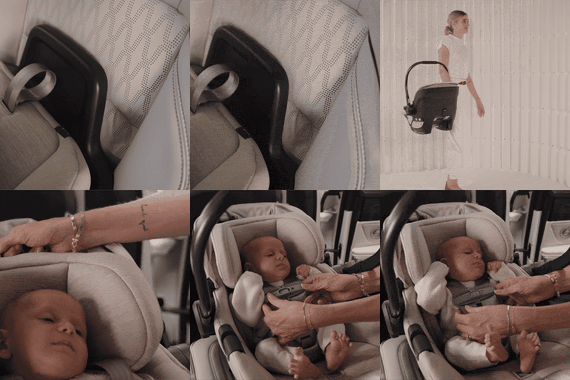
- Take photos before you take anything apart. Photograph how the cover, harness and buckle are routed, from the front and the back. You'll need them to put it back together.
- Vacuum out crumbs, especially around the buckle, the harness adjuster and the belt paths. In a notice about one convertible seat, Transport Canada warned that food or debris can stop the harness adjuster's locking mechanism from working properly.
- Remove the cover as your manual shows. Leave the foam under it in place unless the manual says otherwise. Nuna, for example, says not to remove the energy-absorbing foam on the PIPA Urbn.
- Wash the cover on the setting on its care label, and dry it the way the label says, whether that's air-drying, drip-drying or a low tumble.
- Surface-clean the straps the way your manual says, usually with a cloth or sponge, water and mild soap. Most of the brands above rule out bleach. Let them air-dry.
- Clean the buckle the way your manual says. For some seats that's warm water only, with no soap or lubricant.
- Wipe the shell with a damp cloth, and mild soap if your manual allows it.
- Let everything dry fully before you put it back together.
After a spill, spit-up or slushy boots
For a small mess, you may not need to take the whole seat apart. Wipe the shell and spot-clean the cover and straps following the same rules. For milk, spit-up or vomit that has soaked into the cover, take it off and wash it per its label. For the straps, stick to what your manual allows. If they're beyond cleaning, contact the manufacturer rather than soaking them.
In winter, salt and slush from boots end up on the cover and in the buckle area. Clean it off with the method your manual gives for the cover and shell. Our guide to salt and slush care for strollers covers the other gear that gets salty, and our winter infant seat guide covers keeping a baby warm without bulky layers under the harness.
Don't replace parts with third-party products
If a cover is beyond saving, buy a replacement from the seat's manufacturer, not a generic one. Transport Canada says adding third-party products can reduce a car seat's effectiveness, and that most manufacturers say in their instructions not to use them. Products made by the seat's own manufacturer have been tested with their seats. The same goes for strap covers and liners, and if you're not sure, ask the manufacturer first. Diono, for example, makes its own summer cover for the Radian and Rainier.
Before the next ride
- Compare the harness routing with your photos and the manual. The straps should go through the right slots without twists.
- Buckle and unbuckle a few times to check the buckle latches and releases.
- With your child in the seat, tighten the harness, then try to pinch the webbing at the shoulder. If you can't pinch any, it's tight enough. Transport Canada also recommends pulling on the straps every time to check they stay tight.
- Reinstall the seat, hold it where the belt or UAS strap passes through, and check it doesn't move more than 2.5 cm (1 inch) side to side or front to back.
If the seat has been in a crash, cleaning won't fix it. Our guide to buying a used car seat explains why crash history matters.
Not sure it's back together right?
We offer car seat installation and check-ups by appointment at our Richmond and Burnaby stores, free for seats bought from us and $50 for other seats. Here's what happens at a car seat check. For winter coats and car seats, see our winter car seat safety guide.
Neo W. is a BCAA-certified Child Passenger Safety Educator at baby enRoute (BCAA CPS Educator II Course).