In this article
Bulky winter clothing and harness fit are two separate problems. Transport Canada says bulky coats and snowsuits may not work well with a child restraint and directs caregivers to follow the exact restraint manual. The useful goal is not a brand of coat; it is clothing that allows the harness to be adjusted exactly as the seat manufacturer requires.
Start with the restraint manual
Find the section on clothing, harness adjustment and approved accessories for the exact Canadian seat. Some manuals prohibit bulky or compressible clothing; wording and permitted alternatives can differ by model. Do not borrow instructions from another brand, an older seat or a social-media demonstration.
Keep the child in the correct restraint stage and within the seat's height and weight limits. Winter clothing does not change the permitted harness height, buckle position, insert rules or recline.
Why bulk changes the harness task
A thick coat or snowsuit can place compressible material between the child and the harness. It may also hide twisted webbing, change where the shoulder straps sit or make the chest clip harder to position. A harness that looks close over a puffy layer may not match the manual once that layer compresses.
Check the webbing from the shoulder slot to the buckle every time, not only at the chest clip.
A cold-weather loading routine
- Dress the child in thin, close-fitting layers that the restraint manual permits.
- Place the child squarely against the restraint, with no extra item behind the back or under the harness.
- Route and tighten the harness exactly as the manual directs. Keep the webbing flat and place the chest clip at the stated level.
- Add warmth over the secured harness only in a way the restraint manufacturer permits. Keep any blanket or cover clear of the child's face and every harness, handle, indicator and release point.
- Remove the blanket or open layers once the vehicle is warm enough to prevent overheating.
Never place a blanket, bunting, liner or coat behind the child or under the harness unless the exact restraint manufacturer permits that product and configuration.
Use the manual to assess a coat
Some caregivers compare the harness setting with and without the coat. That can reveal obvious bulk, but it does not replace the restraint manual and does not create a Canada-wide pass/fail measurement. If the manual does not clearly permit the clothing, choose thinner layers or contact the manufacturer with the exact seat model and garment description.
Do not loosen the harness to preserve a coat. The harness setting is determined by the child and the restraint instructions. Warmth has to be solved around that fit.
Infant seats need a clean carrier path
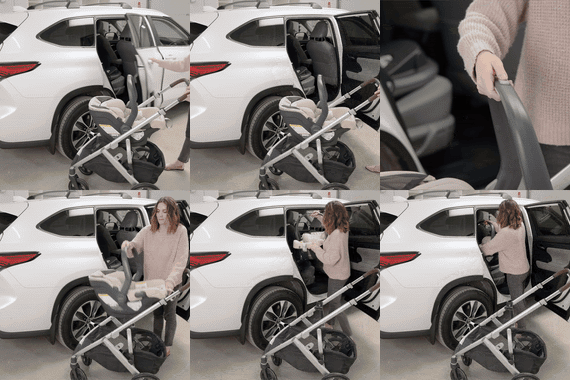
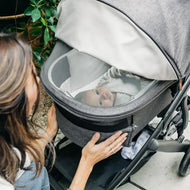
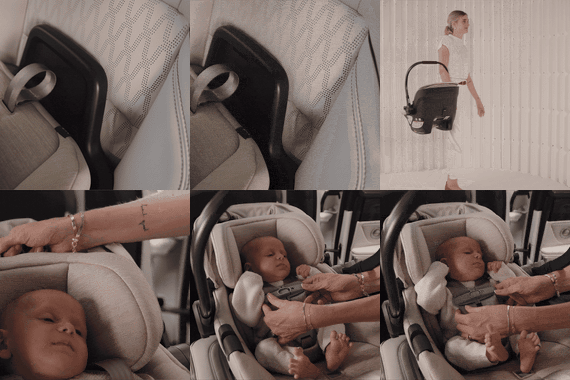
For an infant carrier, check that a cover does not route behind the baby, under the harness or between the carrier and base unless the seat maker approves it. A shower-cap style cover that goes over the shell may still need to remain clear of the child's face, harness, handle positions and release points. Follow the seat maker's specific instructions.
Keep the carrier release and base indicators visible. A blanket or cover should not prevent the carrier from locking into the base or make it hard to confirm the connection.
Convertible seats and older children
A child in a convertible seat can wear thin layers into the vehicle and use a coat backwards over the arms after buckling if the restraint manual allows that approach. A blanket kept in the car can solve the first cold minutes without adding material under the harness.
For a booster, the vehicle lap-and-shoulder belt still needs to lie in the required positions. A coat should not lift the lap belt onto the abdomen, interfere with the shoulder guide or keep the child from sitting back against the booster.
Build a small winter kit
- thin base layers permitted by the restraint manual;
- a hat and warm footwear that do not interfere with the harness;
- a blanket stored within reach of the caregiver but secured when not in use;
- dry mittens and a spare thin layer for wet-weather changes; and
- the current restraint manual or a saved manufacturer link.
Loose items should be stored so they do not become projectiles. Do not hang heavy objects from the child restraint or place them where they block the harness or installation checks.
Stop and recheck when
- the coat hides the harness slots or twisted webbing;
- the chest clip cannot reach the manual's required position;
- the harness has to be loosened specifically to fit the outerwear;
- a cover sits behind the child or between the carrier and base without approval;
- the child slides forward or the vehicle belt changes position in a booster; or
- the exact manual does not answer whether the garment or accessory is allowed.
The simplest winter plan is usually thin layers for harnessing and warmth added after the child is secured. Recheck fit whenever clothing changes, and keep the Transport Canada winter guidance and exact restraint manual together.