In this article
The hardest six-month passenger layout should lead this comparison. DEMI next brings two equal 50-lb stroller seats, an included rider board, and a 24-inch published width to a compact stacked plan. Bugaboo Kangaroo brings higher published basket capacity, an included bassinet in the 2-in-1 package, and an inline tandem approach to a newborn-and-toddler plan. Map where each child and the family's gear go at the same time before counting configurations.
First confirm the exact Canadian products
The comparison is between the current Canadian Nuna DEMI next with rider board and Bugaboo Kangaroo 2-in-1 stroller. Bugaboo's Canadian Kangaroo page is live and lists the current product as a single-to-double stroller. Nuna's sibling seat and bassinet are separate products. Bugaboo's 2-in-1 package includes the bassinet components described on its current page, while double conversion requires the relevant additional child configuration.
Match the exact accessory name and current manual before purchase.
The passenger-position switchboard
Choose the row that resembles the hardest six months of use:
| Family stage | DEMI next question | Kangaroo question |
|---|---|---|
| One newborn | Stroller seat, separate bassinet or PIPA? | Will the included bassinet be the primary walking setup? |
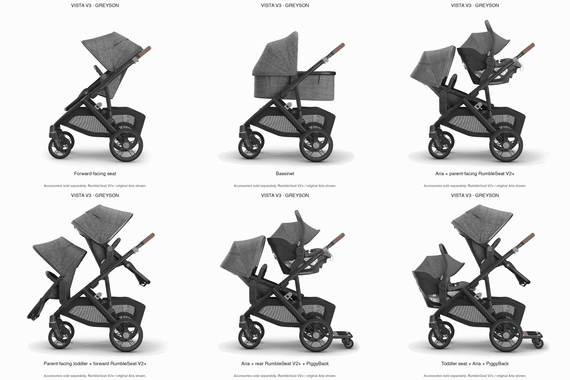
| Newborn + toddler | Bassinet/car seat above with sibling seat below, or another allowed layout? | Which inline position keeps the newborn and toddler accessible? |
| Two seat riders | Do two 50-lb seats justify the lower stacked position? | Does the tandem arrangement preserve the preferred view and leg space? |
| Toddler + older walker | Is the included board enough, avoiding a second seat? | Is a wheeled-board setup the better use of length and storage? |
After selecting a row, inspect only that complete arrangement. A stroller can look ideal in single mode and become wrong when the lower seat blocks the bag opening or the older child dislikes the assigned position.
DEMI next: equal seat limits and a compact stack
Nuna publishes the DEMI next main seat for newborn use to 50 lb. The separate sibling seat connects in the upper or lower position without an extra adapter and is also rated from birth to 50 lb, up to 45 inches. It can face forward or rearward. That equal published capacity is a meaningful advantage for siblings whose weights may overlap at the upper end of stroller use.
The trade-off is the stacked lower position. It keeps the stroller's published width at 24 inches and avoids a long front extension, but one passenger sits lower and closer to the basket area in common double layouts. Whether that is acceptable depends on child preference, caregiver reach and the bag you need to access.
The current stroller package includes a rider board positioned behind the seat area. It flips into the basket when not used. This can make a second full seat unnecessary for an older child who walks most of the route, but the board and basket compete for space when stored.
Kangaroo: inline growth and a larger basket
Bugaboo publishes the Kangaroo as a single-to-double stroller, weighing 28.6 lb with the seat. The seat is rated to 50 lb, the bassinet to 20 lb, and the underseat basket to 28.6 lb with extra pockets. Its one-piece self-standing fold is 19.6 by 24.4 by 38.1 inches.
The Kangaroo's defined win is gear carrying: its official basket limit is 6.6 lb higher than DEMI next's 22-lb limit. A car-light family transporting groceries, daycare gear or winter layers on foot can reasonably prioritize that difference.
Its inline arrangement extends the family system along the stroller rather than placing the second passenger as deep within the basket zone. That does not automatically make access or steering better; it means the spatial compromise is different. Confirm the exact second-seat package, allowed orientations and fold steps in the current Canadian manual.
Folded storage is a shape problem
DEMI next publishes a folded size of 23.5 by 24 by 35 inches and a 26-lb weight without insert, canopy and armbar; those excluded parts add about 3.4 lb. Kangaroo publishes 19.6 by 24.4 by 38.1 inches for its one-piece self-standing fold and 28.6 lb fully assembled with seat.
The Kangaroo fold is shorter along one axis but taller along another. The DEMI next is marginally narrower by published width. Tape both rectangles on the trunk or closet floor, then mark the full height. Add the second seat or bassinet that must be stored beside the folded frame. The winning base fold may lose once loose accessories are included.
Newborn setup: bassinet inclusion changes the purchase list
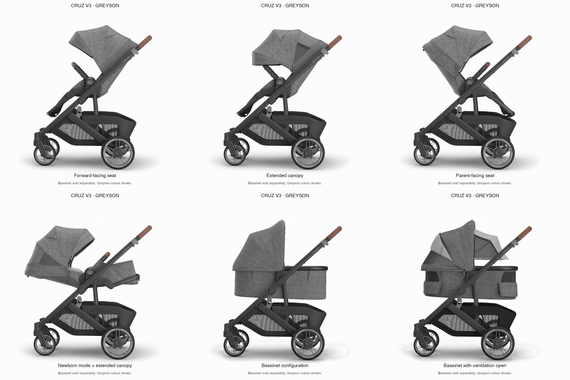
Nuna's DEMI next bassinet is separate and published for birth to 20 lb, up to 27 inches, with a stop condition when the infant begins to push up on hands and knees. Nuna also supports PIPA-series infant car-seat use and stroller-seat configurations according to its instructions.
The Bugaboo Kangaroo 2-in-1 page presents the stroller with both seat and bassinet modes. If a bassinet is the planned newborn surface, that included package can make Kangaroo the simpler initial configuration. Compare actual current Canadian package contents, not just chassis prices.
Neither stroller bassinet claim should be generalized beyond its manual. Follow the exact product instructions for stroller use and any sleep-related conditions.
Basket, board and second seat cannot be scored separately
DEMI next has a 22-lb basket, but a lower seat and stored rider board alter access. Kangaroo has a 28.6-lb basket with extra pockets, but a tandem family setup can also change how the space is reached. Load planning should use the real double configuration.
Pack the normal bag at home and measure its rigid dimensions. At a product demonstration, place the stroller in the intended two-child mode before checking whether the bag passes through the basket opening. A high weight limit does not help if the everyday bag cannot be inserted without moving a child or accessory.
Weather and cleaning belong in the layout
Double strollers collect twice the snack debris and often carry wet outerwear. Nuna states that the DEMI next includes a rain cover and uses an all-season seat. Bugaboo publishes machine-washable seat, bassinet and canopy fabrics at 30°C for Kangaroo. Check each fabric label and manual before washing; the comparison supports maintenance planning, not a claim that one is easier to clean in every household.
In rain, rehearse access with the approved cover fitted. Ask whether the lower child can be reached, whether the gear opening remains usable and where a wet cover will go after the walk. This can change the preferred passenger position and basket score.
One-caregiver versus two-caregiver use
A configuration that works with two adults may fail the weekday routine. One caregiver should be able to brake, load the first child, secure the second and retrieve the bag without leaving either child unsecured. Run that sequence in both layouts. The better result can outweigh a modest difference in folded size.
Fair scenario winners
DEMI next wins when two equivalent 50-lb stroller seats are central, the family prefers a 24-inch stacked chassis, or the included rider board will replace a second seat for an older child. Its system can reduce the need to predict which sibling will outgrow a lower-capacity accessory seat first.
Bugaboo Kangaroo wins when the bassinet-led 2-in-1 package matches the newborn plan and the 28.6-lb basket limit changes everyday utility. It is also the more logical shortlist for a family that prefers inline passenger placement over DEMI's lower stacked seat.
Pause the purchase when no one can assign passengers at the hardest stage. A generic plan to “grow” is not enough. Draw child ages, approximate weights, desired orientations and the exact gear load, then review the current official configuration diagrams.
Configuration checkpoint
- Confirm the exact Canadian base package and every added seat, bassinet, board and adapter.
- Verify both children's limits in the current manual.
- Build the intended double mode and test caregiver reach and basket access.
- Measure the equipped storage bundle, not only the folded chassis.
- Choose the layout that works at the hardest stage without requiring an unsupported configuration.
Explore the current Nuna collection and DEMI next pages for the Nuna route. Use Bugaboo Canada's Kangaroo page for the competing configuration. Either stroller can be the right answer; the honest winner is determined by passenger position and gear, not brand prestige.