In this article
Two newborn stories
Cot is a separate chapter. Nest to Seat changes roles inside one system.
Choose the Joolz Aer² Cot for a distinct full-sized cot stage. Choose the Nest to Seat when fewer large pieces and a later parent-facing seat matter more.
Both are current newborn paths for the Joolz Aer², but they are not two versions of the same accessory. The Cot is a separate component with its own mattress and bumper bar. Nest to Seat begins as a newborn nest and later changes into a parent-facing seat, with Joolz listing the combined configuration from birth to 33 lb.
Browse the current local assortment in the Joolz collection. The exact instructions control attachment, position, transition and use. Neither configuration should be assigned an overnight-sleep role that Joolz does not state.
See the configurations before comparing the claims


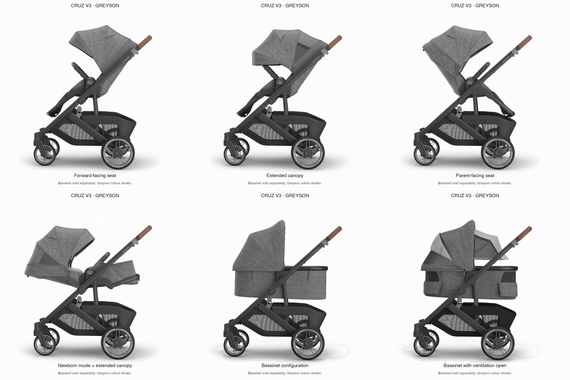
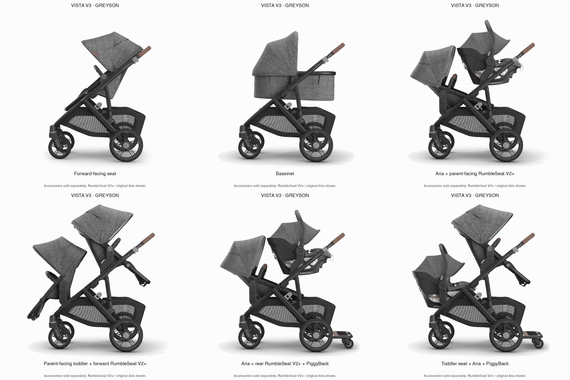
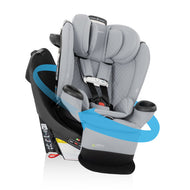
Why product views are necessary here: the purchase hinges on the physical configuration and transition. A generic lifestyle photo cannot show whether the newborn space is a separate cot or part of a transforming seat system.
The two paths, stage by stage
Stage 1 · Newborn setup
Cot: attach the separate cot with its included mattress and bumper bar. Nest to Seat: use the newborn nest in the exact position described by its instructions.
Stage 2 · Transition
Cot: remove the cot and move to the standard Aer² stroller seat when the child and instructions allow. Nest to Seat: change the same accessory from newborn nest to parent-facing seat.
Stage 3 · What remains at home
Cot: a separate large component needs a storage plan after its stage. Nest to Seat: the accessory keeps a later role, reducing the large-piece handoff.
The numbers belong to exact configurations
| Decision point | Aer² Cot | Aer² Nest to Seat |
|---|---|---|
| Basic form | Separate full-sized cot | Newborn nest that changes to a parent-facing seat |
| Published stage | Birth to about 6 months; cot limit 20 lb | Birth to 33 lb in the combined configuration |
| Published combined weight | 18.7 lb stroller with cot | 14.3 lb on the combined product page |
| Published folded package | 35.4 × 17.7 × 14.9 in with cot | 20.4 × 15.7 × 8 in on the current combined page |
| Overnight travel-crib role | No, in the current Joolz comparison | No overnight role stated |
The folded dimensions describe different exact configurations. “Folds together” does not mean “keeps the standard Aer² fold.” Measure all three sides against the trunk, closet and luggage plan, then follow the approved fold sequence for the product in hand.
Story A: the Cot creates a clear handoff
Joolz describes the Aer² Cot as full-sized and includes a mattress and bumper bar. Its clearest advantage is separation: the newborn component has its own structure, then the stroller returns to the standard Aer² seat after that stage.
Joolz lists the stroller with Cot at 18.7 lb and the cot capacity at 20 lb. The current comparison places the cot stage at roughly birth to 6 months and says the chassis folds with the cot attached. It also publishes the larger 35.4 × 17.7 × 14.9 in folded package. A small car or home must accommodate that exact version, not the standard stroller dimensions.
The current Joolz comparison says the Aer² Cot is not an overnight-sleep bassinet or travel crib. Plan a separate destination sleep space rather than extending the stroller configuration beyond its stated role.
Story B: Nest to Seat keeps the transition in one system
Joolz describes Nest to Seat as beginning with a newborn nest and later switching to a parent-facing seat. The current combined page lists use from birth to 33 lb and a 14.3 lb weight. Its proposition is continuity: instead of storing a separate cot after the early stage, the accessory changes jobs.
That does not mean the configuration changes itself or that the transition can be judged from age alone. Follow the exact instructions for attachment, restraint routing, approved position and fit. A similarly named accessory from another Aer generation is not enough evidence of compatibility.
Nest to Seat's longer role has value only when parent-facing seated use is wanted. If the family plans to move quickly to the standard world-facing Aer² seat, the transforming path may solve a problem that does not exist.
Let storage settle the tie
Choose Cot when
You specifically want the separate cot form, have room to store it after the newborn stage and prefer a simple handoff to the standard stroller seat.
Choose Nest to Seat when
You want fewer large components and value a later parent-facing seat enough to use the accessory beyond the newborn nest.
Pause when the decision is based mainly on cabin marketing. Compactness can inform packing, but neither accessory can promise a flight outcome. Also pause when the purchase is expected to serve as an overnight crib; the current sources do not establish that role.
Test the transition, not only the newborn moment
A newborn configuration can look ideal in isolation and still create an awkward handoff later. For the Cot, identify where the separate component will go when the child moves to the standard seat. Check whether it stays available for another child, is stored long term or leaves the home. That physical plan is part of the purchase.
For Nest to Seat, identify when and why parent-facing seated use would continue. If no caregiver values that stage, the transforming design may add instructions without adding a benefit. If face-to-face use is important, its later role can eliminate the abrupt switch from separate cot to world-facing standard seat.
In both cases, rehearse a normal departure: attach the configuration, load the basket, fold according to the instructions and place every loose part where it will travel. The better story is the one your household can repeat without improvising.
Bring the exact trunk measurements, the expected diaper bag and a list of the adults who will attach or fold the setup to an in-store comparison. Ask to see the transition rather than only the finished configuration. A clear demonstration should leave the family able to name every component, its storage place and the next approved stage.
Before ordering
- Confirm the stroller is the current Aer² generation.
- Read the exact Cot or Nest to Seat instructions, including stage and load limits.
- Measure the folded package and any separate storage space.
- Decide whether the post-newborn seat should be parent-facing or the standard Aer² seat.
- List every included component so an essential part is not assumed.
- Plan a separate destination sleep space approved for that purpose.
For broader stage context, read our guide to newborn use in travel strollers.
The ending you prefer decides the beginning
Choose Cot for a distinct newborn chapter and a later switch to the standard seat. Choose Nest to Seat for one accessory that continues into a parent-facing stage. The correct answer comes from transition and storage, not from treating one as a premium version of the other.
Sources
- Joolz Aer² Cot official product page. Accessed August 6, 2026.
- Joolz Aer² Nest to Seat official accessory page. Accessed August 6, 2026.
- Joolz Aer² with Nest to Seat official combined product page. Accessed August 6, 2026.
- Joolz official stroller comparison. Accessed August 6, 2026.