In this article
Dress your baby in one more layer than you're wearing, then let a stroller footmuff or snowsuit handle the cold instead of a pile of blankets. That's the rule of thumb from the Canadian Paediatric Society, and it works for most Canadian winter walks. What changes between cities is the outer layer: Vancouver needs to stay dry, Ottawa needs to stay warm.
Start with one more layer than you
Think about what you're wearing for the walk. If you're comfortable in a sweater and a winter coat, your baby needs their usual outfit, a warm middle layer and an insulated outer layer. The Canadian Paediatric Society's winter safety advice puts it simply: one more layer than an adult in the same conditions.
The reason is that a baby in a stroller isn't moving. You warm up pushing up a hill. They don't.
- Base: a snug cotton, wool or modal bodysuit and leggings or a sleeper.
- Middle: a fleece or knit layer. Fleece is easier in rain because it still feels warm when a little damp.
- Outer: an insulated snowsuit, or a footmuff that zips around them in the seat.
- Extremities: a hat that covers the ears, mittens and booties. For small children, the CPS suggests a neck warmer instead of a scarf, which can get caught.
Snowsuit or footmuff? Usually one, not both
If your baby rides in the stroller and you don't need to take them out much, a footmuff is the easier choice. It zips around them in the seat, so you dress them in normal clothes plus a fleece and skip the snowsuit wrestling match at every stop.
A snowsuit makes more sense once they're walking a little, or when you're out of the stroller often: the park, a carrier, a friend's house. Wearing a full snowsuit inside a winter footmuff is usually too much, except on the coldest days.
The Cybex Winter Footmuff is a good example of the stroller-first approach. It fits CYBEX strollers, so check your stroller model first. If you'd rather dress the baby than the stroller, the Jan & Jul Baby Insulated Snowsuit has 220 g/m² insulation, a Sherpa-lined torso and hood, and fold-over cuffs for hands and feet. It's sold in 12–18 and 18–24 months. Its fabric is rated 10,000 mm, but the seams aren't taped, so it's water-repellent rather than fully waterproof.
Vancouver: plan for wet, not just cold
A typical Vancouver winter walk sits a few degrees above zero, with rain. Getting wet is the bigger risk than the temperature, because damp clothes pull heat away fast.
- Put a rain cover on the stroller. It keeps the footmuff dry, which matters more than the footmuff's rating.
- A water-resistant footmuff or a fleece layer under a rain cover is often enough. A heavy −30 °C snowsuit can be too warm under a rain cover.
- Bring a spare middle layer. If anything gets soaked, swap it as soon as you're inside.
Rain covers are model-specific, and ventilation matters. Our guide to stroller rain covers covers fit and airflow.
Ottawa: plan for real cold and wind
An Ottawa January walk can mean −15 °C before the wind. This is where the insulated outer layer earns its price.
- Use a winter-rated footmuff, or a snowsuit plus a footmuff on the coldest days.
- Cover as much skin as you can. The cheeks and nose are what get cold first in a stroller.
- Pull the canopy down against the wind. It acts like a windbreak.
- Keep walks short when it's very cold. The CPS suggests considering staying indoors when the temperature or wind chill is −27 °C or lower, because exposed skin can start to freeze.
For toddlers, a thin balaclava like the Jan & Jul Thermal Balaclava (sized from 2 years) covers the neck and ears without the loose ends of a scarf.
Don't forget hands and feet
Babies kick off socks and pull off mittens. Booties that close at the ankle, like the Jan & Jul Stay-Put Winter Booties, stay on better than socks. Thumbless mittens are easier for babies than gloves. If your footmuff has a hand cover or the snowsuit has fold-over cuffs, use them.
Watch for overheating once you're inside
A bundled baby warms up fast on transit, in a mall or at a café. Check on them often, and if they're sweaty or flushed, take a layer off. Open the footmuff or unzip the snowsuit as soon as you step inside.
Two things not to do
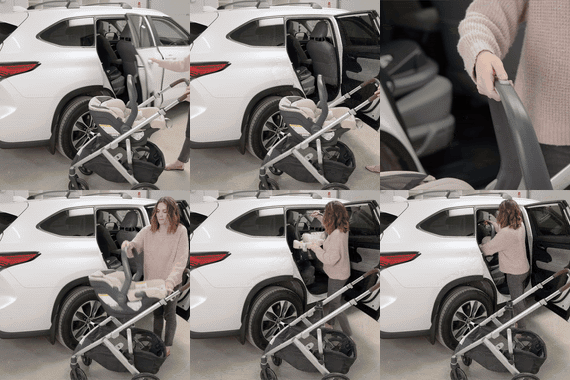
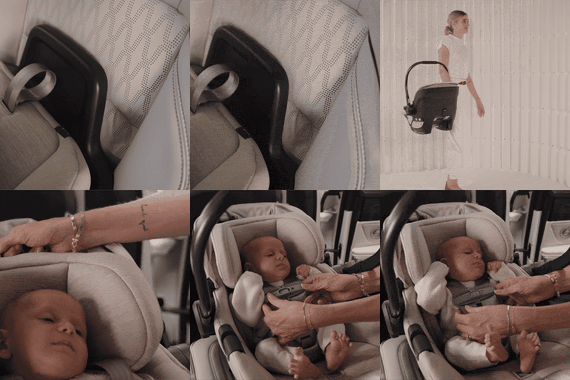
- Don't put the snowsuit on before the car seat. Bulky layers under a car seat harness leave the straps too loose. Take the snowsuit off for the car, buckle in, then add a blanket over the harness. Our guide to winter car seat safety walks through it.
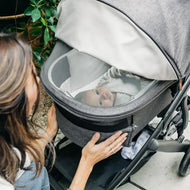
- Don't treat the stroller as a bed. Babies often fall asleep on a cold walk. That's fine while you're with them, but move them to a safe sleep space when you get home. Health Canada advises against letting babies sleep unsupervised in products that aren't designed for sleep.
A simple setup for most families
| Where you walk | Under the outer layer | Outer layer | Add |
|---|---|---|---|
| Vancouver, wet and 0–7 °C | Bodysuit, sleeper, fleece | Water-resistant footmuff | Rain cover, hat |
| Calgary or Ottawa, dry and −5 to −15 °C | Bodysuit, sleeper, fleece | Winter footmuff or snowsuit | Hat over the ears, mittens, booties |
| Ottawa, −15 °C and windy | Bodysuit, wool or fleece layers | Snowsuit inside a winter footmuff | Face covered, canopy down, short walk |
Not sure which footmuff fits your stroller? Bring the stroller model to our Richmond, Burnaby or Ottawa store and we'll help you match it. Call ahead and we'll let you know which footmuffs we have on hand. You can also browse our stroller accessories and snow gear.