In this article
Colic is long, hard-to-settle crying in a baby who is otherwise healthy. HealthLink BC says it usually starts at around 3 weeks of age, is at its worst at 6 to 8 weeks, and goes away on its own by 8 to 14 weeks. It isn't caused by anything you did. There's no cure, but there are safe ways to soothe your baby, a few remedies to be careful with, and some signs that mean you should call a doctor. Here's what Canadian health sources say.
Is it colic?
All babies cry, and HealthLink BC says it's normal for crying to increase from about 2 weeks of age. Doctors usually call it colic when a healthy baby cries for:
- More than 3 hours a day
- More than 3 days a week
- For at least 3 weeks in a row
During a crying spell, a colicky baby may clench their fists, stiffen their belly and legs, arch their back or pull their legs up. The cause isn't known. HealthLink BC says colic isn't caused by pain, illness or a digestive problem, although gas can make the crying worse.
Some signs are not colic. Vomiting, diarrhea, a fever, or blood or mucus in the stool need a doctor's attention. See when to call below.
In BC, you may hear this stage called the Period of PURPLE Crying. Parents who give birth in a BC hospital get the program's materials, and HealthLink BC describes it as a normal stage that comes to an end, usually by 3 to 4 months.
Ways to soothe a crying baby
Start with the basics: is your baby hungry, wet, too hot or too cold, or unwell? Then try these ideas from HealthLink BC and the Canadian Paediatric Society. What works one day may not work the next, so keep a few in rotation.
- Hold your baby. The Canadian Paediatric Society says you can't spoil a baby by picking them up.
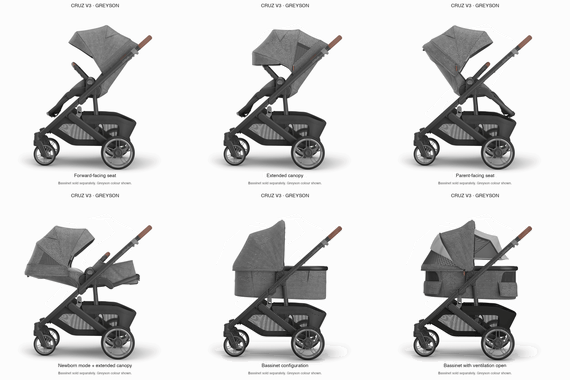
- Motion. Rock your baby in a quiet room, or go for a walk with your baby in a front carrier or a stroller. A carrier also leaves your hands free; our carrier buying guide explains how to choose one.
- Calm and steady sound. Dim the lights and cut the noise, then try gentle shushing or a steady droning sound, such as a fan.
- Swaddling, done safely. Our guide on how to swaddle a newborn safely covers how to do it and when to stop.
- Sucking. Offer the breast or a pacifier. Never dip a pacifier in alcohol.
- A warm bath or infant massage.
- A car ride. Some babies settle in the car. Health Canada says it isn't safe for babies to sleep in a semi-reclined position in products like car seats, so if your baby falls asleep on the drive, move them to their crib when you get home.
HealthLink BC also suggests keeping a diary of crying, feeds and sleep, which can help you spot patterns.
Gas, feeding and anti-colic bottles
HealthLink BC suggests burping your baby, especially if you think gas started the crying, and watching for signs that your baby is full so you don't overfeed. The Canadian Paediatric Society adds that there isn't strong evidence that colic is caused by gas, wind or food allergies.
- Switching formula probably won't help, according to the Canadian Paediatric Society. If you're worried about your baby's digestion, talk to your doctor.
- If you're breastfeeding, HealthLink BC says stopping breastfeeding won't cure colic. The Canadian Paediatric Society says that for most babies, what a breastfeeding parent eats doesn't change how much they cry.
- Anti-colic bottles are designed to manage the air that goes in as your baby drinks, for example with the vent in a Dr. Brown's Options+ bottle ($23.99 for two 270 mL bottles). They don't treat colic. Our guide to anti-colic bottle vents explains what the extra parts do, and our guide to nipple sizes covers flow.
Gripe water and other remedies
Gripe water is one of the most searched colic remedies. Before you give it, or any other product, ask your doctor or pharmacist. Here's why:
- The Canadian Paediatric Society says to talk to your doctor before using over-the-counter or "natural" products for colic, and that there's very little scientific evidence they help.
- HealthLink BC says not to give your baby any medicine unless your doctor recommends or prescribes it, and to get your doctor's advice before trying alternative therapies.
- Products can have problems you can't see. In 2019, Health Canada announced a recall of all lots of one alcohol-free gripe water, sold under several store brands across Canada, after the company's testing found microbial contamination.
- Probiotics: HealthLink BC notes that some doctors prescribe them for colic, and that studies are still looking at how well they work.
Never give a baby aspirin or alcohol.
When to call a doctor or 9-1-1
Call 9-1-1 if your baby has been shaken, isn't responding normally, or has severe trouble breathing, or if you're afraid you might hurt your baby and can't get help.
Get medical care right away if your baby:
- Is under 3 months old and has a fever
- Has blood in their stool
- Cries in an unusual way, or for an unusually long time
- Cries a lot and also has vomiting, diarrhea or a fever
Book an appointment if your baby isn't eating or gaining weight as usual, seems unwell in a way you can't pin down, doesn't settle however you comfort them, or is still crying excessively after 3 months. Call your doctor too if you often feel anxious or low, or find it hard to connect with your baby.
For advice from a registered nurse at any time of day, call 8-1-1 in BC, or Health811 at 811 in Ontario.
Take care of yourself too
Hours of crying are exhausting, and not being able to stop it doesn't mean you're doing anything wrong. Some things that help:
- Take turns. Ask your partner, family or a friend to take over for a while.
- Step away safely. If you feel overwhelmed or angry, put your baby somewhere safe, such as their crib, and leave the room. HealthLink BC suggests taking 10 to 15 minutes to calm down before you try again.
- Tell every caregiver that staying calm matters more than stopping the crying.
- Never shake a baby. Shaking can cause serious brain injury or death.
Colic ends, usually by 3 to 4 months. Until then, a carrier can give your arms a break, and our BabyBjörn Hold and Ergobaby Omni Deluxe Mesh both carry newborns from 3.2 kg (7 lb). Call our Richmond, Burnaby or Ottawa store ahead of your visit to ask which carriers are on display. Prices were current when we wrote this.