In this article
Clic is the simpler starting point when carrying the regular stroller is your main concern. Nia becomes more compelling when you specifically want its optional folding Pod. Both strollers have a one-hand fold, stand when folded and include a shoulder strap. Those shared features mean the decision needs to go beyond whether either can fold quickly.
For a compact stroller used mainly with its regular seat, Clic has two concrete advantages to start from: its lower listed weight and shorter open depth. Nia adds a sculpted seat liner and the option of folding with its matching Pod attached. Here is how those differences affect the walk, the lift and the space left in the car.
Compare the weight you will actually pick up
Silver Cross Canada publishes Nia at 16 lb for the chassis and seat, with a separate 12 lb chassis-only figure. Clic is listed at 13.9 lb excluding the arm bar. These are the figures for the Canadian products, not the similarly named UK Clic 2. The Nia specifications and Clic specifications identify those configurations.
Do not compare Nia's bare chassis with a Clic stroller and conclude that Nia is lighter. Nor should the difference between 16 and 13.9 lb be treated as a precise fully equipped comparison: the published exclusions differ. A bag, rain cover or other accessory that stays with the stroller is part of what you carry, even if it is not part of the headline number.
For someone lifting at every journey, Clic's lower listed starting weight is a useful reason to try it first. For someone who usually rolls through an elevator, the weight difference may have little influence on the day. In that case, a feature you use while walking can reasonably outweigh a carrying advantage that rarely comes into play.
The difference is not only carrying weight. Nia's published open footprint is 17.7 inches wide by 35 inches deep; Clic's is 18 inches wide by 31 inches deep. The widths are close, but Clic is four inches shorter front to back in those specifications. For an everyday stop where the parked stroller projects into a small space, that shorter open depth may be more useful than chasing a marginal width difference.
From rolling stroller to shoulder carry
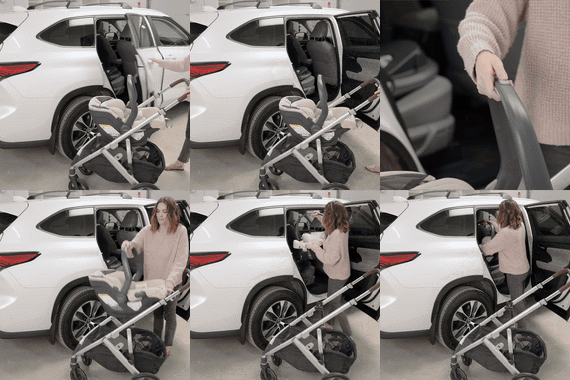
The standing fold lets you set the empty stroller down while opening the car or picking up a bag. The strap matters for the next movement, particularly if the walk from the car to your storage area is long. Both provide that carrying option, so Clic's lower listed starting weight is the more useful tie-breaker when no additional Nia feature is important to you.
Follow the exact Nia manual or Clic manual for the mechanism, and keep the child away during folding and unfolding. A one-hand description is not a reason to improvise a fold while holding the child next to the moving frame. This comparison concerns the empty stroller's handling, not a new way to operate it.

For storage, three dimensions beat the word compact
The Canadian Clic specification gives a folded size of 18 inches wide, 9 inches deep and 21 inches high. Use all three dimensions. An opening wide enough for the stroller may still lead to a space that is too shallow, while a tall narrow slot may require a different orientation from the one shown in a product photograph.
Tight-fit note: confirm Nia's complete folded width for the Canadian configuration before ordering around a precise cupboard or luggage-space limit. Do not assume it is narrower than Clic. For either stroller, leave room beside your ordinary luggage and enough clearance to move the folded package through the opening.
Nia's Pod changes the comparison only when you want that component
The Nia Pod is a separate model-specific component, and Nia can fold with it attached. That is the principal reason to consider a different package from a straightforward seat-stage compact stroller. The benefit is keeping that chosen configuration together during storage, not turning every Nia purchase into a requirement to buy a Pod.
The Pod alone is listed at 8.82 lb, so the 16 lb stroller-seat figure is not the weight of the Pod configuration. Choose the Nia stroller and Pod bundle when you want that component and its attached fold; otherwise compare the regular-seat strollers. The advantage is keeping the chosen Pod setup together, not making that setup as light as the seat-only stroller.
A flight adds a policy question, not a guaranteed winner
Neither model should be bought on the assumption that “cabin compatible” guarantees a place in your aircraft's overhead storage. Silver Cross itself asks travellers to check airline requirements. Air Canada's stroller guidance distinguishes small collapsible strollers accepted at the gate from larger strollers that must be checked at the baggage counter; it is not blanket cabin permission for a named compact model.
If flying is the main reason for the purchase, confirm the operating airline's treatment of your complete packed stroller. For a long connection where you expect to carry the folded stroller, Clic's lower listed starting weight remains relevant even if both ultimately travel in the hold.
The seat-stage difference is not only about the Pod
Silver Cross describes Nia's sculpted seat liner as machine-washable. Clic's seat-care instructions specify sponging with warm soapy water, rinsing and natural drying, and prohibit machine washing the seat unit. That is a tangible cleaning difference after a messy outing. Nia's liner description is not permission to machine-wash the whole stroller seat.
Both Canadian stroller packages list a bumper bar and fitted rain cover, and both have adjustable calf support. Those shared items are useful, but do not distinguish one package from the other. Compare the included equipment on the Nia page and Clic page before adding accessories separately.
What about the wheels?
Nia has puncture-proof wheels and full suspension. Clic's Canadian page describes lockable wheels intended for city streets and park footpaths. That gives Nia a documented suspension feature to consider alongside its carrying weight, but does not establish a measured ride-quality advantage over Clic.
For paved errands followed by stairs or car loading, Clic remains the first model to shortlist: its carrying and open-size advantages address that routine directly. If your walks include uneven paving and you are leaning toward Nia, compare how the two steer on the same available surface. Let that experience decide whether Nia's extra carried weight buys something you value; the suspension label cannot answer it for you.
Which one fits your routine?
Start with Clic when the regular stroller is all you need, repeated lifting matters and its known folded shape works in your storage space. Its lower published starting weight is relevant, but confirm the feel of the complete configuration rather than deciding from arithmetic alone.
Start with Nia when the attached-Pod fold is part of your actual plan, or when the washable liner and its wheel arrangement make it the more appealing everyday stroller. Accept the heavier published seat-stage starting weight, and resolve the folded width before a tight-fit purchase.
Compare colours and expected fulfilment through the Silver Cross collection. Confirm timing for the selected configuration, especially before a trip. The better purchase is the stroller that works through the entire fold, carry and storage transition, not the one that wins only the first few seconds of a demonstration.