In this article
A travel stroller can make a flight easier, but only when it solves more work than it creates. The decision starts before comparing folded dimensions: who will manage the child at security, what happens to the stroller at the aircraft door, and what kind of streets or transit wait at the destination?
Decide which part of the trip needs a stroller
For a long connection or a solo adult travelling with cabin bags, the stroller may be most valuable as terminal mobility and a predictable place to buckle a tired child. For a direct flight with two adults and a child who walks reliably, carrying another item through security may add little. At the destination, steep streets, cobblestones, frequent naps or train transfers can matter more than the airport itself.
| Primary travel job | Tradeoff to resolve | Models to compare |
|---|---|---|
| Small folded package | A very compact fold still has to provide the seat stage, steering and carry method needed after landing. | CYBEX Libelle |
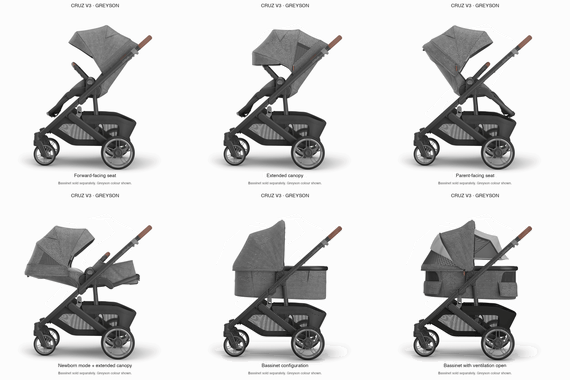
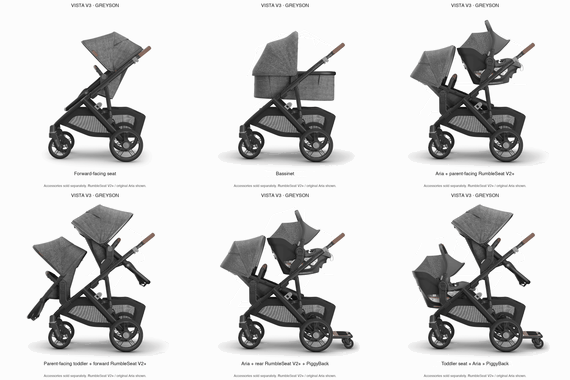
| Travel plus everyday use | A fuller everyday setup may be easier at the destination but heavier to carry through transfers. | UPPAbaby Minu V3 |
| Premium compact city travel | Handle the fold and shoulder-carry approach, then judge seat comfort and basket access for the whole trip. | CYBEX Coya |
Airline handling and cabin baggage are different questions
Air Canada’s stroller notice says a small collapsed stroller no more than 25.5 cm in diameter and 92 cm long may be checked at the gate and delivered at the aircraft door, while a large, heavy stroller must be checked at the baggage counter. That describes handling; it is not a promise that a stroller will be accepted as cabin baggage.
The current CYBEX Libelle Canadian page lists a 12.6 x 7.8 x 18.9-inch fold and a product weight of 13.7 lb, while directing travellers to check individual airline restrictions. The operating airline decides what it accepts, and codeshare legs may be operated under different rules. Confirm every leg shortly before departure and be ready for the stroller to be tagged at the gate.
Practise the handoff, not just the fold
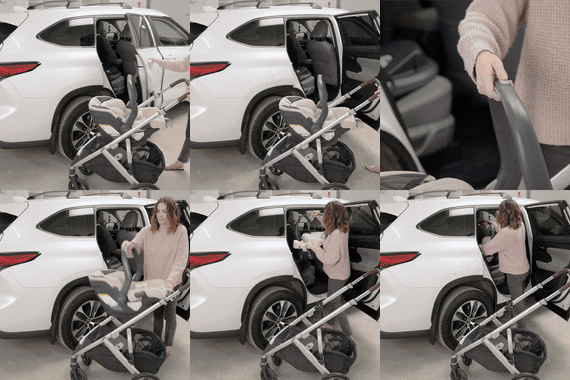
A fast fold is useful only if the adult can complete the whole sequence while the child is secure. At home, choose where the child waits, remove the organizer, cup holder and other loose accessories, empty the basket, fold the stroller and pick it up with the normal cabin bag. If one adult cannot manage that sequence, decide which companion takes the child or whether a carrier is the better airport tool.
Keep medication, travel documents, feeding supplies and one change of clothes outside the stroller. Put identification inside the stroller bag as well as on the exterior. Photograph the stroller before it is checked, and plan for the possibility that it will be returned at baggage claim instead of the aircraft door.
Let the destination break the tie
A small fold can win at the airport and lose on a trip filled with rough pavement, naps and groceries. Check the child’s approved seat-use stage, usable recline, canopy coverage, brake operation, basket opening and wheel response. If newborn use is required, identify the manufacturer-approved stroller-seat, bassinet or infant-car-seat setup and obtain every necessary adapter before the first outing.
For a resort transfer and smooth indoor routes, minimum folded bulk may lead. For a week of city walking, the easier push and more usable seat may justify extra weight. For a child who will mostly walk, a carrier or no stroller can be the more practical answer.
Browse the travel stroller collection after choosing the job. Then compare these models, practise the complete gate handoff and verify the operating airline’s current policy; a “travel” label cannot make those decisions for you.