In this article
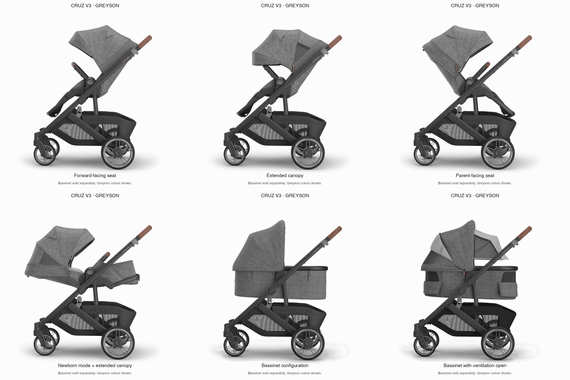
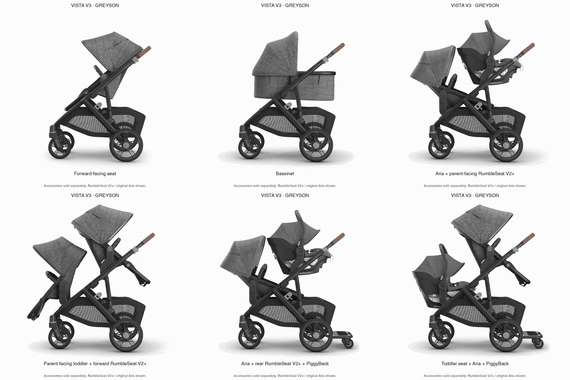
Choose the equipment for the day you will actually spend away from your accommodation. A compact stroller can be the main transport for a long, accessible city outing. A carrier can be enough for a short outing that returns to a base frequently. Bringing both makes sense when they serve different parts of the trip and you have a place for the stroller during the carrier-only part.
For one baby, the important question is not which product has more advantages. It is where the baby, the supplies and the unused equipment will be at each change of plan. A carrier-only plan puts the baby's carrying load on an adult; a stroller-plus-carrier plan still leaves someone responsible for the stroller.
A long walking day with an accessible return route
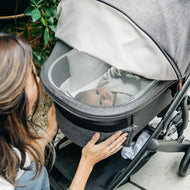
Imagine leaving after breakfast, walking along a waterfront, spending the afternoon at a museum and returning by the same accessible route. If there is no planned place to leave a stroller, and an adult does not want to carry the baby throughout the outing, a suitable compact stroller is the stronger main option. The route gives its wheels and basket a continuing job.
For a concrete example, UPPAbaby lists the Minu V3 at 16.7 lb, with a 20 lb basket and a 10 x 18 x 21.5-inch fold. Those numbers answer different questions: the basket limit matters while rolling, and the stroller's empty weight matters when loading or carrying it. They do not establish airline cabin acceptance or whether a particular venue will allow it inside.
A carrier need not be a second purchase merely because the stroller is compact. Add one if there is a specific portion of this day where you want to carry the baby and can manage the remaining equipment. Otherwise, the stroller and its appropriate supplies may already cover the outing.
A short outing from a nearby base
Now change the itinerary: a short walk to a small market, then back to the accommodation for feeding, changing and rest. If the adults are comfortable carrying the baby for that outing, a suitable carrier can avoid taking a stroller that has no useful parking place. The nearby return point is what makes this a different plan from carrying through an entire sightseeing day.
Supplies still need to go somewhere. Carrier pockets may hold small essentials, but choosing a carrier does not eliminate the changing kit, spare clothing or the adult's water. Compare the actual bag you will carry with the option of putting permitted supplies in the stroller basket. The Ergobaby Omni Deluxe Mesh is one structured-carrier option to assess for fit, not a promise that every wearer will find a long day comfortable.
A mixed day only works if the unused stroller has a place
For example, you might use a stroller for a long morning walk, return to the hotel, and leave it there before a shorter carrier outing. Here, bringing both gives each item a separate job without requiring an adult to carry the folded stroller throughout the second route.
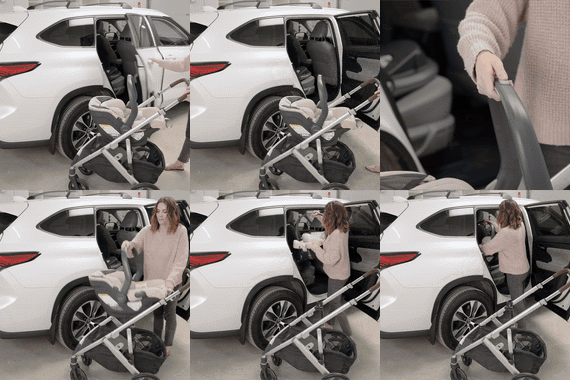
The harder version is an outing that never returns to base: an accessible promenade followed immediately by a visit where you plan to leave the stroller outside. Before choosing both, confirm that the venue provides a suitable place to leave it. If not, the plan still contains the baby, carrier, folded stroller and bags. Carrying the baby does not make the folded stroller disappear; changing the route may be more practical than adding equipment.
Do not turn an unexpected staircase into a plan to carry an occupied stroller. The Minu V3 manual says never to leave a child in the stroller on stairs or an escalator. Check for an accessible alternative before treating a route as stroller-friendly.
Check the baby's setup before committing to the itinerary
For Omni Deluxe, the current instructions set front inward-facing minimums of both 7 lb and 20 inches. The carrier must be adjusted for the baby's size and head support; meeting one number is not enough. Minu V3 has a from-birth seat configuration, but its North American instructions require the most reclined position and rear crotch-buckle slot until the baby has strong head and neck control and can sit with bent knees. Use its illustrated infant foot-barrier setup too.
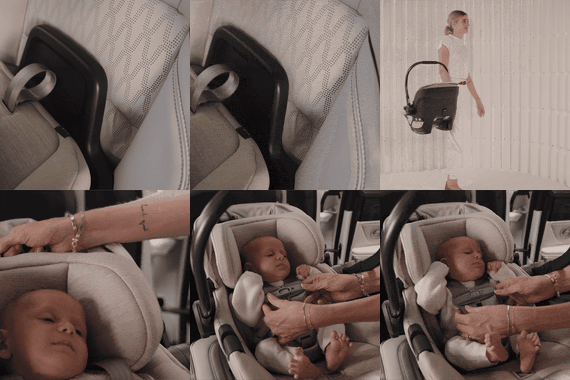
Health Canada's carrier guidance advises talking to your baby's doctor before carrier use, especially for babies under four months, born prematurely or with a medical condition. Keep a young baby inward-facing, upright and supported, with the face visible and chin off the chest; monitor breathing often. These are conditions of a carrier plan, not benefits that a mesh fabric or padded strap can replace.
The destination needs its own sleep plan
Neither choice supplies the baby's sleep space when you arrive. Health Canada's safe-sleep-on-the-go guidance says to transfer a baby who falls asleep in a stroller or carrier to a safe sleep space once you reach your destination. A crib, cradle or bassinet meeting current Canadian requirements is the appropriate destination plan. Do not build the trip around leaving the baby asleep in either transport product at the hotel.
For a trip with long rolling routes and few returns to base, start with lightweight and travel strollers. For short outings where carrying and a separate supply bag are workable, compare carriers. Bring both when you can name the segment each will cover and where the other item will be, not simply because two products feel more complete.