In this article
Storage bags and rigid containers solve different bottlenecks. Bags use freezer space efficiently and suit labelled one-time portions; rigid containers can reduce pours when a compatible vessel moves between pumping, cooling and feeding. A mixed routine often keeps bottles near the front of the refrigerator and flat bags in the longer-term freezer queue.
Compare the workflow
| Question | Storage bag | Rigid bottle |
|---|---|---|
| Freezer space | Can freeze flat and file compactly | Uses more fixed space |
| Reuse | Purpose-made milk bags are generally single-use | Reusable within manufacturer care limits |
| Transfer | Usually requires pouring before feeding | May reduce transfers in a compatible system |
| Inspection | Check seal, seams and label area | Check lid, threads, scratches and cracks |
| Transport | Needs protection from puncture and squeezing | Rigid but bulkier |
Use a bag when freezer density is the problem
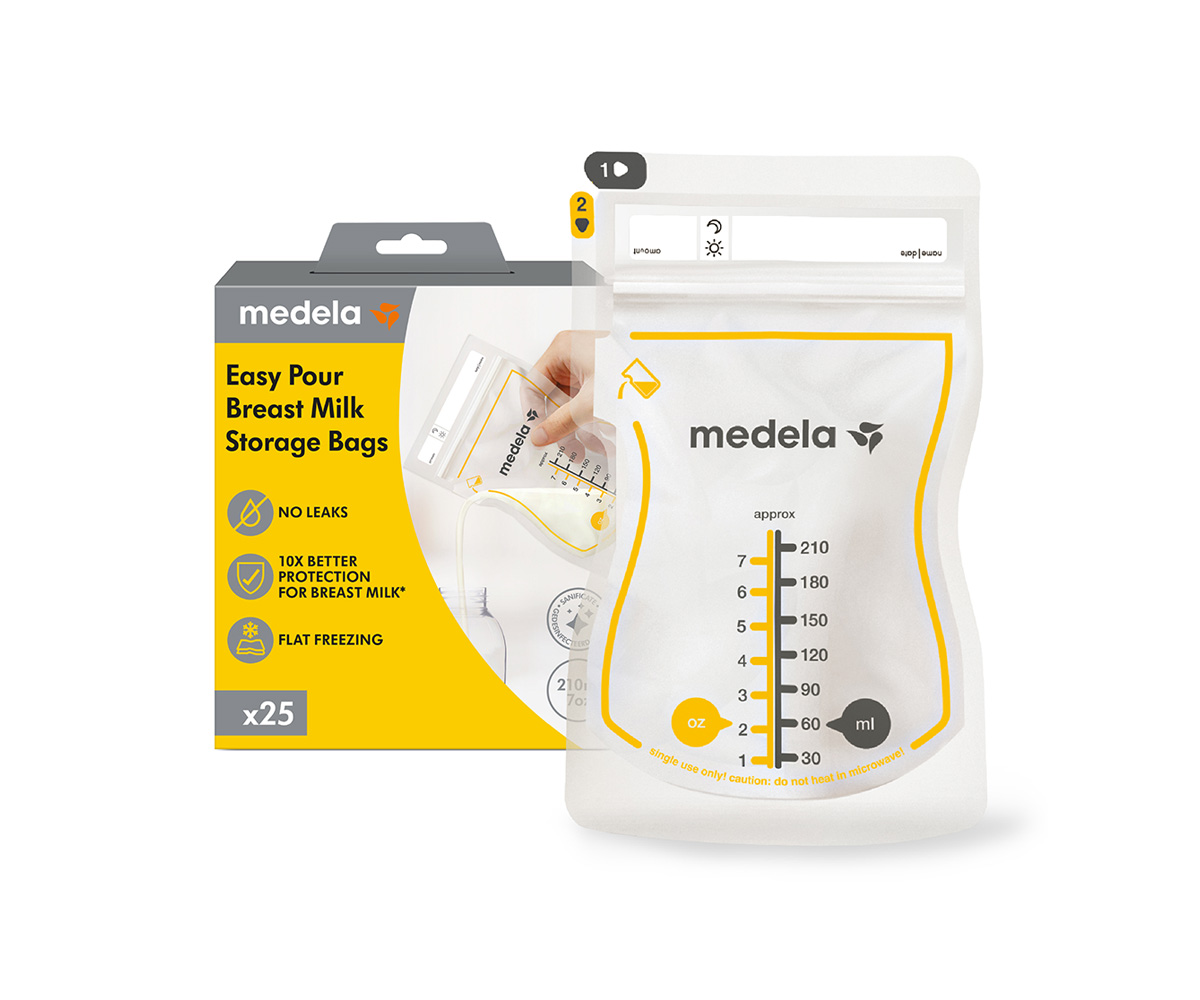
Fill only to the marked limit, remove excess air according to the instructions, seal carefully and freeze flat before filing. Put bags inside a clean rigid bin so seams are not scraped by other frozen items. Freeze in volumes the baby commonly takes to reduce leftovers and speed thawing.
Use a bottle when transfer reduction matters
A compatible rigid bottle can move from pump to refrigerator and sometimes to feeding with a change of lid or nipple. The Hegen 150 ml/5 oz four-pack is a rigid storage path for households already using that system. Confirm the exact pump and bottle connection rather than assuming a shared brand is enough. Bottles must still be labelled and protected from contamination.

Follow current Canadian storage guidance
Toronto Public Health advises using clean glass, BPA-free hard plastic containers with tight lids, or bags made for breast milk. It gives storage limits of up to four hours at room temperature at 25 C or cooler, four days in a refrigerator at 4 C or cooler, about six months in a refrigerator freezer and up to 12 months in a deep freezer. Use the most current guidance from the family's health authority when recommendations differ.
Label the date and time. Cool milk promptly, use the oldest appropriate portion first and do not use disposable bottle-liner bags for storage. For premature or medically fragile infants, follow the care team's instructions because household guidance may not apply.
Thaw and warm without shortcuts
Toronto Public Health's thawing guidance says to thaw in the refrigerator or by holding the closed container under cool and then warmer running water. Do not microwave human milk; uneven heating can create hot spots. Never refreeze milk that has fully thawed. Keep the seal area clean when pouring.
Build a hybrid routine
- Use labelled rigid bottles for milk expected within the next day or two.
- Freeze surplus in purpose-made bags at familiar feed volumes.
- Keep a first-in, first-out bin and a small thawing tray in the refrigerator.
- Keep the oldest readable date at the front and remove any container whose label can no longer be read.
Check the route before buying a large pack
Confirm that one filled bag lies flat in the intended freezer bin and that one rigid container fits the real cooler without pressure on its lid. Check that labels remain readable after chilling and that the intended pump, lid and bottle interfaces connect without improvised adapters.
Buy the next quantity only after the test shows which format is moving. A low price per bag is not useful when portion size creates leftovers. A large bottle set is not efficient when most milk is frozen flat.
Plan the caregiver handoff
Ask the receiving caregiver or daycare which containers, labels and cooler arrangement they accept. Record child identifier, expressed date/time and any information they require without writing across the seal. Confirm who thaws, who transfers, and what happens to an opened or unfinished portion under the applicable guidance.
Reject a damaged container
Do not use a bag with a puncture, damaged seam, failed closure or unreadable identity. Remove a rigid container with cracks, damaged threads, a lid that no longer seals or wear outside the manufacturer's criteria. If a frozen bag must be squeezed into an overfilled drawer, reduce the batch or change the bin rather than relying on the film to tolerate pressure.
Useful exits
Use mostly bottles when turnover is fast and compatible direct pumping avoids pours. Use mostly bags when freezer density is the repeated constraint. Use both when near-term and frozen milk have different destinations. If a care team gives individual instructions, those replace the household workflow in this guide.
For flat freezer portions, the Medela Easy Pour 100-pack is the available bag path; the smaller 50-pack is not a substitute when it is unavailable. Choose the format that preserves the labelled cold chain with the fewest error-prone transfers.