In this article
Baby-led weaning means letting your baby feed themselves soft finger foods from the start of solids, instead of only spoon-feeding purées. Health Canada doesn't recommend one approach over the other. It does say babies can have soft textures and finger foods from about 6 months, and that offering finger foods among the first foods encourages self-feeding. You can also combine the two. Whichever you choose, the safety basics are the same: wait until your baby is ready, start with iron-rich foods, prepare them so they're easy to manage, and always sit with your baby while they eat.
Is your baby ready?
Solids start at around 6 months. HealthLink BC lists these signs that your baby is ready. They can:
- Hold their head up
- Sit up and lean forward
- Open their mouth to accept food
- Pick up food and try to bring it to their mouth
Your baby doesn't need teeth: HealthLink BC says babies can eat soft foods and finger foods before their teeth come in. Health Canada says breastfeeding should still be the main source of nutrition at about 6 months, so solids add to milk feeds rather than replacing them.
Start with iron-rich foods
Health Canada recommends iron-rich foods as the first foods, offered two or more times a day from 6 to 12 months. Iron-rich foods include:
- Cooked meat, poultry and deboned fish, finely minced, ground or mashed
- Mashed cooked egg, lentils, beans and tofu
- Iron-fortified infant cereal
Alongside these, Health Canada lists soft-cooked pieces of vegetables and fruit, soft ripe fruit such as banana, grated cheese, and bread crusts or toast as finger foods. Make them with little or no added salt or sugar.
Lumpy textures should be on the menu by 9 months at the latest, and by age 1 your baby should be moving on to a variety of textures, adapted from family foods.
Lower the risk of choking
Health Canada says to avoid foods that are hard, small and round, or smooth and sticky. Some foods aren't safe for children under 4 at all: hard candies and cough drops, gum, popcorn, marshmallows, peanuts and other nuts, seeds, fish with bones, and snacks on toothpicks or skewers.
Other foods are fine if you prepare them well:
| Food | How to prepare it |
|---|---|
| Raw carrots, apples and other hard fruit | Grate them |
| Grapes, cherry tomatoes, large berries | Cut into smaller pieces |
| Fruit with pits | Remove the pits |
| Celery, pineapple and other fibrous foods | Chop finely |
| Hot dogs and sausages | Dice, or cut lengthwise |
| Peanut butter | Spread thinly on toast or crackers, not on its own or on a spoon |
How your baby eats matters too. Health Canada says children should be sitting upright, not lying down, walking, running or distracted, and an adult should be watching and engaged. Eating in a moving vehicle isn't safe, so save snacks for when the car is stopped. Health Canada also recommends that parents and caregivers take a choking first aid and CPR course.
Let your baby lead
Health Canada describes responsive feeding: watch for your baby's hunger and fullness cues, and let them decide how much to eat, and whether to eat at all. That fits baby-led weaning well: you put a few pieces in front of your baby, and they pick up what they want.
Common allergens, honey and drinks
- Common allergens. HealthLink BC says to introduce common allergens when your baby starts solids, at about 6 months, one at a time. Once your baby has had a food with no reaction, keep offering it regularly. Peanut butter needs the preparation in the table above. If you have concerns about allergies, talk to your health care provider.
- No honey before age 1. That includes cooked or baked foods that contain honey.
- Water in an open cup. Health Canada suggests offering water for thirst, in an open cup with your help at first, and limiting juice and sweetened drinks.
- Cow's milk. If you introduce it, Health Canada says to wait until 9 to 12 months, and to keep it to no more than 750 mL a day.
Gear that helps
You don't need much, but a few things make baby-led weaning easier:
- A high chair your baby can sit upright in. Look for good support and a tray or table your baby can reach. Our high chair guide explains the options, and you can browse high chairs online.
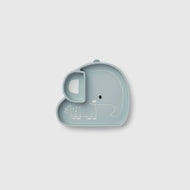
- A suction plate or bowl, so food stays put instead of landing on the floor. Try the b.box First Feeding Set ($19.99), a suction bowl with a silicone spoon, or the Bumkins Silicone Grip Dish ($24.99), which has a suction base and separate sections.
- A bib with sleeves or a pocket. The b.box Smock Bib ($23.99, 6 months to 2 years) is waterproof, with elastic cuffs and a pocket that catches dropped food.
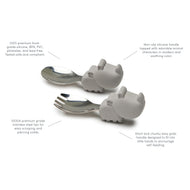
- Baby-sized spoons and forks for later, when your baby wants to try them. The Minikoioi Scoops Spoons ($14.99 for two) have soft silicone heads, and the Marcus & Marcus Palm Grasp Fork and Spoon ($17.79) have handles shaped for a whole-hand grip.
For more on keeping mealtimes tidy, see our guides to preparing for solids and mess-free feeding. And once those first teeth arrive, here's when to start brushing.
Prices are in CAD and were current when we wrote this. Call our Richmond, Burnaby or Ottawa store ahead of your visit to ask which high chairs are on display.