In this article
For most Canadian families, the best fabric choice is not one “miracle” material. It is matching the fabric to the job: soft cotton for irritated skin, breathable bamboo or light cotton for warm sleepers, wool-blend layers for cold days, and waterproof outerwear that keeps the insulating layer dry.
If you want the shortest version: start with organic cotton for everyday basics, switch to lightweight bamboo or cotton sleepwear for hot sleepers, add thin merino-blend layers for winter warmth, and choose waterproof shells over bulky absorbent outer fabrics for wet weather.
A quick fabric picker for real-life shopping
- Eczema-prone or very sensitive skin: prioritize soft cotton, especially organic cotton, with simple seams and room to layer.
- Hot sleepers: look for breathable sleepwear that feels light, dries quickly, and does not trap heat.
- Winter layering: use a thin next-to-skin base, then add a warm wool-blend or fleece layer instead of one heavy piece.
- Rainy-day daycare runs and puddle play: buy waterproof outerwear first, then layer underneath based on temperature.
- Gift shopping: choose forgiving, useful textiles like muslin blankets, soft pajamas, and easy-care cotton basics.
Best fabrics for eczema-prone skin
When skin is flaring, the safest place to start is usually soft, breathable cotton. The American Academy of Dermatology recommends loose-fitting 100% cotton clothing for children with eczema and notes that wool and some synthetics can be irritating for some kids.
That does not mean every child will react to the same fabric. It does mean cotton is the easiest low-risk baseline when you are trying to calm skin down, especially for bodysuits, sleepers, underwear, and layers worn close to the body.
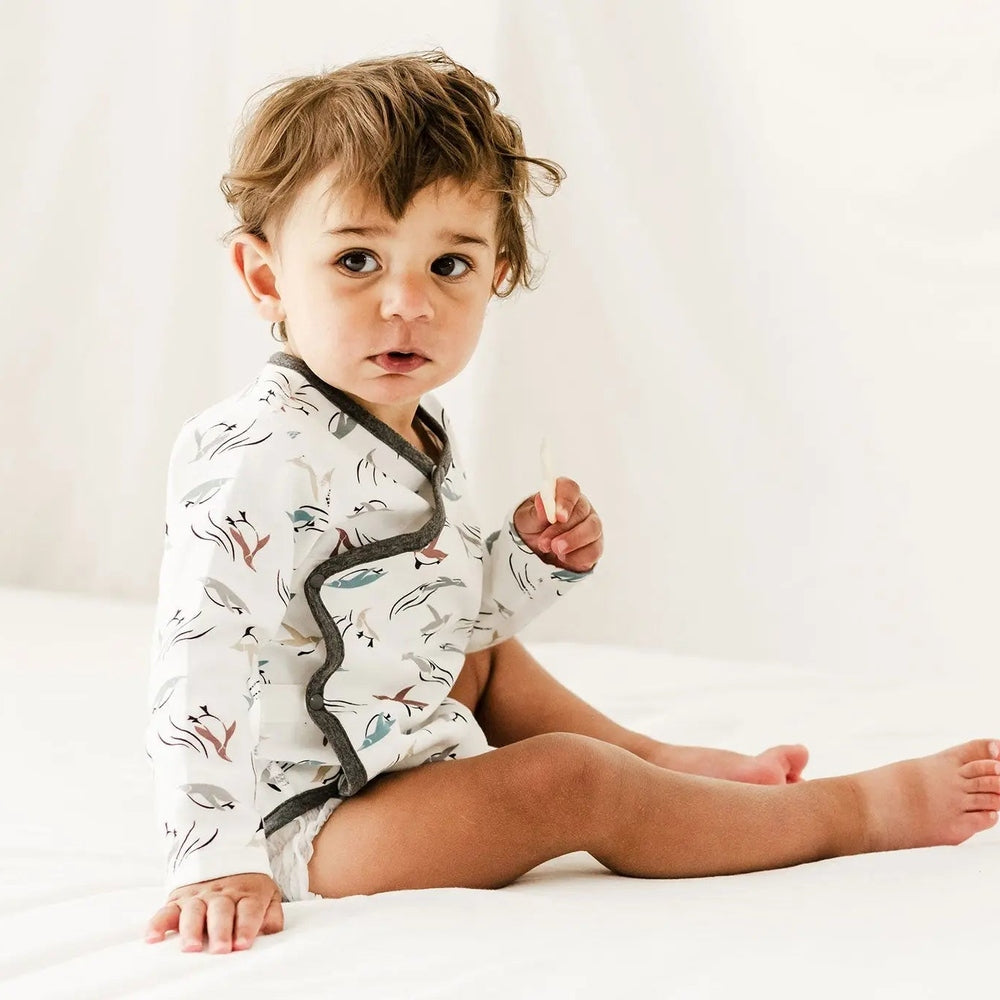
A practical example is the Nest Designs Organic Cotton Kimono Long Sleeve Onesie, described as GOTS-certified organic cotton with a touch of stretch. For gift buyers, that kind of easy-on cotton basic is usually a smarter sensitive-skin choice than fuzzy novelty fabrics or heavy trims.
What to skip when skin is already irritated
- Tight cuffs, scratchy decorative lace, and stiff appliqués that rub the same spots all day.
- Thick fleece or plush fabrics directly on hot, inflamed skin.
- Wool next to the skin unless you already know your child tolerates it well.
Best fabrics for hot sleepers
If your child runs warm, fabric weight matters as much as fibre type. You want breathability, airflow, and easy moisture release, not just a fabric that feels silky in the hand.
Bamboo-based sleepwear is popular because it feels cool and drapey, but it helps to shop with clear expectations. In the marketplace, many bamboo baby garments are viscose or rayon made from bamboo rather than raw bamboo fibre. The U.S. Federal Trade Commission explains why that distinction matters for textile labeling.
For families shopping warm-weather pyjamas or backup daycare sleepwear, the Silkberry Baby Bamboo Short Sleeve 2 Pc Pajama Set Pineapple Love is a real bamboo-fabric example carried by the store. Lightweight short sleeves, soft hand feel, and quick wash-and-wear convenience are what make this type of set attractive for hot sleepers and gift registries alike.
If your child overheats easily, also watch the full sleep setup: room temperature, sleep sack TOG, mattress protection layers, and whether the pyjamas fit close enough for safe sleepwear use without becoming overly heavy.
Best fabrics for winter layering
For cold Canadian days, fabric strategy beats bulk. The goal is to trap warm air in layers while keeping sweat from sitting on the skin. That usually means:
- a soft base layer,
- a warm middle layer,
- and a weather-ready outer layer.
Merino wool is popular for layering because it can feel lighter than a bulky cotton-only stack while still helping with warmth. It is not the best first choice for every eczema-prone child, but it can be a smart outer or mid layer once you know your child tolerates wool blends.
A real example is the Condor Extrafine Merino Wool Rib Tights Black, listed with a wool-blend composition. Pieces like this can work under dresses, tunics, or winter uniforms when you want warmth without adding a thick pant layer that bunches inside boots.

A better cold-weather formula
Instead of buying one extra-thick outfit, try a cotton base + insulating layer + weather shell. That gives you more mileage across school runs, stroller walks, and car-seat transitions.
Best fabrics for rainwear and slushy shoulder seasons
For rainwear, softness matters less than waterproof performance, mobility, and what goes underneath. A soaked cotton jogger is comfortable only until it is wet. A lightweight waterproof shell keeps the warm layer dry, which is what actually preserves comfort.
The Jan & Jul Waterproof Puddle Dry Rain Suit Yellow is a useful example: the shell does the wet-weather job, while you change the base layers underneath depending on whether the forecast is cool, cold, or mild.

That is also why rainwear can be a strong gift buy for toddlers: parents often need it quickly, sizes are easier to buy with room to layer, and it solves a very obvious seasonal problem.
Best fabric gifts when you are not sure what size or season to buy
If you are shopping for a shower, first birthday, or practical just-because gift, focus on textiles that are forgiving and genuinely useful.
- Muslin blankets: easy to gift, easy to wash, and useful well beyond the newborn stage.
- Breathable pyjamas: a good pick for warm sleepers or summer babies.
- Soft cotton basics: lower risk for sensitive skin than plush novelty pieces.
- Rainwear: especially useful for mobile toddlers and daycare families.
Two useful examples are the Lulujo Baby Breathable Bamboo Muslin Swaddle Blankets 4Pack and the Loulou Lollipop Muslin Quilt Blanket. Both lean into the kind of soft, easy-care fabric gift that feels premium without guessing too hard on fit.
What labels actually matter when you compare fabrics
- Fibre content: check whether “bamboo” means bamboo viscose or rayon from bamboo, not just a marketing shortcut.
- Certifications: GOTS and OEKO-TEX can be useful trust signals, especially for next-to-skin basics.
- Care instructions: the best fabric for daily life is one your household will realistically wash, dry, and re-use often.
- Use case: sleepwear, rainwear, underwear, and outer layers should not be judged by the exact same rules.
FAQ
What is the best fabric for a baby with eczema?
Usually soft, breathable cotton is the safest first choice, especially during a flare. Organic cotton basics with simple seams are often the easiest place to start.
Is bamboo better than cotton for hot sleepers?
Not always. Bamboo-based sleepwear can feel lighter and cooler, but a lightweight cotton fabric can also work well. Focus on breathability, fabric weight, and the full sleep setup, not just the buzzword on the label.
Is merino wool okay for kids in winter?
Yes, for many families merino or merino-blend layers are excellent for cold weather. If your child has very reactive skin, try cotton closest to the skin first and use wool as a middle or outer layer unless you know they tolerate it well.
What fabric should I choose for toddler rainwear?
Choose waterproof outerwear first. The shell keeps the child dry, and you can adjust warmth underneath with cotton, fleece, or wool-blend layers depending on the weather.
What fabric gifts are safest when I do not know the baby's preferences yet?
Muslin blankets, breathable pyjamas, and soft cotton basics are usually the easiest practical gifts because they are versatile, washable, and lower risk than highly textured fabrics.