In this article
KEEN and UGG do not represent two interchangeable answers to “winter boot.” The exact models matter. KEEN’s Little Kids’ Puffrider is an insulated snow boot with a waterproof membrane. UGG’s Kids’ Perry Weather Chelsea is a seam-sealed leather Chelsea boot that UGG positions for casual wear in light-to-moderate rain. One belongs in the snow-day lane; the other belongs in the wet everyday lane.
That distinction is more useful than choosing a brand winner. Start with the surface and duration of the outing, then check the child’s foot, socks and current size. A warm label cannot fix a cramped toe box, and a waterproof construction does not turn a low casual boot into deep-snow equipment.
For snow play: KEEN Puffrider
The KEEN Little Kids’ Puffrider Waterproof Winter Boot uses KEEN.DRY waterproof breathable membrane construction, 200 g of KEEN.WARM insulation, a thermal-shield insole and a rear bungee-cinch opening. KEEN publishes a temperature rating down to -32°C/-25°F for this exact model.

Use the manufacturer’s temperature figure as a model specification, not a forecast of how every child will feel. Sock material, circulation, activity, moisture, fit and exposure time all change comfort. A child standing at a bus stop and a child running uphill in the same boot do not produce the same result.
The rear opening deserves a real try-on. Loosen it fully, have the child push the heel to the back, then secure the bungee. Ask the child to walk, squat and climb one stair. The heel should not lift excessively, and the instep should not feel pinched. With the winter sock on, toes should be able to move without the foot sliding forward.
For wet everyday wear: UGG Perry Weather Chelsea
The UGG Kids’ Perry Weather Chelsea uses waterproof leather and seam-sealed construction. UGG describes this exact kids’ model as a casual boot for light-to-moderate rain. Its elastic side panels and pull-on Chelsea shape make it a quick everyday option for school, errands and wet sidewalks.
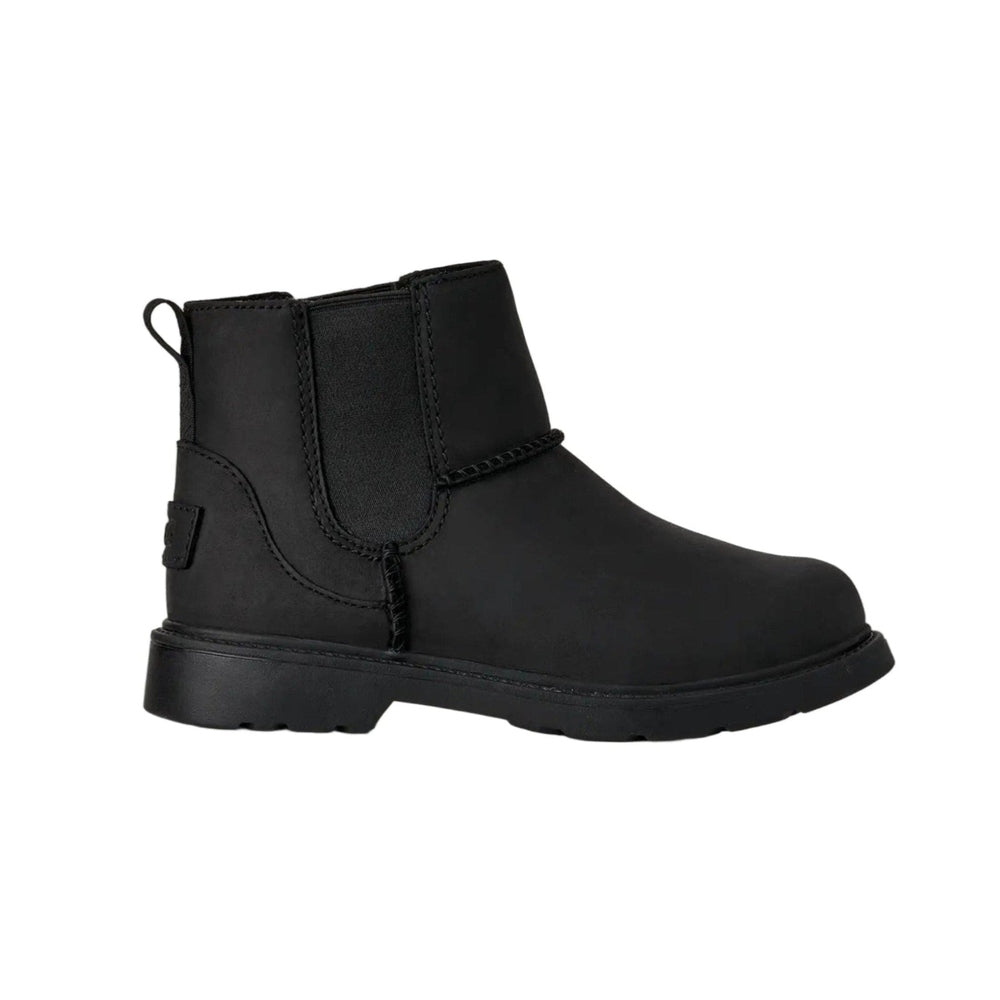
The Perry does not carry the Puffrider’s insulated snow specification. Do not buy it on the assumption that the UGG name automatically means sheepskin lining, a sub-zero rating or deep-snow coverage. Choose it when a child needs a tidy, quick-on waterproof leather boot for the conditions UGG actually names.
Because the shaft is lower and has elastic panels, check where rain pants or regular pants end. For shallow puddles and wet pavement, the Chelsea shape may be exactly the convenient choice. For deep snow, the opening is a more exposed junction and the Puffrider’s taller snow-boot build is the more relevant starting point.
Three trips, three answers
| Trip | Better first look | Why |
|---|---|---|
| Daycare snow play or sledding | KEEN Puffrider | Insulation, taller shaft, thermal insole and snow-oriented closure |
| Wet school commute and errands | UGG Perry Weather Chelsea | Quick pull-on shape and seam-sealed waterproof leather |
| Long cold outing with uncertain snow depth | KEEN Puffrider, after fit check | Its exact published construction addresses insulation and snow coverage |
The fit check that matters more than the logo
- Measure both feet late in the day while the child is standing. Use the longer foot and the brand’s current size chart.
- Test with the sock planned for the outing. A thick sock added after fitting can remove needed space and reduce comfort.
- Seat the heel, secure the boot and ask the child to walk up and down a step. Watch for heel lift, toe pressure and a changed gait.
- Remove the boot and look for persistent red pressure areas. Ask specific questions: “Do your toes touch?” and “Does the top press here?” work better than “Is it fine?”
- Check the pant connection. A snow pant gaiter should cover the Puffrider shaft. With Perry, confirm the everyday pant or rain layer does not funnel water into the elastic opening.
Do not add a full size simply for “warm air.” Growth room and functional room are not the same as uncontrolled movement. If the heel lifts, the toe drags or the child’s stride changes during the try-on, reassess the fit before buying. Use the manufacturer’s allowance and the child’s movement as the deciding evidence.
Moisture changes the next day
At the end of the outing, remove loose snow and mud, open the boot and dry it according to the exact care instructions. Pull removable insoles only when the manufacturer allows it. Avoid direct high heat, which can damage materials and adhesives. A boot that is still damp inside tomorrow is not ready simply because the exterior looks dry.
Traction also depends on the surface. A lugged outsole can help on snow and rough wet ground, but no children’s boot should be described as slip-proof on ice. Shorten the route, use handrails and slow the child down when conditions glaze over; outsole appearance alone cannot certify a surface as safe.
Build the daycare routine around that drying time. If a child is outside twice a day, a backup pair or indoor shoes may solve more than a higher specification. Label the boots, pack spare dry socks and teach the child to loosen the closure before pulling rather than crushing the heel counter.
Plan the indoor hand-off too. Puffrider insulation that helps outside may feel excessive in a heated classroom; Perry’s leather upper is still outdoor footwear. A clearly labelled indoor shoe keeps the weather boot open for drying and prevents a child from spending the day in the same damp sock-and-boot environment.
When the child comes inside, check the sock at the toes, heel and ankle. A damp patch can reveal snow entering at the opening, rain running down the pant, perspiration or a closure problem. Fix the route before assuming the membrane failed.
Finish with the size lane
Puffrider uses Little Kid sizing while Perry Weather Chelsea extends into Big Kid sizing. Their labels overlap only around the transition between those stages, so this is not a clean head-to-head for every child. Measure both feet, open the exact chart and check the available size and colour after choosing the weather job.
For a wider boot-fitting framework, read How to Choose Kids’ Winter Boots Without Chasing the Warmest Label and Daycare Winter Boots: Fit, Fast Closures and Drying Time. Then browse the Fall/Winter Edit for the rest of the child’s current weather system.
The clean decision is job first: Puffrider for insulated snow-duty, Perry for light-to-moderate wet-weather everyday wear. If the job is neither of those, keep looking rather than asking either model to become a different boot.