In this article
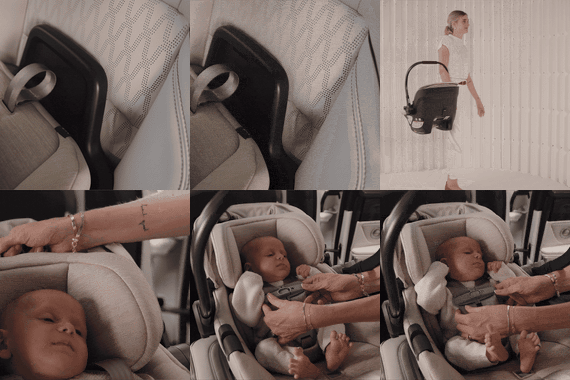
An infant car seat has to work when everyone is tired: the first ride home, a wet parking lot, a late appointment, and the moment a newborn needs to be buckled without guesswork. The Cybex Aton G Swivel Sensorsafe Infant Car Seat is for families who want the infant-carrier stage with a rotating base and smart safety reminders.
The short answer: choose Aton G Swivel Sensorsafe if easier loading and a dedicated infant carrier help caregivers use the seat correctly. Choose a simpler infant or convertible plan if vehicle space, stroller fit, or budget are the bigger constraints.

Start with correct use, then judge convenience
Car-seat shopping can become feature-heavy very quickly, but the real test is simple: can the seat be installed correctly, fit the baby correctly, and be used correctly by every caregiver who drives the child? A swivel feature is valuable only when it supports those basics rather than distracting from them.
Transport Canada advises families to choose a child restraint that matches the child’s stage, height, and weight, and to use seats with the Canadian National Safety Mark. For a newborn, that means rear-facing use, correct recline, and close attention to the manufacturer labels. The swivel mechanism does not change those requirements.
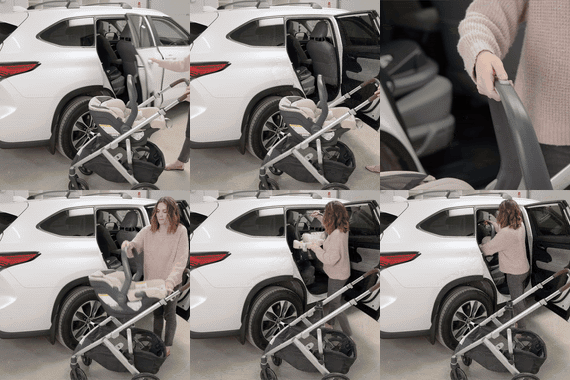
The strongest reason to consider Aton G Swivel Sensorsafe is loading ergonomics. Turning the seat toward the door can make it easier to place the baby, straighten harness straps, check the buckle, and avoid awkward twisting in a tight back seat. That can matter for shorter caregivers, postpartum recovery, grandparents, or vehicles with lower rooflines.
The second reason is consistency. A feature that makes the daily setup less frustrating may help caregivers take the time to tighten the harness and check the chest clip. Canadian Paediatric Society guidance emphasizes proper harness fit, including flat straps, no twists, and a snug shoulder fit. Anything that supports that repeated routine deserves attention.
Vehicle fit comes before brand preference. Parents should decide which seat position will be used, whether the front passenger still has safe space, how the base installs, and whether the carrier clears the door and front seat when rotated. A premium seat that crowds the vehicle can create daily frustration.
The infant-carrier stage also needs a stroller plan. Some families love moving a sleeping baby from car to stroller without rebuckling. Others rarely use that transfer and would rather have a seat that stays installed. If the carrier will mostly remain in the car, compare the value against a convertible-seat path before buying.
Sensors and reminders can be reassuring, but parents should treat them as support, not supervision. The safest habit is still never leaving a child unattended in a vehicle, checking the back seat every time, and building routines that do not depend on a phone alert or accessory alone.
A good pre-birth plan is to install the base early, read both manuals, and practice buckling with a doll or stuffed animal before the first real trip. Transport Canada installation guidance tells families to follow both the vehicle manual and the seat manual. That practice is especially helpful when a new feature, such as rotation, adds steps.
Parents should also map who carries the seat. An infant carrier can be convenient and still heavy when combined with a growing baby. If one caregiver has wrist, back, or incision-recovery concerns, the stroller connection and doorway distance may matter as much as the seat itself.
The newborn recline check is another reason to slow down. Transport Canada notes that newborns and premature babies may need more recline to help keep the airway open, according to the seat’s instructions. The rotation, base angle, and vehicle seat shape should all be checked before the first ride.
The main caution with any swivel seat is assuming the feature solves every fit problem. It may improve access, but it cannot make a poor vehicle fit acceptable or replace the child’s height and weight limits. If the base is hard to install securely or the carrier blocks safe front-seat positioning, another option may be better.
The second caution is budget allocation. A family buying a stroller, bassinet, monitor, and feeding gear may need to decide where convenience is worth the premium. Aton G Swivel Sensorsafe is easier to justify when the car seat is used daily and multiple caregivers benefit from the loading angle.
For winter families, harness discipline deserves special attention. Bulky clothing can interfere with proper tightening, so parents should plan safe layers that work in the car seat. A swivel seat can make adjustments easier, but the clothing and harness rules still come from safety guidance and the product manual.
Before checkout, run through one realistic day: leaving for a doctor visit, parking beside another car, loading in rain, attaching to a stroller, then returning home with a tired baby. If the swivel base clearly lowers stress while preserving correct use, it has a strong job. If the benefit feels occasional, choose the seat that fits the vehicle and budget best.
Families with more than one vehicle should make the base plan explicit. A rotating base in the primary car may be enough, or a second base may be needed if daycare pickup changes between caregivers. Moving a base repeatedly can be done correctly, but only if the adult has time and confidence to reinstall it every time.
Stroller compatibility should be treated as a routine question, not a bonus. If the family expects to transfer the seat often, confirm the adapters, frame, and lifting path before buying. If the transfer will be rare, do not let travel-system appeal outweigh the vehicle installation decision.
Parents should also think about the end of the infant-seat phase. A premium infant seat is temporary by design, so the value has to come during the months it is used most. If the family expects a larger baby, long daily drives, or early transition to a convertible seat, plan the next step before the infant seat feels outgrown.
A clear yes comes from repeated use: easier buckling, calmer parking-lot loading, and a caregiver who can check fit without twisting. A clear no comes when the same money would better solve vehicle space, a second base, or the next car-seat stage. The right answer is the one that improves every ride, not just the first impression in the store.
Families should also plan who will confirm the seat over time. Babies grow quickly, inserts change, harness height changes, and caregivers may swap vehicles. A monthly calendar reminder to check fit, clean crumbs, and review the manual can be more valuable than any premium feature that is forgotten after installation day.
If grandparents or occasional caregivers will drive, keep the routine simple enough to teach. The swivel base may make loading easier, but the adult still needs to understand lock indicators, harness tightness, and the no-bulky-clothing rule. The best seat is one the whole care circle can use correctly.
Infant car-seat buying checklist
- Confirm the seat is appropriate for the child’s stage, height, and weight.
- Check the Canadian National Safety Mark and read the manual.
- Test the base in the actual vehicle position if possible.
- Practice harness tightening without bulky clothing.
- Move a sleeping baby to a safe sleep space after the ride.
FAQ: buyer questions parents ask before choosing
Is a swivel infant car seat worth it for a newborn?
It can be worth it when easier loading helps caregivers position and buckle the baby correctly. It is not a shortcut around vehicle fit, the manual, or choosing a Canadian-approved seat for the child’s height and weight.
Should I choose Cybex Aton G Swivel Sensorsafe over a traditional infant seat?
Choose it when the rotating base, carrier routine, and safety reminders solve a repeated problem. Choose a traditional infant seat if your vehicle space, stroller compatibility, or budget points to a simpler setup.
What should I check in my vehicle before buying?
Check the seating position, front-passenger space, installation method, recline angle, carrier clearance, and whether every caregiver can repeat the installation and harness routine correctly.
Can a car seat be used for sleeping after the drive?
No. Canadian pediatric guidance says a car seat is not a safe sleep space. Move the baby to a safe sleep surface when the ride is over.
For installation-sensitive gear, follow the product manual and use a qualified installation check when needed.
Related baby enRoute reading
- What Parents Need to Know Before Buying a Car Seat in Canada: Your Ultimate Guide (and Where to Get Expert Help in BC!)
- The Ultimate Infant Car Seat Guide 2026: Safety, Features, and Fit
- Canada Travel System Guide: How to Choose a Stroller and Infant Car Seat That Actually Work Together
Product details can change: Check linked product pages for current colours, pricing, availability, and compatibility. Follow manufacturer instructions and official safety guidance when those apply.