In this article
Quick answer
If your baby will ride in your own car most days, the Clek Liing is usually the stronger fit because it gives you a base with a load leg, rigid-UAS installation, and multiple recline positions that can make everyday setup easier. If your routine is more taxi, rideshare, travel, or frequent car swapping, the Clek Liingo is usually the smarter buy because it was built around baseless flexibility instead of one-car convenience.
The key is not deciding which seat is “better” in the abstract. The real decision is which one matches how you actually move around with a newborn.
What stays the same
Liing and Liingo solve the same core job: they are both rear-facing infant seats for the newborn stage, both work up to 35 lb and 32 inches according to baby enRoute’s live product details, both use a narrow shell that can help in tighter vehicle layouts, and both can connect to many stroller brands through approved Maxi-Cosi-style adapters. Both are also marketed around travel readiness, newborn support, and aircraft approval.
That is why this is not a safety-versus-unsafe comparison. It is a routine-fit comparison.
The biggest difference is how you install and move them
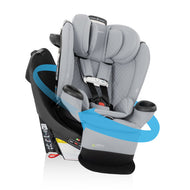
The Liing is the more traditional premium infant-seat setup. baby enRoute’s live product page positions it around a base with a metal load leg, rigid-UAS installation, and up to seven recline positions. That usually matters most for families who want a more locked-in everyday setup in a primary vehicle.
The Liingo takes the opposite path. baby enRoute’s live product page positions it as a baseless infant seat with built-in UAS connectors and a European belt path, aimed at families who may jump between taxis, rideshares, travel days, grandparents’ cars, or city routines where carrying a separate base feels like extra friction.

So the cleanest way to think about it is this:
- Liing = stronger everyday home-car setup
- Liingo = stronger flexible-car or car-light setup
Choose the Liing if your life is mostly one main car
The Liing makes the most sense if you expect most trips to start from the same vehicle and you want the easier day-to-day rhythm of a premium base. That is especially true if you care about three things:
- easier repeat installs in the same vehicle
- more recline adjustability for newborn positioning
- a stronger “set it up once and use it daily” routine
For many families, that is the better use of money because infant seats are used constantly in the first months. If your baby will leave the house from your own vehicle most of the time, the Liing’s base-driven setup tends to feel worth it more often than a travel-first design.
Choose the Liingo if your life includes taxis, rideshares, or frequent switching
The Liingo becomes more compelling when your daily life is less predictable. If you live in the city, share one car, use Uber or taxis often, travel more than average, or need one seat to move between multiple adults without a second base plan, the Liingo solves a very real pain point: it is built around not needing the extra base in the first place.
That does not just matter on flights or vacations. It matters on ordinary days when one parent has the car, when grandparents help with pickup, or when you want fewer moving parts in a condo or apartment routine.
If that sounds like your real life, Liingo is not the “cheaper compromise.” It is often the more logical tool.
What about small cars, travel, and airport days?
Both seats appeal to families trying to keep their setup compact, and both can work for travel. The difference is where the convenience shows up.
- Liing is usually easier to appreciate in the daily vehicle you use all the time.
- Liingo is usually easier to appreciate when the install itself changes all the time.
If you are the parent thinking, “We do not even drive every day, but when we do, I need this to be fast,” that is Liingo logic. If you are thinking, “We drive every day and I want the more dialed-in base setup,” that is Liing logic.
For flights, both can still make sense, but the Liingo story is more compelling when the whole trip includes airport transfers, rental cars, and uncertainty rather than just the aircraft portion.
Stroller compatibility is not the main decision, but it still matters
Both seats can work with many stroller systems when the correct adapter is used. baby enRoute’s live product pages reference compatibility through approved adapters rather than a built-in one-brand travel-system story. That means the smarter question is not “Do these work with strollers?” but “Does my exact stroller support this seat cleanly with the right adapter?”
If stroller use is central to your routine, confirm the exact pairing before you buy. A good compatibility match can make either seat feel easier. A sloppy adapter story can make either seat feel more annoying than expected.
For newborns, fit and setup matter more than premium language
The strongest external guidance on infant seats is still the basic stuff: correct rear-facing setup, correct harness position, correct recline angle, and a stable install. Transport Canada and the Canadian Paediatric Society both emphasize that rear-facing is the safest setup for infants, and third-party technicians repeatedly point out that tiny differences in fit and angle matter more than marketing language.
That is why parents of very small newborns should think less about the nicer feature list and more about which setup they will actually use correctly every time. The “best” seat on paper loses value fast if the install style does not match your real routine.
Start here if you are stuck
- If you mostly use your own car, start with Liing.
- If you mostly use taxis, rideshares, travel, or multiple vehicles without a stable base plan, start with Liingo.
- If you are buying for a compact-car household, confirm fit and the exact stroller adapter plan before checkout.
This is one of those baby-gear choices where the better seat is usually the one that removes friction from the routine you already have.
FAQ
We mostly use our own car — is the Liing worth paying more for, or is the Liingo enough?
If your baby rides in your own car most days, the Liing is usually easier to justify because the base, load-leg setup, and recline adjustability are features you are more likely to benefit from every day. Liingo becomes the smarter value when you are paying for flexibility you will actually use, not when your routine is already stable.
We don’t own a car and use taxis or Ubers a lot — is the Liingo actually the smarter buy?
Usually yes. That is the routine where Liingo makes the most sense. If you are regularly moving between vehicles and want to avoid managing a separate base, the baseless design becomes a practical advantage rather than a feature you only use a few times a year.
Which one is easier with a newborn: getting the angle right, moving it between cars, and using it for travel?
For a single main vehicle, Liing is usually the easier everyday answer because the base and recline system are designed around that use case. For moving between cars, rideshares, and travel days, Liingo is usually the easier answer because its whole design is built around flexibility.
For installation-sensitive gear, follow the product manual and use a qualified installation check when needed.
Related baby enRoute reading
- What Parents Need to Know Before Buying a Car Seat in Canada: Your Ultimate Guide (and Where to Get Expert Help in BC!)
- Your Ultimate Guide to Car Seat & Stroller Warranties (for Brands like UPPAbaby, Britax, & More!)
- The Ultimate Infant Car Seat Guide 2026: Safety, Features, and Fit
Product details can change: Check linked product pages for current colours, pricing, availability, and compatibility. Follow manufacturer instructions and official safety guidance when those apply.