In this article
A stroller that's $150 cheaper in the US often isn't cheaper by the time it's in your hallway. Add the exchange rate, the tax you pay at the border and any duty, then remember two things you can't add back: the warranty usually only works in the country where you bought it, and a US infant car seat can't legally be used in Canada.
Here's how to work out whether a cross-border stroller is really a deal.
1. The warranty usually stays in the US
Most stroller warranties are tied to the country of purchase. UPPAbaby's, for example, is valid only in the original country of purchase, and the company says it won't ship repair or replacement parts outside that country. Bugaboo's warranty also applies only in the region where the stroller was bought.
So if a fold latch breaks or a wheel fails in your first year, a US-bought stroller may mean shipping it back across the border for service, or paying for the repair yourself. For a stroller you'll use every day for three or four years, that's a real cost.
Before you buy, check the brand's warranty page for the exact wording. Look for "country of purchase" or "region of purchase."
2. Tax and duty at the border
When you bring a stroller home, it counts toward your personal exemption:
- Away less than 24 hours: no exemption. You pay tax on the stroller.
- Away 24 hours or more: up to CAD $200 of goods tax-free. If you're over $200, tax applies to the whole amount, not just the difference.
- Away 48 hours or more: up to CAD $800 tax-free, and you pay tax only on the amount above $800.
Most full-size strollers cost more than $800 on their own, so expect to pay Canadian sales tax on top of any US sales tax you already paid. Duty depends on where the stroller was made, not where you bought it. Goods made in the US or Mexico generally come in duty-free under CUSMA, but most strollers are made elsewhere, so duty may apply. The Canada Border Services Agency's website has the current rules, and the border officer will tell you what you owe.
Shipping a stroller to a Canadian address from a US store works the same way, usually with a brokerage fee added by the courier.
3. A US car seat can't come with it
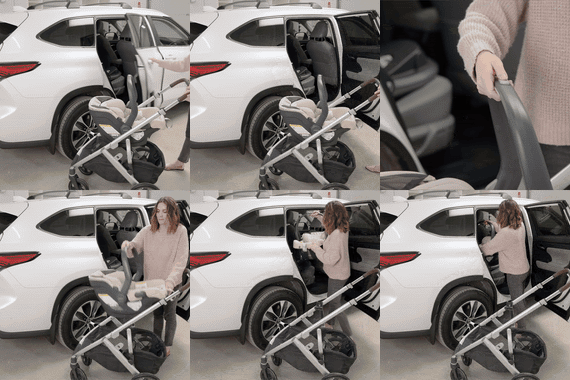
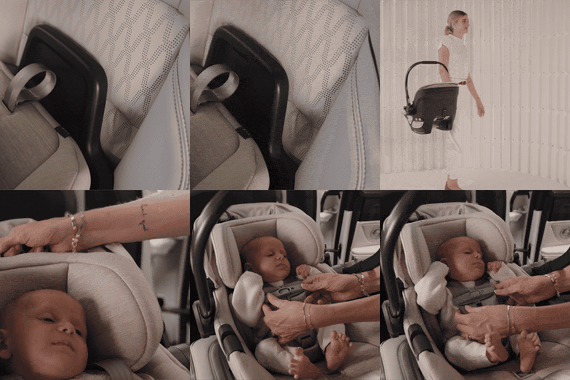
If the deal is a travel system with an infant car seat, the car seat is the problem. Transport Canada says car seats that don't meet Canadian standards can't be imported, sold or advertised in Canada, and provincial laws don't allow them to be used here. A Canadian-approved seat has the National Safety Mark on its label. A US-market seat won't, even if it's the same brand and looks identical.
So a US travel system usually means buying the stroller there and the infant car seat in Canada, which can wipe out the saving.
4. Canadian and US versions aren't always the same
Strollers sold in Canada have to meet Canada's own stroller regulations. A US-market stroller wasn't sold against those rules, and recall notices and safety fixes are handled by country. If a model is recalled, a Canadian buyer with a US stroller may not get the notice or the fix through the usual channel.
Accessories can differ too. Check that the car seat adapters, rain cover and bassinet you plan to buy in Canada fit the exact US model.
5. Run the real numbers
To compare fairly, add up:
- The US price, converted at your card's exchange rate, plus any foreign transaction fee
- US sales tax, if the state charges it
- Canadian sales tax at the border, and any duty
- Gas, parking and time, or the shipping and brokerage fees
- The cost of a Canadian infant car seat, if the deal included a US one
- An allowance for having no Canadian warranty
Then compare that total with the Canadian price after tax. In BC and Ontario, strollers pay 12% and 13% respectively, while car seats pay only 5%. Our guide to sales tax on baby gear explains the breakdown.
Returns are worth thinking about too. Sending back a stroller you've driven home across the border is much harder than returning it to a store down the road.
When buying in the US can still make sense
- You'll be in the US for 48 hours or more and the price gap is large even after tax.
- The model you want isn't sold in Canada at all, and you've confirmed parts and accessories are available.
- It's a second, inexpensive stroller where the warranty matters less.
If you're weighing a used stroller instead, our checklist for buying a used stroller in Canada covers recalls and what to test. Want to try the Canadian version first? Call our Richmond, Burnaby or Ottawa store ahead of your visit and we'll let you know which models we have on the floor, or browse all full-size strollers.