In this article
Short answer: if you are buying new, start with the Bugaboo Donkey 6. Bugaboo's Canadian Donkey 5 page now labels that generation retired. If you already own a Donkey 5 that fits your children, vehicle and home, keep it unless Donkey 6 removes a repeated problem with basket capacity, side-luggage access, bassinet airflow or the fold-and-lift routine.
First decide whether this is a new purchase or an upgrade
| Your situation | Starting answer | What to verify |
|---|---|---|
| Buying through a current retailer | Choose Donkey 6. | Pick the exact single, double or twin configuration and price every required fabric or seat set. |
| Donkey 5 owner with no recurring friction | Keep Donkey 5. | Confirm that age, load and condition still match its manual. |
| Donkey 5 owner who regularly runs out of storage | Test Donkey 6 with the real weekly load. | Separate underseat-basket needs from side-bag needs; their access and limits differ. |
| Comparing a used Donkey 5 with a new Donkey 6 | Compare total cost and condition before feature deltas. | Check exact included parts, maintenance history, current support and missing conversion pieces. |
What Bugaboo says changed
Bugaboo's current Donkey 6 comparison identifies larger breezy bassinet panels, a 50% larger underseat basket, a redesigned side luggage basket, a rear seat pocket, lighter wheels and a smaller folded footprint than previous Donkey models. These are useful deltas, but none is automatically an upgrade reason. The question is whether one changes a task your household repeats.
| Donkey 6 change | Potential buyer value | Counterexample |
|---|---|---|
| Underseat basket rated to 33 lb / 70 L | More room for a predictable weekly load. | Extra capacity is irrelevant if the stroller is normally used lightly. |
| Redesigned side luggage basket | Useful in single configuration when side access matches the routine. | It does not replace the underseat basket in double configuration. |
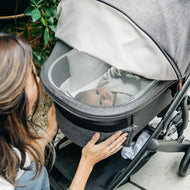
| Larger breezy bassinet panels | More adjustable ventilation area in bassinet use. | It does not establish an individual comfort or temperature outcome. |
| Lighter wheels and smaller folded footprint | May improve a repeated lift or storage sequence. | Published deltas do not prove the folded stroller fits your trunk. |

Use current Donkey 6 numbers for the space plan
Bugaboo's Canadian Donkey 6 single page lists 33.7 lb with the seat, 35.9 lb with the bassinet, a 23.6 in. single-configuration width, and a one-piece fold of 22 x 24.2 x 35.4 in. It also lists a 50 lb seat capacity. Treat those as planning inputs, not a promise of easy lifting or universal doorway fit.
- Doorway: measure the tightest doorway, elevator and gate used in a normal week in the intended configuration.
- Parking: mark the stroller's home position and leave space for conversion parts that are not attached.
- Vehicle: reproduce the fold, then measure the cargo opening and the usable area around other gear.
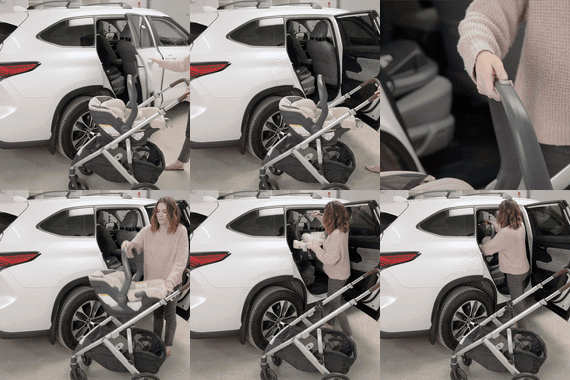
- Lift: rehearse lifting the displayed configuration to cargo height without relying on a showroom floor.
Do not compare a Donkey 5 measurement from one setup with a Donkey 6 measurement from another. Bassinet, seat, single and double configurations can change both the number and the handling sequence.
Run a seven-day load ledger
Before upgrading for storage, write down every item carried for seven ordinary days and where it needs to be reached. Then pack that load into the intended Donkey 6 configuration.
- Place heavy, low-priority items in the underseat basket without exceeding the published limit.
- Place frequently reached items where access remains possible with the selected seats or bassinets installed.
- Check whether conversion changes remove access you had in single mode.
- Price any required second seat, bassinet fabric or adapter by exact product name.
This test can produce a perfectly sensible keep decision. If Donkey 5 already carries the actual load and stores cleanly, Donkey 6's larger published capacity is extra capacity rather than solved friction.
Choose the configuration before comparing generations
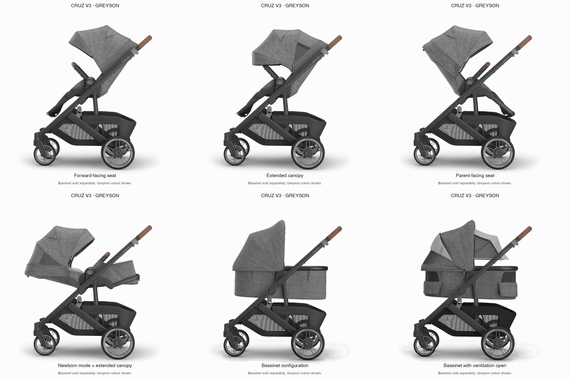
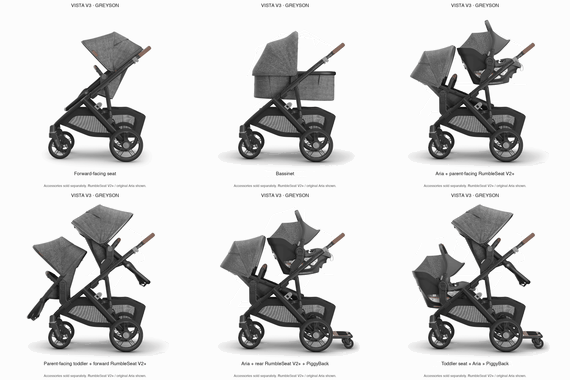
Bugaboo currently presents Donkey 6 in single, double and twin configurations. Write the intended configuration at purchase and the next likely configuration before comparing price, weight, storage or included parts. A single-to-double sibling plan is not the same receipt as a twin plan, and a displayed stroller can contain components that are separate in the configuration you buy.
| Household plan | Question that can eliminate Donkey 6 | What to put on the receipt |
|---|---|---|
| One child, no expansion plan | Does side-by-side expansion justify the folded size and component storage? | Exact single configuration and only the accessories used now. |
| Baby plus older sibling | Will both children still need seats during the same ownership window? | Each seat or bassinet component required for the planned sibling stage. |
| Twins | Do the twin setup, vehicle and home storage work together from the first day? | Two matching newborn and later seating paths, with every conversion part named. |
Check a Donkey 5 before assigning upgrade value
For an existing stroller, inspect condition separately from Donkey 6 features. Use the Donkey 5 manual to check the frame, wheels, brake, harnesses, fold, baskets and all conversion parts. Missing or worn components can change the keep decision, but they do not prove that every owner needs the newer generation. Confirm whether replacement parts and service remain available for the exact Donkey 5 component before assigning resale value.
Then calculate upgrade value by task: how many weekly loads exceed the old basket, how often side access is blocked, how frequently the bassinet is used in warm conditions, and whether the new folded shape fits the actual parking space. If the answer is zero or occasional across every row, keep the current stroller and revisit only when the household configuration changes.
Choose by household, not generation number
Choose Donkey 6 when buying new because it is the current supported retail generation. Consider upgrading from Donkey 5 only when the larger basket, side-bag layout, ventilation changes or fold-and-lift sequence solves a named weekly problem. Keep Donkey 5 when it remains suitable and the changes would mostly duplicate capacity you do not use.