In this article
Quick answer: choose the UPPAbaby Mamaroo Smart Swing if you want app-connected motion variety and a dedicated soothing station; choose the Maxi-Cosi Cassia Swing if you want a lighter, compact swing that rotates easily in a smaller room. Neither should be bought as a sleep product. The right decision is about supervised awake-time soothing, not naps.
Baby swings are tempting because they promise a few hands-free minutes during the hardest part of the newborn day. The challenge is that swing marketing often sounds close to sleep language, while safety guidance separates soothing from sleep very clearly. Public health and consumer-safety sources consistently point families back to a firm, flat, bare sleep surface for actual sleep. That makes the best swing the one that solves your awake-time problem without confusing your sleep plan.
The core difference: motion ecosystem or compact helper?
The UPPAbaby Mamaroo Smart Swing is the more feature-led choice. Its value is in multiple parent-inspired motion patterns, adjustable speeds, built-in sounds, app control, and a familiar smart-swing experience for parents who expect to use it many times a day. It belongs in a living room, nursery corner, or open kitchen where the swing can stay ready.
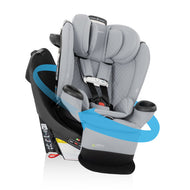
The Maxi-Cosi Cassia Swing is the compact-choice answer. Its appeal is lighter weight, 360-degree rotation, motion activation, and a space-saving footprint. It is easier to imagine moving between rooms or turning toward the parent without shifting the whole frame. For condos, shared spaces, or grandparents’ homes, that may matter more than having the most motion combinations.

When the Mamaroo is the better buy
Choose the Mamaroo when you want a soothing station that can be tuned. Some babies respond better to one pattern than another, and tired parents may appreciate being able to adjust motion and sound without hovering over the seat. It is also the stronger pick for families who already know a swing will be used daily: during quick showers, while folding laundry nearby, or while keeping baby close during supervised awake time.
The trade-off is that a feature-rich swing can invite overuse. Parents should set their own boundaries before the product arrives: short supervised sessions, harness used correctly, no added blankets or pillows, and immediate transfer to a safe sleep surface if baby falls asleep. If the household needs a product that disappears between uses, the Mamaroo may feel like more station than helper.
When the Cassia is the better buy
Choose the Cassia when space and visibility are the issue. The rotating seat is useful because a parent can keep eye contact from a different angle without dragging the frame around. Its compact nature makes it easier to place in real rooms where strollers, play mats, feeding gear, and laundry already compete for floor space. For families who need a practical soothing option but do not want a large baby-gear footprint, this is the cleaner path.
The Cassia also makes sense for second caregivers. A grandparent may find a lighter swing easier to position safely in an open area away from cords, heaters, and traffic paths. Motion activation can be helpful, but it should never replace supervision. A swing is still a seat, not a babysitter, and not a sleep zone.
What to decide before buying either swing
- Where will it live? Measure the actual room, not the nursery board.
- Who will use it? Choose controls that every caregiver can understand quickly.
- How sensitive is your baby? Some babies like movement; others settle better with arms, feeding, or a quiet mat.
- What is the sleep plan? Decide in advance where baby goes if they doze off.
- What else do you own? If you already have a bouncer, decide whether swing motion adds a real new job.
Bottom line
The Mamaroo is the better premium motion station. The Cassia is the better compact swing. Both can be useful when they are used for the right job: supervised soothing while a caregiver is present. If the parent’s actual need is safe sleep, spend the money on the crib, bassinet, playard, mattress, or room-sharing setup first. If the sleep plan is already solid and the family needs awake-time help, then choose by room size, control preference, and how often the swing will realistically be used.
FAQ: buyer questions before choosing a smart swing
Should I choose the Mamaroo or Cassia for a newborn?
Choose the Mamaroo if app-connected motion patterns and a larger soothing station matter. Choose the Cassia if a lighter, compact swing with 360-degree rotation and automatic motion sensing better fits your room.
Can a baby nap in the Mamaroo or Cassia swing?
No swing should be treated as a routine sleep space. If baby falls asleep in a swing, move them to a firm, flat, bare crib, bassinet, or playard sleep surface as soon as possible.
Is a smart swing worth it if I already have a bouncer?
It can be worth it when hands-free soothing is a daily need, but a bouncer and a swing are both awake-time tools. If your baby is easily overstimulated, a simpler seat may be enough.
What room size works best for each swing?
The Cassia is easier for compact rooms and frequent repositioning. The Mamaroo is better when the swing can keep a dedicated spot and parents value motion variety over portability.
How to use a swing without blurring sleep boundaries
The safest swing plan is written before the baby arrives: use the swing for short, supervised awake windows, fasten the harness, keep the seat clear of added blankets and pillows, and move baby to a safe sleep surface if sleep begins. That rule protects parents from the very common slippery slope where a product that soothed crying becomes the default nap place. The Mamaroo and Cassia can both be helpful, but neither changes safe-sleep guidance.
Placement matters too. A swing should sit on the floor, away from stairs, cords, heaters, blinds, pets, and busy sibling paths. It should not be lifted onto a table or couch to bring baby closer. If a parent needs baby at table height during awake time, that is a different category of product and should still be used according to its own instructions. For swings, stable floor placement and direct supervision are part of the purchase decision.
Which swing fits which parent routine?
The Mamaroo is easier to justify when one caregiver will use motion settings intentionally. A parent may learn that baby calms with a slower side-to-side pattern after feeding but prefers a different pattern during the early evening fussy window. App control can reduce hovering, but the parent should still remain close enough to observe breathing, position, and comfort. Its dedicated-station feel works best when the room can spare a permanent baby-soothing corner.
The Cassia fits a parent who values line of sight. The rotating seat can face the couch, kitchen, or play mat without moving the whole frame. That is useful in smaller homes where gear competes for the same few square metres. It is also helpful for caregivers who want simple controls and a lighter frame. If you expect to move the seat often, compactness may matter more than advanced motion variety.
When to skip a swing altogether
Skip or delay a swing if the registry budget is still missing a safe primary sleep space, a stroller or carrier needed for daily transportation, or feeding basics that will be used for months. Some babies prefer arms, a carrier walk, white noise, or floor time over mechanical motion. Other babies tolerate a swing for only a few minutes. Borrowing or testing a swing under supervision can prevent a premium purchase from becoming a decorative corner piece.
Also skip a swing as a solution for reflux, prolonged crying, or sleep difficulty without professional guidance. Product choice cannot diagnose discomfort, feeding issues, or medical concerns. If a baby cries intensely, struggles to feed, seems hard to wake, or repeatedly falls asleep in unsafe positions, the next step is caregiver support and medical advice, not a more complex motion setting. The best swing decision leaves room for real support when the problem is bigger than gear.
For parents still undecided, choose the swing that fits the room where soothing actually happens, not the room where the box will be opened. A product used safely for ten calm minutes every day is more valuable than a feature list that makes caregivers improvise.
Related baby enRoute reading
- UPPAbaby Minu V2 vs. Minu V3: The Ultimate Comparison & Guide | baby enRoute Canada
- Bassinet Comparison: Bugaboo Stardust vs Maxi-Cosi Iora
- The Maxi-Cosi Starling Smart Bassinet: Decoding Baby's Cries for Peaceful Sleep
Product details can change: Check linked product pages for current colours, pricing, availability, and compatibility. Follow manufacturer instructions and official safety guidance when those apply.