In this article
Quick answer: the Cybex Lemo 2 High Chair 3-in-1 Set is best for parents who want a long-use dining chair that starts at the first solid-food stage. It is not simply a “baby chair”; it is a table routine system, so the right buyer is a family that wants one clean setup to grow from early feeding into toddler meals and later homework snacks.
High-chair decisions can feel surprisingly emotional because they sit in the middle of daily life. The chair is where first tastes happen, where caregivers clean purée from straps, and where a toddler learns that meals have a place. For Canadian families, the first filter should be safety and fit, not whether the chair looks good in a kitchen photo. Health Canada’s high-chair guidance highlights restraint, stability, locking parts, and supervised use as the non-negotiables.
The real decision: feeding chair, newborn seat, or long-use dining system?
A basic high chair solves one job: hold a baby upright for meals after they can sit with enough control. A newborn accessory solves a different job: keeping a younger baby near the table during awake time while adults eat. A long-use system tries to connect those stages so parents do not keep replacing furniture. The Cybex Lemo 2 High Chair 3-in-1 Set is in that third camp.

The 3-in-1 set includes the chair, baby set, and tray, which is the practical combination for families starting around the solid-food stage. The point is to avoid buying the chair as a newborn solution when its real value is a safer, cleaner solid-food and toddler-meal routine.
Why the Lemo 2 works for design-conscious homes
The Lemo 2’s appeal is adjustability without making the kitchen feel like a temporary nursery. Tool-free height and depth changes are valuable because children grow in small increments, not annual upgrades. If the seat and footrest can be tuned quickly, parents are more likely to maintain a comfortable posture rather than leaving the chair in the last setting. The result is a chair that can stay at the dining table after the tray years instead of disappearing into storage.
That long-use argument only works if the chair is easy to clean and stable enough for real meals. A beautiful chair that traps food in seams or encourages climbing will frustrate parents. Health Canada specifically warns against allowing children to stand, sit on the tray, climb in or out unassisted, or push against walls and cupboards. For a premium chair, the buyer should ask whether the design makes the safe behaviour easy every day.
When the bouncer accessory changes the purchase
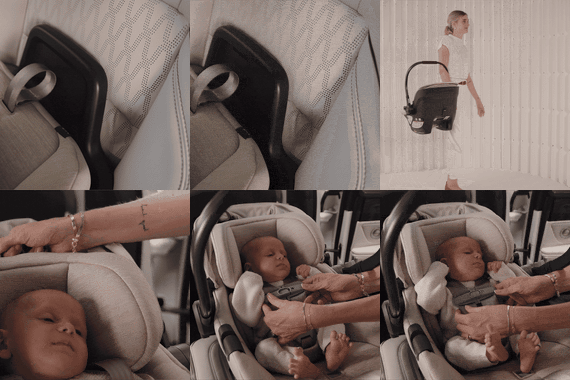
The compatible bouncer matters for parents who want the baby nearby while preparing food or eating, but it should be thought of as supervised awake-time support. Safe-sleep sources are clear that babies who fall asleep in seats, swings, or inclined products should be moved to a safe flat sleep space. That means the bouncer can improve togetherness at the table, but it should not be bought as a nap solution.
For a first baby, this distinction helps prevent overbuying. If your priority is feeding at six months and beyond, the Lemo 2 3-in-1 set is the central purchase. If your priority is newborn table-height presence, add the bouncer only if you will use it often enough to justify the separate piece. If your home already has a favourite standalone bouncer, the high chair set alone may be the cleaner investment.
Buyer checklist
- Readiness: wait for upright sitting ability before using the high-chair feeding position.
- Restraint: use the harness every time, even for quick snacks.
- Placement: keep the chair away from stoves, windows, cords, counters, and walls that a child could push against.
- Cleanability: inspect tray removal, strap access, and wipeable surfaces before committing.
- Longevity: decide whether the chair will stay at the family table after baby years, because that is where the Lemo value is strongest.
Who should buy it?
Buy the Lemo 2 if you want a premium chair that looks adult enough to remain at the table and child-specific enough to support the messy feeding years. Skip or delay it if you need the smallest possible footprint, if your baby will eat mostly at a caregiver’s home, or if you prefer inexpensive gear for short phases. The best high chair is not the one with the most stages; it is the one your family uses correctly at every meal.
FAQ: buyer questions before choosing a premium high chair
Is the Cybex Lemo 2 worth buying before my baby starts solids?
It can be worth buying early if you plan to use the compatible bouncer stage and want one dining-area system, but for feeding in the high chair position most babies still need independent upright sitting readiness.
Should I buy the Cybex Lemo 2 now or wait until solids start?
Choose a newborn-compatible chair system if table-height togetherness and fewer standalone pieces matter. Choose a separate bouncer if you want a lighter seat that moves around the home more easily.
What safety feature matters most in a high chair?
Health Canada emphasizes a restraint system with a waist belt and crotch strap, a wide stable base, working locks, and safe placement away from walls, counters, windows, cords, and stoves.
How should I compare Lemo 2 with other premium high chairs?
Compare the included pieces, the baby stage, the ease of adjustment, the footprint at the table, cleanability, and whether the chair still works after the tray years are over.
How to tell whether a baby is ready for the high-chair stage
Parents often want the chair ready before solids, but the feeding position should wait until the baby can sit upright with appropriate control. Readiness is not just age; it is posture, stamina, and whether the baby can stay comfortably supported through a short meal. A chair like the Lemo 2 can be assembled early, but the baby set and tray become useful when meals are truly beginning. Before that stage, keep the purchase decision focused on the future feeding routine rather than trying to turn the chair into a newborn container.
Once meals begin, the footrest and seat depth matter because a dangling, slumped baby has less stability for exploring food. Parents should check the setup in real clothing, not just during assembly. Is the harness easy to fasten over a sweater? Can the tray come off without pinching fingers? Does the chair sit far enough from the island edge that a child cannot kick against it? These small checks make the premium features meaningful.
Cleaning and maintenance should influence the purchase
High chairs are cleaned multiple times a day during the early feeding period, so wipe paths matter. Before buying, look for places purée can hide: strap slots, tray seams, joints, and the underside of the baby set. A high chair that cleans quickly is more likely to be used correctly, because parents are less tempted to skip the harness or feed from an adult lap after a messy morning. Premium value is partly about how the chair handles the repetitive work.
It also helps to decide where accessories will live. The tray should have a home when the chair is pulled to the table. The harness should stay attached and visible, not buried under a cushion. If the chair will later convert to a regular seat, keep the baby-stage pieces labelled in one place so a second child or visiting baby can use them safely. Long-use furniture only stays valuable when its parts do not vanish between stages.
How Lemo compares with a simpler high chair
A simpler high chair can be the smarter choice for a family that wants a short-term feeding station and has storage space for later. The Lemo 2 is stronger for parents who dislike replacing gear, care about the dining-room footprint, and expect the chair to remain useful after toddlerhood. The cost is easier to justify when the chair will be used daily at the main table, not kept as a backup in a basement. If the baby will eat mostly at daycare or a caregiver’s home, put more weight on portability and price.
The practical test is whether the Lemo’s adjustability solves a problem you already have. If table height varies, if siblings use the same space, or if parents want a chair that does not visually expire after year one, the growing-chair concept makes sense. If the only requirement is a safe place for purée twice a day, a smaller high chair may be enough. Either way, supervision and restraint use remain the real safety features.
Related baby enRoute reading
- B.box Insulated Flip Top 1L in Canada: A Parent's Guide to Easier Summer Water Breaks
- Bc Babycare Long Sleeve Bib in Canada: A Practical Guide for Outdoor Meals and Messes
- B.box Silicone Bib in Canada: A Practical Guide for Outdoor Meals and Messes
Product details can change: Check linked product pages for current colours, pricing, availability, and compatibility. Follow manufacturer instructions and official safety guidance when those apply.