In this article
Walking into a baby store for the first time as an expecting parent can feel like entering a foreign country — unfamiliar products, specialized terminology, and an overwhelming number of choices in every category. Planning your visit with a few key priorities helps you leave with clarity rather than confusion. For Canadian families, shopping in person also means access to hands-on testing that no website can replicate.
Before You Go: Prioritize Your Categories
Baby stores carry hundreds of products across dozens of categories. Trying to evaluate everything in one visit leads to decision fatigue. Instead, identify 2-3 categories where hands-on experience matters most. For most families, those are:
Car Seats: The Non-Negotiable Start

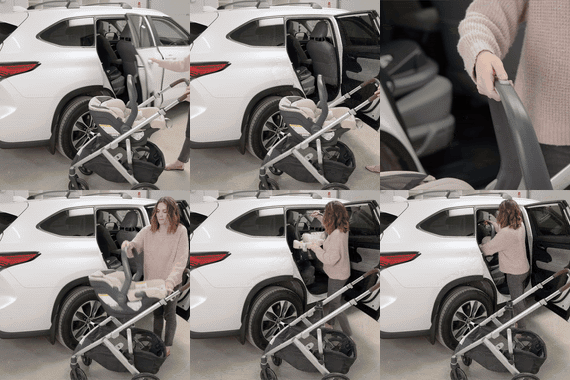
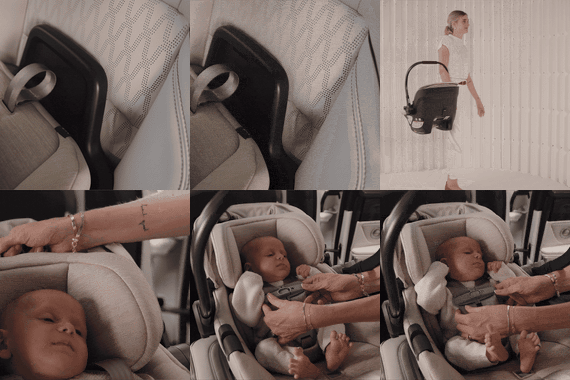
An infant car seat is required before you leave the hospital. Testing in-store lets you check: Does it fit in your vehicle? Can you operate the harness and buckle smoothly? Is the carrier weight manageable for carrying from car to stroller? These questions are nearly impossible to answer from product photos alone.
Strollers: The Daily Driver

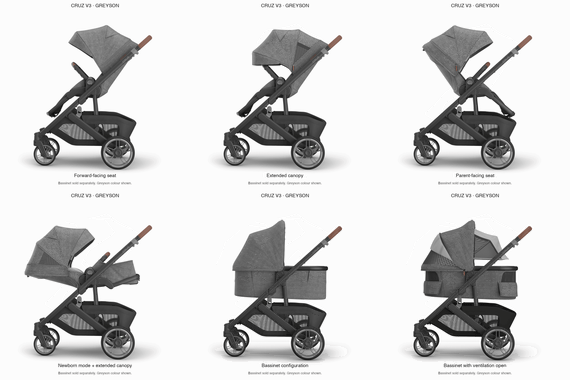
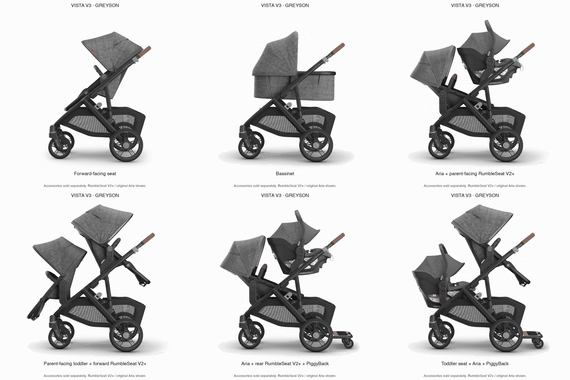
A stroller needs to fold into your trunk, navigate your neighbourhood's sidewalks, and fit your body ergonomically. In-store testing reveals fold mechanism ease, handlebar height comfort, and turning radius — three factors that determine daily satisfaction. Push a stroller through the store for several minutes; a 10-second test reveals nothing.
Sleep Setup: Crib and Mattress

Touching mattress firmness, testing crib rail mechanisms, and seeing actual furniture dimensions in person prevents the common online-ordering mistake of furniture that's too large (or too small) for your space.
What to Bring
- Your vehicle key measurements: Trunk width, depth, and height. Many stores have measuring tools, but having your own numbers saves time.
- Your phone: Take photos of products, tags, and configurations you like. Your future self will thank you when comparing options at home.
- Your partner or co-parent: If possible. Both people need to be comfortable with the car seat install, stroller fold, and furniture choices.
- A short list: 3-5 specific questions or categories. This focuses the visit and makes better use of staff expertise.
How to Use Staff Knowledge
Retailer Insight: Good baby store staff have handled every product they sell. They've folded every stroller, installed every car seat, and assembled every crib. That hands-on experience is genuinely valuable — more so than online reviews, which often reflect first impressions rather than sustained use. The most productive approach is arriving with specific questions: "We have a compact SUV and need a stroller that folds small" is better than "Which stroller is best?"
Don't hesitate to ask about trade-offs. Honest retailers won't just point you to the most expensive option — they'll help you understand what you gain and what you give up at each price point. Our buying team personally evaluates every product we stock, so our staff can speak from direct experience rather than marketing materials.
Testing Checklist: What to Do In-Store
Strollers

- Fold and unfold — time yourself. Can you do it with one hand?
- Push for at least 2 minutes — check handlebar height and steering responsiveness
- Load the basket — bring a bag similar in size to your diaper bag
- Check the recline mechanism — can you adjust it without waking a sleeping baby?
Car Seats

- Lift the carrier with the handle — is the weight manageable?
- Practice the harness buckle — can you operate it smoothly?
- Ask about vehicle installation options — LATCH vs seatbelt
Furniture
- Test the crib rail drop or conversion mechanism
- Feel the mattress firmness — compare multiple options side by side
- Open dresser drawers — smooth glides matter more than you'd think when operating one-handed
The Registry Conversation
Many Canadian families start or build their baby registry during a first store visit. This is efficient — you can scan items you've tested and liked rather than building a registry purely from online browsing. If the store offers a registry program, ask about completion discounts and return policies, which vary between retailers.
In-Store Observation: Common First-Visit Patterns
After helping thousands of first-time parents across Canada, our team notices a consistent pattern: families arrive focused on the crib (the emotional centerpiece) but leave most informed about the car seat and stroller (the functional priorities). This shift happens naturally when you handle products in person — the daily-use items reveal their importance through touch and testing. It's one reason we encourage in-store visits even for families who plan to purchase online.
After the Visit: Processing and Deciding
Don't feel pressured to buy everything in one trip. A productive first visit ends with: photos of your top picks, a clear understanding of the trade-offs in each category, and a sense of which decisions you're ready to make versus which need more thought. The best decisions come from sleeping on it — and good products will still be available tomorrow.
First Baby Store Visit Questions
When should I start shopping for baby gear?
Most families start browsing during the second trimester (weeks 20-28). This gives enough time for research, in-store visits, and delivery of any custom-order items. Starting too early can mean products being updated before your due date; too late creates unnecessary stress.
Should I buy everything from one store?
Buying from a single retailer simplifies returns and may qualify you for bundle pricing or loyalty discounts. However, no single store carries every product in every category. A practical approach: buy major items (stroller, car seat, crib) from a store where you've tested them in person, and supplement smaller items from wherever offers the best selection.
How do I handle well-meaning advice from friends and family?
Everyone has opinions about baby products. The useful filter: was their recommendation based on extended personal use, or a first impression? "We used this daily for two years and loved it" carries more weight than "I heard it's the best." Your family's specific needs (vehicle, living space, lifestyle) may differ from theirs, so use their experience as input, not instruction.
Are floor models safe to buy?
Reputable retailers like baby enRoute maintain floor models to current safety standards and don't sell display units as new. If a store offers a display discount, check for wear, verify all components are included, and confirm the product hasn't been recalled during its time on the floor. For car seats specifically, buying new is strongly recommended — you need to know the full history of a safety device.
Can I return baby products if they don't work for my child?
Return policies vary by retailer and product category. Car seats, mattresses, and hygiene products typically have restricted return policies for safety reasons. Strollers and furniture usually offer standard return windows. Ask about the specific return policy for each major item before purchasing — and keep all packaging until you're certain about your choice.
For installation-sensitive gear, follow the product manual and use a qualified installation check when needed.
Related baby enRoute reading
- Navigating Parenthood: Your Essential Guide to Baby Gear at baby enRoute
- What Parents Need to Know Before Buying a Car Seat in Canada: Your Ultimate Guide (and Where to Get Expert Help in BC!)
- Your Ultimate Guide to Car Seat & Stroller Warranties (for Brands like UPPAbaby, Britax, & More!)
Product details can change: Check linked product pages for current colours, pricing, availability, and compatibility. Follow manufacturer instructions and official safety guidance when those apply.