In this article
Choose the Clek stage before comparing Clek models. Liing is a removable rear-facing infant carrier. Foonf and Fllo are convertible seats for rear- and forward-facing use. Oobr and Olli are belt-positioning boosters for children who have outgrown a forward-facing restraint and meet the booster's requirements. The model name matters only after the child's current stage and the intended vehicle position are clear.
Start with the stage map
| Current need | Clek route to compare | Question that decides it |
|---|---|---|
| Rear-facing infant carrier | Liing | Will a removable carrier and approved stroller connection be used often enough to justify a shorter infant-seat stage? |
| Seat that remains installed and later turns forward-facing | Foonf or Fllo | Which installation style, rear-facing range, weight and geometry fit the child, vehicle and caregiver? |
| High-back belt-positioning booster | Oobr | Does the child meet every booster requirement, stay positioned, and obtain correct belt fit in the intended vehicle? |
| Backless belt-positioning booster | Olli | Does the vehicle provide the head support and lap-and-shoulder belt geometry required by the exact manual? |
Use the Clek collection to see the current store range, but use Clek's Canadian specifications and manuals to decide eligibility and installation.
Liing: choose the removable-carrier routine
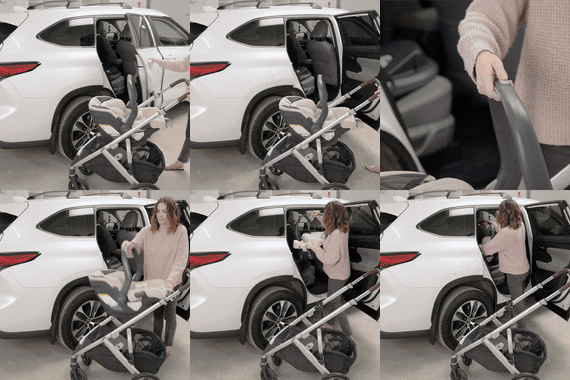
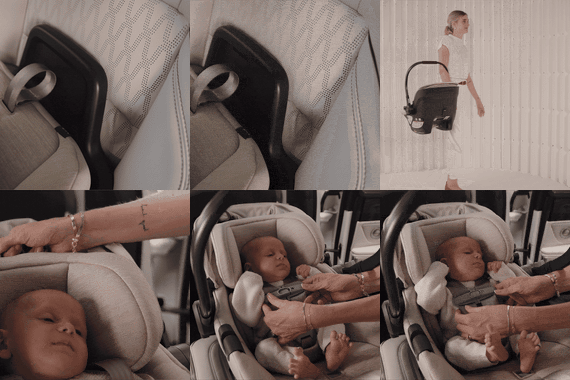
Liing is the infant-stage route when a removable carrier regularly moves between the vehicle and an approved stroller connection or destination. If the restraint will usually stay installed, compare that benefit with a newborn-compatible convertible seat. The detailed Clek Liing guide covers its current Canadian child limits, carrier and base measurements, baseless-installation planning and transfer routine.
Foonf or Fllo: compare installation and handling
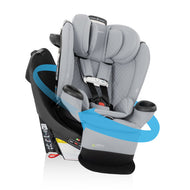
Foonf and Fllo are the convertible routes in this lineup. They differ in rear-facing limits, weight, installed geometry and forward-facing lower-anchor hardware, so the right comparison starts with the intended vehicle position and the way the seat will be moved or installed. See the Foonf vs Fllo comparison for the current Canadian figures and the installation implications. The vehicle and restraint manuals still determine which method is permitted in the intended position.
Oobr or Olli: start with vehicle support and belt fit
Oobr is Clek's high-back booster route and can convert to backless mode; Olli is the dedicated backless route. Before comparing portability or comfort, confirm that the child has outgrown the forward-facing restraint, meets every requirement in the exact booster manual and can remain correctly positioned for the whole ride.
A backless booster needs the vehicle support and belt geometry required by its manual. A high-back booster supplies its own back and shoulder-belt guide, but its manual may still impose vehicle-seat or head-restraint requirements. The high-back vs backless booster guide explains the vehicle-support and belt-fit checks without assuming that every high-back model solves a low seatback.
Use one comparison record for the exact setup
- Record the child's current standing height and weight.
- Confirm the National Safety Mark and Canadian manual for the exact model.
- Write down the vehicle year, model, seating position and neighbouring passengers or restraints.
- Check the permitted installation method, recline, tether and vehicle-support requirements in both manuals.
- Compare only the routine details that will recur: carrying, moving between vehicles, buckling access and storage.
Transport Canada advises matching the restraint to the child's size and the vehicle and keeping a child in each stage until the applicable seat limit is reached. That rule prevents the Clek range from becoming a model ladder that a child moves through on a preset schedule.
Stop before purchase when
- the exact Canadian label does not cover the child's current stage or measurements;
- the intended vehicle position does not provide a permitted installation or required head support;
- a stroller or accessory combination is not approved for the exact models;
- a regular caregiver cannot repeat the harness, belt-routing or installation checks; or
- the decision depends on a future mode while the current mode does not fit.
The useful Clek path is not "Liing, then Foonf, then Oobr." It is the current model and mode that pass the child's measurements, the vehicle instructions and the caregiver routine today.