In this article
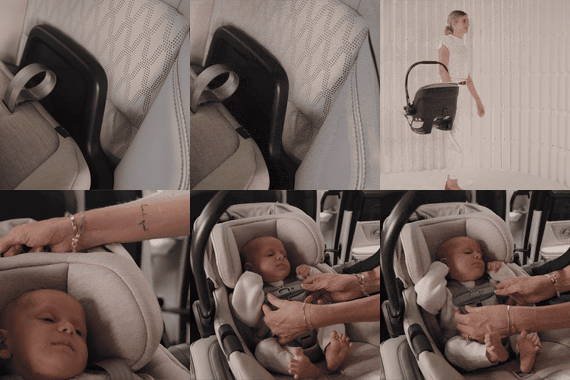
Newborn carrying is less about owning every baby carrier and more about solving the first repeatable routine. The BabyBjörn Baby Carrier Mini is a newborn-first carrier for parents who want closeness, quick adjustment, and a soft setup for the early months.
The short answer: choose it if you want an easy first carrier for home soothing, brief errands, and caregivers who prefer simple buckles. Skip it as the only carrier if you already know you need long outdoor walks, heavier-baby support, or toddler-stage use from the same purchase.

Who this carrier is really for
BabyBjorn Baby Carrier Mini is best understood as a first-months carrier, not a forever carrier. Its strongest use case is the parent who wants to pick up a newborn, settle them close, and move through a short home or neighbourhood routine without learning a complicated adjustment system.
That makes it especially useful for contact naps while supervised, short walks to the mailbox or coffee shop, pacing the kitchen during fussy evenings, or letting another caregiver take over for a few minutes. The value is in fast repetition. If the carrier is easy enough to reach for three times a day, it has a clearer job than a carrier saved only for big outings.
The first buyer test is baby position. Health Canada guidance for soft carriers keeps the focus on an open airway, visible face, close contact, and correct support. Parents should be able to check the baby's chin, mouth, nose, and body position every time the carrier goes on. If that check feels uncertain, the family should pause and review the manual before using any carrier hands-free.
The second test is adult fit. A newborn carrier has to work for the person who will use it when tired. Try the shoulder straps, front buckles, waistband feel, and the motion of lifting the baby in and out. The simpler design is an advantage only if each regular caregiver can adjust it without relying on memory from a showroom demo.
BabyBjorn Baby Carrier Mini is also strongest when the expected sessions are short. It is a soothing and quick-errand tool, not necessarily the carrier a family will choose for long hikes, older babies, or all-day travel. Parents who already know they want extended wearing may want to compare more structured options before treating this as their only carrier.
For registry planning, the honest question is whether a newborn-specific tool solves stress in the first weeks. If one parent expects to be alone for parts of the day, if an older sibling still needs hands-on attention, or if the baby settles better when held upright, the carrier may earn its place quickly. If the family rarely plans to babywear, the budget may be better saved for a later-stage carrier.
Cleaning and storage should be part of the decision. A carrier used around spit-up, milk, pacifiers, and winter layers needs a predictable laundry routine and a place to dry. It should live near the spot where parents actually pick up the baby, not at the back of a closet with travel gear.
Before buying, rehearse a real moment: baby crying after a feed, one adult needing both hands, and a short task that cannot wait. If BabyBjorn Baby Carrier Mini can be put on calmly, adjusted safely, and removed without waking the whole house, the product has a practical role.
The main reason to choose it is ease during the newborn window. The main reason to skip it is expecting one carrier to cover every future stage. Those are different jobs, and separating them makes the buying decision much cleaner.
A good final check is whether the carrier will stay within arm's reach. If it will sit near the sofa, entryway, or diaper station, it can become a quick calming tool. If it will be stored away until occasional outings, the family may be shopping for a carrier category rather than solving a routine.
Fit should be checked with the actual clothing parents expect to wear. A thick sweater, robe, or winter layer can change how the carrier sits on the adult body. The baby should still sit high and close, and the caregiver should not feel the need to hold the carrier in place with one hand to feel secure.
It is also worth testing a caregiver handoff. If two adults will share the carrier, each person should be able to loosen, tighten, and remove it without rebuilding the whole setup. A first carrier becomes more valuable when another adult can use it at 2 a.m. without asking for a tutorial.
Parents should watch the baby's cues as much as the product features. Some newborns settle quickly in close contact; others need more time, a different position, or a break. The right carrier supports a safe attempt, but it should never pressure parents to continue when the baby is too warm, slumped, or unsettled.
Short errands are the clearest outside-the-home use case. A quick pharmacy stop, school pickup, or walk around the block can be easier when the stroller feels like too much equipment. For longer days, parents should compare whether the adult support and baby stage still match the plan.
If the family already owns a structured carrier, BabyBjorn Baby Carrier Mini may still have a role as the quick newborn option. If the family wants to buy only one carrier, the decision becomes harder: choose Mini for simplicity now, or choose a more adjustable model for a longer timeline.
Another useful test is the end of the outing. Parents should be able to unclip the carrier, place the baby down safely, and put the carrier somewhere clean without creating a pile of straps on the floor. Small reset habits decide whether a simple carrier stays simple after a week of real use.
For warmer months, watch heat and airflow. A cozy newborn carrier can become uncomfortable if the adult is layered, the baby is overdressed, or the outing lasts longer than expected. Parents should plan short check-ins and avoid treating hands-free convenience as permission to ignore temperature cues.
For colder months, decide how the carrier fits under or over outerwear. The safest answer depends on the manual, the baby's position, and caregiver visibility. If the setup blocks the baby's face or makes the adult unable to check breathing, the routine is not ready.
BabyBjorn Baby Carrier Mini is most convincing when parents can describe one daily moment it will improve. "I need both hands during evening soothing" is a stronger reason than "everyone says I need a carrier." That difference is the line between practical gear and registry clutter.

Decision checklist before buying
- Choose it for the first months, quick in-and-out use, and simple adjustment.
- Check whether each caregiver can tighten and release it without help.
- Keep a second plan for longer walks if shoulder or back support becomes the limiting factor.
- Use only positions and weight ranges described by the manufacturer.

FAQ: buyer questions about this decision
Should I buy BabyBjörn Baby Carrier Mini for the newborn stage or wait for a larger carrier?
Choose it when the first months are the main job: short wearing sessions, easy front carrying, and simple adjustment. Wait or choose a larger carrier if you need more long-walk structure, heavier-baby support, or extended toddler use.
Is BabyBjörn Baby Carrier Mini worth it for apartment or condo life?
It can be worth it when elevators, short errands, and quick indoor soothing matter. The value is strongest if a caregiver will use it several times a week rather than only for occasional trips.
What safety habits matter most when using a newborn carrier?
Keep the baby high and close enough to monitor, make sure the airway stays clear, follow the product manual, and check that fabric and buckles support the baby without covering the face.
Who should choose a more structured carrier instead?
Choose a more structured option if the main goal is long outdoor walks, heavier-baby support, or shared use by adults who prefer more waist and shoulder structure.
Related baby enRoute reading
- UPPAbaby Vista V3 with Rumble Seat V3 in Canada: Newborn and Toddler Setup Guide
- UPPAbaby Aria V2 + Minu V3 in Canada: Lightweight Newborn Travel System Guide
- Pigeon Newborn Feeding Gift Set in Canada: First Bottle Setup and Care Guide
Product details can change: Check linked product pages for current colours, pricing, availability, and compatibility. Follow manufacturer instructions and official safety guidance when those apply.