In this article
A baby rocker can be genuinely helpful, but only when parents define the job before the seat arrives. Maxi Cosi Kori Rocker is the specific item to consider, but the better starting point is the routine it must improve.
Short answer: Choose Maxi-Cosi Kori if you need a light, good-looking rocker for short, supervised awake-time moments. Do not choose it as a sleep solution, a long unsupervised seat, or a powered-swing replacement.

Use a rocker for awake time, not sleep
A portable rocker earns its place only when parents are honest about the job. It can give a supervised, awake baby a nearby place to rest while an adult folds laundry, sits beside an older sibling, or moves through a short kitchen reset. It should not become an overnight sleep space or the default answer whenever a baby is fussy.
Safe-sleep guidance is the boundary that keeps this purchase clear. Babies need a firm, flat, appropriate sleep surface for sleep; a rocker is for short, watched moments when the child is awake. If a baby dozes off, move them to the sleep space your family has already prepared.
That distinction changes how to judge value. Recline positions, soft fabric, and a pleasant rocking motion are useful only if the adult routine includes supervision. If the seat would be left in another room, used for long naps, or treated as a crib substitute, the answer should be no.
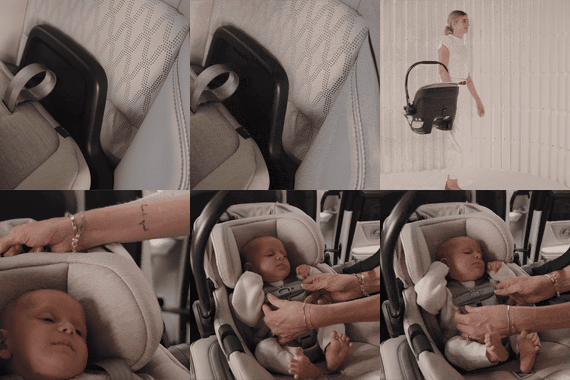
Kori is most appealing for families who want an attractive rocker that can move between living room, nursery corner, and grandparent visit without feeling bulky. The fold and stationary mode matter because many homes do not have space for every baby seat to stay open all day.

Compare it with a swing before choosing
A rocker and a powered swing solve different versions of the same stressful hour. A swing may help when motion needs to continue without an adult hand. A simple rocker can be better when parents want a lighter seat, a calmer footprint, and fewer settings to manage.
The right comparison is not feature count. Ask whether the baby needs powered soothing often enough to justify a swing, or whether the family mostly needs a safe nearby awake-time seat for short supervised windows. More modes are not automatically more useful.
Caregivers should also test the visual fit of the room. A seat that looks beautiful but blocks a hallway will be folded and forgotten. A seat that is easy to move and store can be used more honestly, because it does not force the home to revolve around it.
Cleaning is part of the decision. Spit-up, snack crumbs from siblings, and everyday dust can turn a premium seat into a chore. Choose the rocker only if the fabric and buckle routine feel realistic for the adults who will clean it.

Who should buy it, and who should skip it
Buy it if the repeated need is a supervised awake-time landing spot near an adult. It is strongest for small homes, multipurpose rooms, and parents who prefer a quieter seat over a powered swing.
Skip it if the family is really trying to solve sleep, long unsupervised naps, or constant motion. Those are different problems with different safety rules. Skip it also if the household already has another seat that covers the same watched awake-time moments.
A useful yes sounds specific: the rocker will live beside the sofa, fold after dinner, travel to grandparents once a week, and be used only while an adult is present. A vague yes usually means the purchase is being asked to do too many jobs.
The final check is caregiver consistency. If one adult will use it as a short seat and another will let sleep continue there, the family needs a clearer rule before buying. Gear should make routines easier, not create safety negotiations every day.
Rocker buying checklist
- Use only for supervised awake time, not sleep.
- Plan exactly where it will sit while an adult watches.
- Confirm every caregiver understands when to move baby to a sleep surface.
- Compare against a powered swing only if motion is the real need.
- Check folding, cleaning, buckle, and storage before choosing.
Run the real-room test before adding it to the cart
The practical question is where the rocker will live during the two or three daily moments when it is actually useful. Picture the room during a normal evening: one adult making dinner, one caregiver answering a message, an older child asking for help, and the baby needing a watched place nearby. If the rocker can sit within arm's reach without blocking the path, the product has a clearer role.
Also test the end of the routine. A rocker that folds neatly after use is easier to keep as an awake-time tool because it does not become permanent furniture. If the seat stays open beside the sofa all day, families may be tempted to use it for longer stretches than intended. Storage is not only about tidiness; it helps reinforce the boundary between supervised seat and sleep space.
Parents should decide who will move baby if sleep starts. This rule needs to be simple enough for a tired adult, grandparent, or babysitter to follow without debate. If baby becomes drowsy, the next step is the prepared sleep surface, not another few minutes because the rocker looks comfortable.
For a newborn, the value is often short and specific: a few minutes beside an awake adult while hands are full. For an older baby with stronger head and trunk control, the value may shift toward watching the room, joining family time, or staying close during a quick household task. The same seat should still be used within the limits and instructions for the child's stage.
Decide what problem you are not solving
Kori should not be asked to solve every hard hour. It is not a crib, not a sleep trainer, and not a substitute for caregiver attention. Naming those limits before buying makes the yes more trustworthy, because the family is buying for the moments the rocker can handle instead of hoping it will calm every situation.
If the baby usually settles only with continuous motion, a simple rocker may disappoint unless an adult is willing to provide that movement. If the family mostly needs a safe place for the baby during sleep, the rocker is the wrong category. If the actual problem is no floor space, a seat that folds flat may help, but only after the safe sleep setup is already solved.
A good buying decision should still make sense after the first week. Ask whether the rocker will be used in supervised daylight routines, whether cleaning is manageable, whether the frame can be moved by the smaller caregiver, and whether everyone understands the no-sleep rule. If those answers are clear, the purchase has a focused job.
The strongest reason to buy is not that the seat is attractive. It is that the seat gives the family a repeatable, watched, awake-time option without taking over the room. When that is the actual need, a compact rocker can be more useful than a larger powered seat with features the family rarely touches.
FAQ: Maxi Cosi Kori Rocker buyer questions before choosing
Can a baby sleep in the Maxi-Cosi Kori Rocker?
No. Treat it as a supervised awake-time seat. If baby falls asleep, move baby to a firm, flat sleep surface that follows safe-sleep guidance.
Is Kori better than a powered swing?
Choose Kori when you want a lighter, quieter, easy-to-store seat for watched moments. Choose a swing only when powered motion is the real repeated need.
Where does a rocker fit in a small home?
It fits best beside the adult who is supervising, then folds or moves away after use. If it blocks daily walking paths, it may become more frustrating than helpful.
What should I check before buying?
Check supervision habits, storage space, cleaning expectations, buckle ease, and whether another seat already solves the same short awake-time job.
Related baby enRoute reading
- BabyBjörn Bouncer Bliss in Canada: Awake-Time Comfort, Fit, and Home Use Guide
- Cybex Lemo 2 Bouncer in Canada: Awake-Time Seat Fit and Daily Use Guide
- BabyBjörn Bouncer Bliss Guide: Safe Awake-Time Support
Product details can change: Check linked product pages for current colours, pricing, availability, and compatibility. Follow manufacturer instructions and official safety guidance when those apply.