In this article
A practical Canadian kids' wardrobe works by jobs: a comfortable base, a removable midlayer, and an outer layer chosen for the actual wind or precipitation. Not every day needs all three. The useful system lets a caregiver remove one piece when activity or indoor temperature changes.
Give each layer one clear job
| Job | Current example | Check |
|---|---|---|
| Everyday base or outfit layer | Petite Revery Jet Stream Cardigan | Shoulders and cuffs move comfortably |
| Removable midlayer | Petite Revery Cozy Croissant Fleece Jacket | Fits under the intended shell without bunching |
| Wet-weather shell | Jan & Jul Puddle-Dry Rain Jacket | Exact model's seams, hood, cuffs, and care |
| Insulated outer layer | TNF Kids' Freedom Insulated Jacket | Room for the planned base without excess bulk |
For an ordinary cool day, the Jet Stream cardigan may be the only extra layer needed. When more loft is useful, the Cozy Croissant fleece jacket can become the removable middle piece.
Wet days: inspect the junctions
The Jan & Jul Puddle-Dry Rain Jacket in Wild Child fills the shell job. Match it with the exact rain pant or everyday bottom needed for the route, then ask the child to squat and reach. Check jacket hem, pant waist, wrists, hood, and boot tops; a weather fabric does not remove openings from an outfit.
For a lined alternative, the current Cozy-Dry Bunny Blooms Jacket keeps the fleece with the shell. Choose it when that combined construction suits the routine; choose Puddle-Dry when changing the separate midlayer is more useful.
Cold days: adjust for activity
Health Canada advises layers, a wind-resistant outer layer, and changing wet clothing promptly in extreme cold. A current insulated option such as the TNF Kids' Freedom Insulated Jacket puts insulation into the outer garment. Check the child during the outing and change damp clothing rather than relying on one fixed outfit.
Use transitions to decide what stays removable
For daycare or school, picture the whole sequence: cold doorway, active outdoor block, heated room, and a second trip outside. A separate fleece can stay in the cubby or come off while the shell remains available. An insulated jacket reduces the number of pieces to manage but cannot separate insulation from weather coverage.
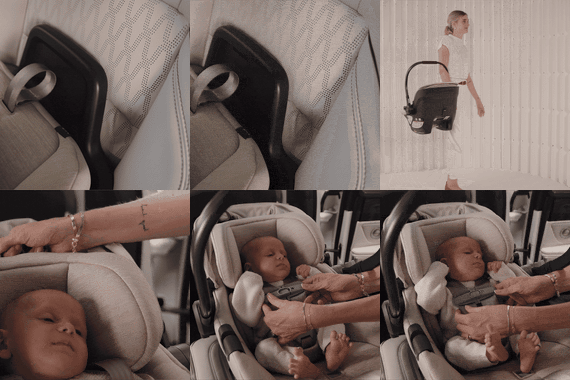
For car travel, avoid letting a bulky outfit dictate how a restraint is used; follow the child-restraint maker's instructions for clothing and harness fit. Pack the outer layer for arrival when necessary instead of improvising around the harness.
Warm and sunny days need a different system
Health Canada recommends light-coloured, loose-fitting, breathable clothing for children during extreme heat. Environment and Climate Change Canada includes clothing and shade in sun protection when the UV Index is 3 or higher. Use an exact UPF claim only when the garment maker provides one.
Use the doorway sequence
- Check temperature, wind, precipitation, and outing length.
- Choose the base for the activity.
- Add a removable midlayer only when needed.
- Select the shell or insulated outer layer by its exact model details.
- Run a squat-and-reach check.
- Pack a dry replacement for the piece most likely to get wet.
Browse the current Fall/Winter Edit by the missing job, not by a promise that one outfit covers every Canadian season.